CBD In Skincare, Step By Step
Definition
CBD in skincare means a cosmetic that carries cannabidiol as one of its listed ingredients: a cream, a balm or an oil you put on your skin. In practice it behaves like any other leave-on step, applied after cleansing and tried on a small patch of skin first. Cibdol has been formulating in this category since 2014, and the base under the cannabinoid is declared on the label.
A new jar, and the day before you use it properly
Half past nine on a Tuesday. The box is open on the kitchen counter, the jar is out, the lid is already off, and the obvious next move is a fingertip of cream across your whole face. That is what a shelf is for, after all.
Give it one more day. Not because anything dramatic is riding on it, but because one small square of skin tells you something a full face cannot. One spot, one product, one day on the clock. Then it joins the routine properly and you stop thinking about it.
The inner forearm as the test spot
The site is the inner forearm. You can reach it with your other hand, you can keep it dry, and you can look at it without a mirror. Put on a small amount, roughly the area of a coin, and leave it uncovered. No rinsing, no second layer on top, no extra dab because the first one went in faster than you expected.
Pick a day when that forearm gets left alone. No long shower, no gym session, no sleeve rubbing across it for hours. And write down the time. That part gets skipped constantly, and "some time yesterday evening" is not a reference point you can compare anything against tomorrow.
A full day on the clock
Twenty-four hours. That is the wait, and it does not shorten because the product feels light or because the jar is small. A twenty-minute look in the bathroom mirror is a different test, and a much shorter one.
Once the day is up, compare the test square with the skin right next to it, in daylight rather than under a bathroom bulb. Same colour, same texture, nothing worth noting: the product moves into your routine. If the square stands out from its neighbours, you stop there and keep the box, ingredient list included, for whoever you ask next.
One test per product, not per brand. A cream and a balm from the same range are two formulas with two different textures and two different ingredient lists, so they get two tests on two different days. Same forearm, different square.
Where the step goes in the sequence
A CBD cream is not a category of its own inside a routine. It is a leave-on step, and leave-on steps have a place: after everything that gets rinsed off, before anything that sits on top and stays there all day.
Two habits cover most of it. Clean skin first. Then thin before thick.
Clean skin first
Cleanser, water, dry face, then the jar. Morning and evening, the same way round. If a toner or a watery serum is part of your routine, those go on before a cream, because they are the thinner textures and they belong underneath. Anything distinctly oily goes on afterwards.
Wash your hands before you open the lid, especially with a jar you dip fingers into rather than a pump or a tube. And keep the amount modest at the start: a small quantity spread evenly tells you more about how the texture behaves on your skin than a thick layer does.
In the evening a cream is often the last thing you put on. In the morning it usually is not. Whatever you wear over it, a day cream with SPF or makeup, goes on once the layer has settled and your fingertips no longer lift it back off.
Thin before thick, and the same order every day
Keeping the order stable is worth more than optimising it. If you use the same sequence every day, then a change in your routine has one obvious cause: the thing you changed. Shuffle three steps at once and you learn nothing about any of them.
So introduce one new product at a time and give it a couple of weeks before the next one arrives. Two new jars in the same week share the credit and share the blame.
The face is also not the only address. Hands, elbows, shins, the back of the neck: a cream can go wherever you want a leave-on step, and the order logic does not change. Clean, dry, thin, thick.
Cream, balm and oil are three different habits
Same shelf, sometimes similar packaging, but these three textures behave differently the moment they are on skin. That difference decides when you reach for them and how much you use.
The base under the cannabinoid
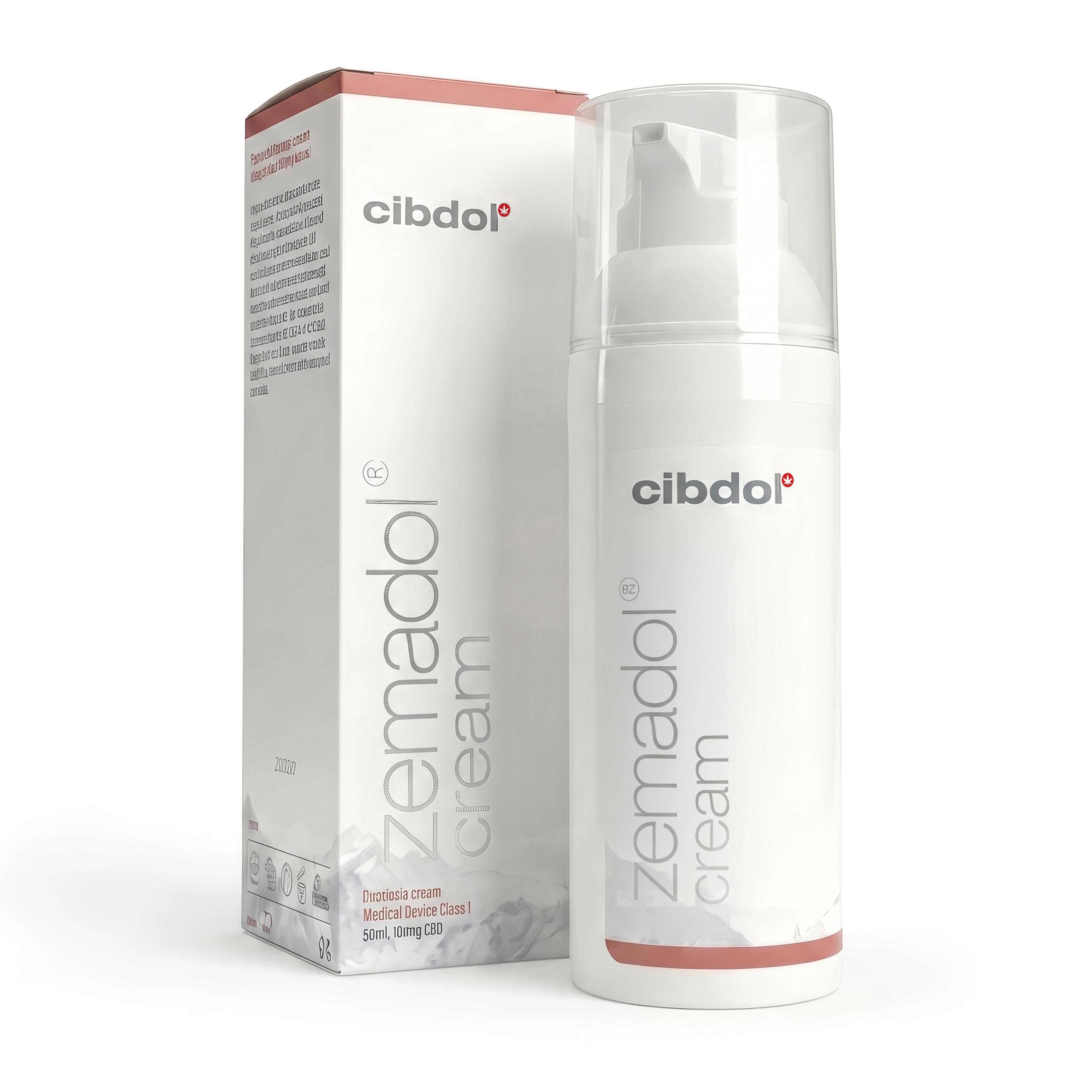
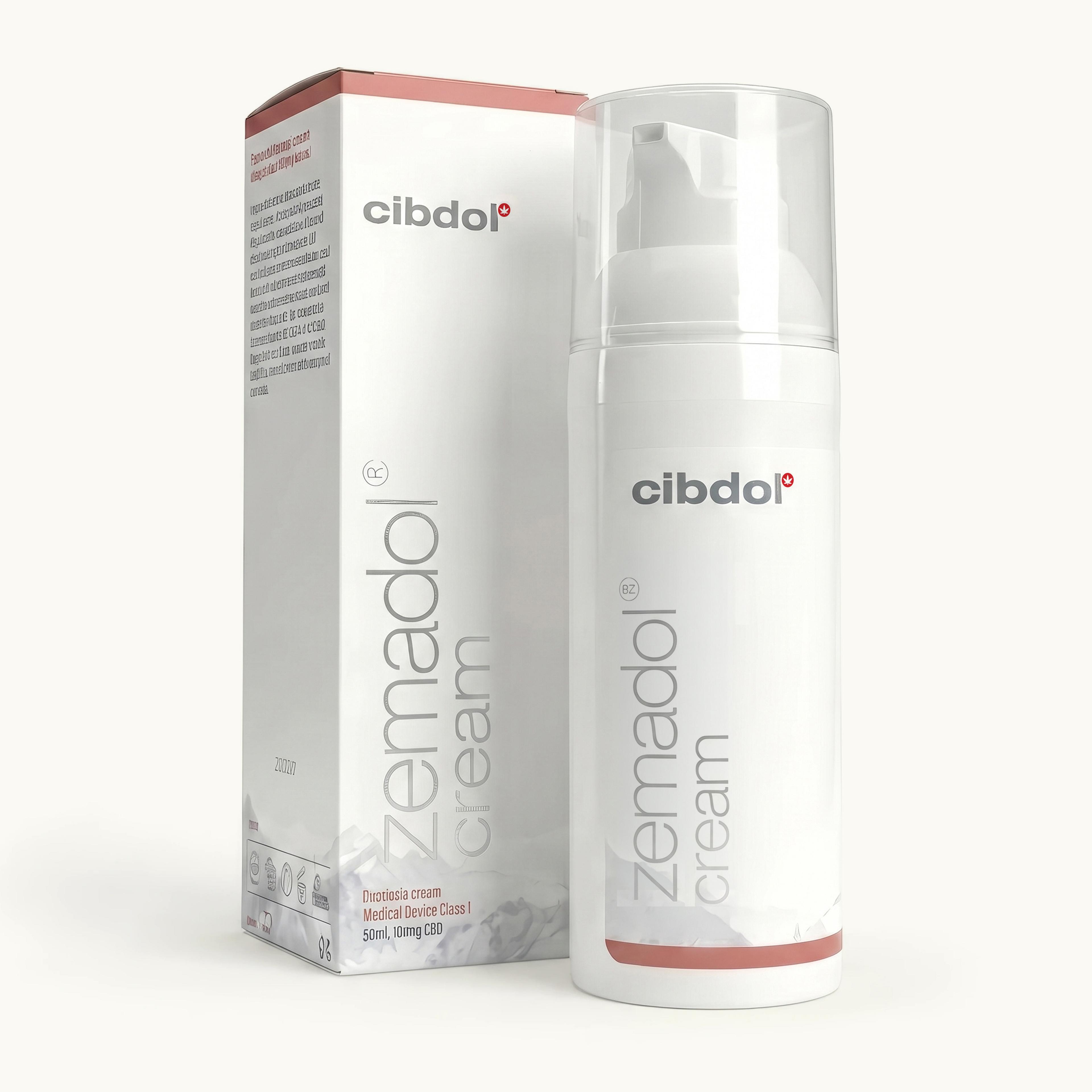
In Cibdol creams the base is hemp seed oil. That is a label fact, and worth reading as one: hemp seed oil is pressed from the seeds of the plant, and it has been used as a carrier in cosmetics for a long time. Not the same thing as an extract, and not there for show. It is the part your fingers actually spread.
Cannabidiol is a small share of a cosmetic formula by weight. Most of what you apply is base and the rest of the ingredient list, which is why the base is the first thing to look at when you compare two jars. It tells you how the texture will feel and how it will sit under or over your other steps.
How long the layer stays on the surface
Balms and oils dwell on the surface of the skin longer than creams do. A cream is gone from your fingertips fairly quickly. A balm is still there, still a layer, still on top.
Two practical consequences follow. First, formats that sit on the surface tend to end up as evening steps, on smaller areas, in smaller amounts, kept away from a shirt collar for a while. Second, they are exactly why the patch test runs the full 24 hours instead of a quick check after twenty minutes: a short glance only covers the first part of the time the product is actually in contact with skin.
None of this makes one format better than another. A cream spreads over a large area. A balm goes where you want a thicker layer on a small patch. An oil is a texture you either like on your face or do not, and the only way to find out is a small quantity on clean skin.
Before the first full application
- Read the ingredient list all the way through before you open anything. In Cibdol creams the base is hemp seed oil, and bases usually sit near the top of the list because they make up most of the formula.
- Check which cannabinoid is in the product and how much of it the label states. A number on the packaging is something you can compare between jars. A vibe is not.
- Look at the batch information. Cibdol has published independent analyses since 2014, and a report tied to the batch in your hand is the point of publishing them at all.
- Choose the test day deliberately. A quiet day, no long shower, no sleeve dragging across your inner forearm for hours.
- Apply a coin-sized amount to the inner forearm, on clean, dry skin, and leave the spot uncovered.
- Write down the time. Phone note, kitchen calendar, back of the box, anywhere you will actually find it again.
- Wait 24 hours. Not twenty minutes, and not "until it looks fine", which usually means about four minutes.
- Compare the square with the skin next to it in daylight, then decide whether the product carries on into your routine.
- Place the step in your sequence: after everything you rinse off, before anything that stays on top. Same order tomorrow.
- Add one new product at a time and leave a couple of weeks between arrivals, so each one gets its own read.
- Keep the outer packaging while you use the jar. The ingredient list and the batch code live there, and both are useful if you ever want to ask someone about the formula.
- Note the date you opened it and check the period-after-opening symbol on the box, the little tub icon with a number of months next to it.
What the 2019 review put on the map
There is a paper people cite constantly in this corner of the market, so it is worth knowing what it actually contains. The 2019 review by Tóth and colleagues [1] is a review, which means it gathers published laboratory work rather than running a new experiment of its own.
What it collects is a map of the skin's own signalling. It describes classical cannabinoid receptors on skin cells, compounds the body produces itself, and ion channels, which are proteins that let charged particles cross a cell membrane [1]. Two of those self-made compounds are named repeatedly: anandamide and 2-AG [1]. Among the ion channels, TRPV1 comes up as one of the described targets [1]. Read plainly, the picture is that skin is not only a barrier; it carries some of the same signalling components found elsewhere in the body [1].
Two qualifications belong right next to that reference, and they matter more than the map itself. The material under review is laboratory and preclinical work, so the subject is cells and tissue, not a person with a jar of cream on a bathroom shelf [1]. And describing a receptor is a different job from measuring what happens after a cosmetic goes on a forearm [1]. Both things can be true at once: the map is real, and it stops where it stops.
- Classical cannabinoid receptors, described on skin cells in the 2019 review by Tóth and colleagues [1].
- Anandamide, one of the compounds the body makes itself, named in the same review [1].
- 2-AG, the second of those endogenous compounds listed there [1].
- Ion channels, including TRPV1, among the components mapped [1].
- The review's own frame: published laboratory and preclinical literature, brought together in 2019 [1].
The label, and what it settles
A jar of cream is a cosmetic, and that has a practical upside for anyone reading a box. Cosmetic packaging carries a full ingredient list in a standardised naming system, a stated quantity, a batch code and a period-after-opening symbol. So the label answers the concrete questions: what is in here, how much of it, which batch, how long after opening.
What the label does not put in writing is how your skin will look in two weeks. Neither does this page. That gap is not a gap in the paperwork, it is the honest limit of what a printed carton can state, and it is why the checkable parts deserve your attention instead.
Since 2014 the standard here has been the same one: know what is inside, publish the analysis, and let the report speak instead of the adjectives. That is also the reason the base gets named on our creams rather than being described as a secret blend. Hemp seed oil, pressed from seeds, long established as a cosmetic carrier.
- The base, first. Hemp seed oil in Cibdol creams, and it is the majority of what you spread, so it decides most of the texture.
- The cannabinoid and its stated amount, so two jars can be compared on a number rather than on packaging design.
- The full ingredient list, read once before the first use and kept with the product afterwards.
- The batch analysis, which exists so the figure on the label can be checked against a laboratory result.
- The format against the job: a cream for larger areas, a balm or an oil where you want a layer that stays on the surface longer.
- The opening date and the period-after-opening symbol, both easier to track if you write the date on the box the day you break the seal.
- Your own patch test note: product, date, inner forearm, 24 hours, outcome. Three lines, and you never have to guess which jar you already tried.
Frequently Asked Questions
3 questionsDo I need a patch test for every new jar, or just the first one?
Does a CBD cream go on before or after the rest of my routine?
What is in a Cibdol cream besides the cannabinoid?
About this article


Luke Sholl has been writing about cannabinoids, CBD, and the broader benefits of nature since 2011. His background includes first-hand cannabis cultivation experience spanning the full seed-to-harvest lifecycle across so
This wiki article was drafted with AI assistance and reviewed by Luke Sholl, CBD & wellness writer. Editorial oversight by Joshua Askew.
Medical disclaimer. This content is for informational purposes only and does not constitute medical advice. Consult a qualified healthcare provider before use of any substance.
Last reviewed August 27, 2026
References (1)
- [1]Tóth, K.F. et al. (2019). Molecules. DOI: https://doi.org/10.3390/molecules24050918
Related Articles
Can You Be Allergic to CBD? Two Papers, One Protein
Two published papers characterise a cannabis plant protein called Can s 3 as an allergen. Here is what they cover, what they leave open, and where the carrier oil and softgel shell fit in.
CBD and Ibuprofen: One Shared Liver Enzyme
Ibuprofen depends on a single liver enzyme, and cannabidiol has been described as an inhibitor of it. Here is what the 2011 and 2019 research documented, and where the record simply stops.
CBD That Mixes Into Water: The Actual Chemistry
The phrase exists because of one physical fact: cannabidiol and water do not mix on their own. Here is what emulsions and liposomes actually are, and where the published human measurements stop.
CBD Oil or Gummies: Where the Amount Gets Decided
The pipette leaves the counting to you; the gummy carton arrives with the number already on it. Here is what the published human data covers, and where it stops.
One Gummy, 25 mg, and What the Studies Measured
25 mg per gummy, ten in a pack, THC-free printed on the box. What happens after chewing is the part human trials are still measuring [1].
Travelling With CBD: Check Three Countries First
A country-by-country permission list for CBD is wrong by design. Here is the checking order instead: three countries per ticket, the airline's own conditions, and a clear rule for unresolved cases.
What Is A CBD Tincture? The Word And The Bottle
Tincture once described a method: extraction with alcohol. Here is how the word travelled to CBD dropper bottles, and what the ingredient list settles that the front label does not.
Combining CBD Products: Counting The Day's Milligrams
An oil in the morning and a capsule at night belong to the same daily figure, counted in milligrams. Here is how that arithmetic works, what the human pharmacokinetic literature covers, and why a topical sits in a column of its own.
Ways To Take CBD, Route By Route
A pipette bottle, a capsule and a chewable piece are not three sizes of the same thing. They sit on different routes, and published human reviews keep those routes in separate columns.
