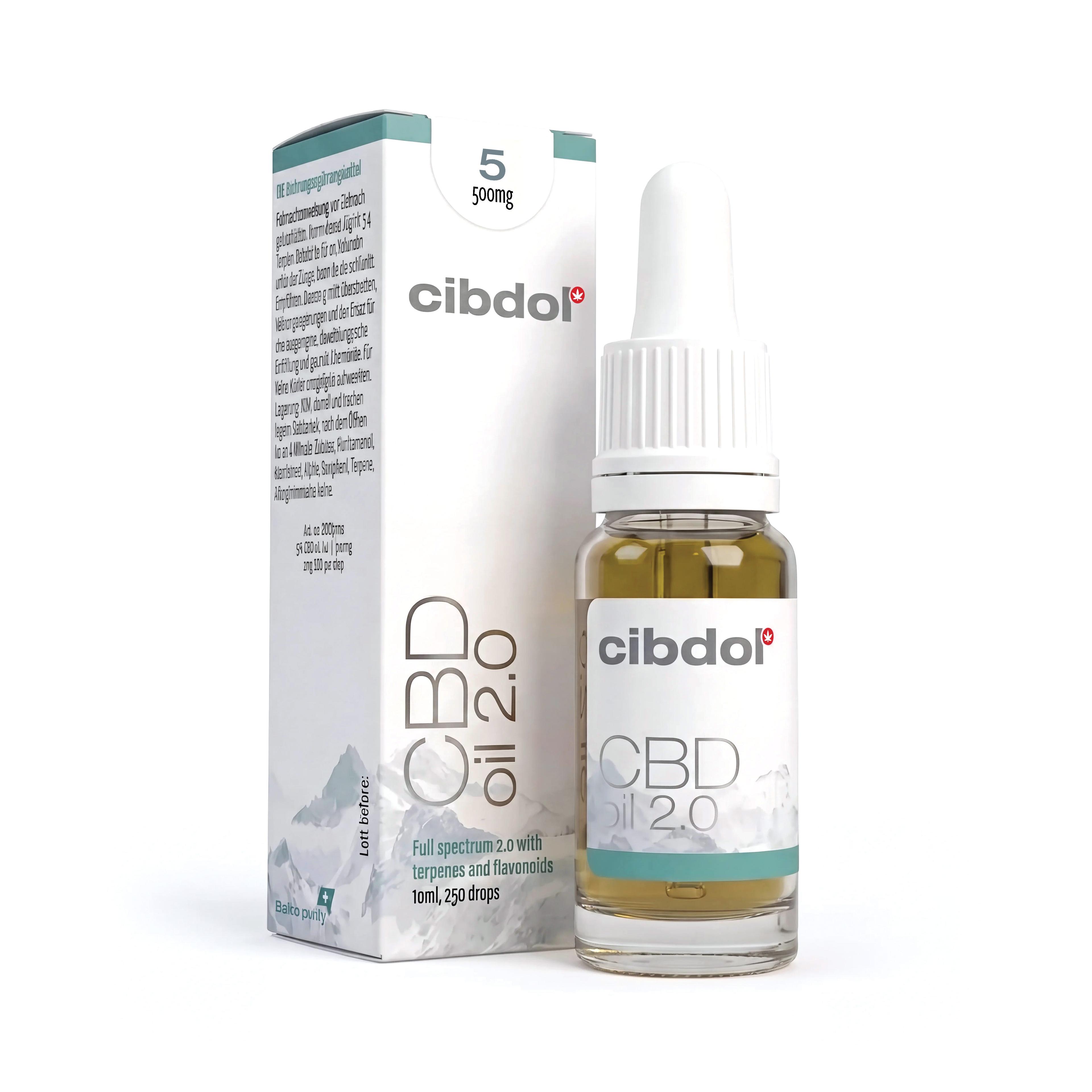
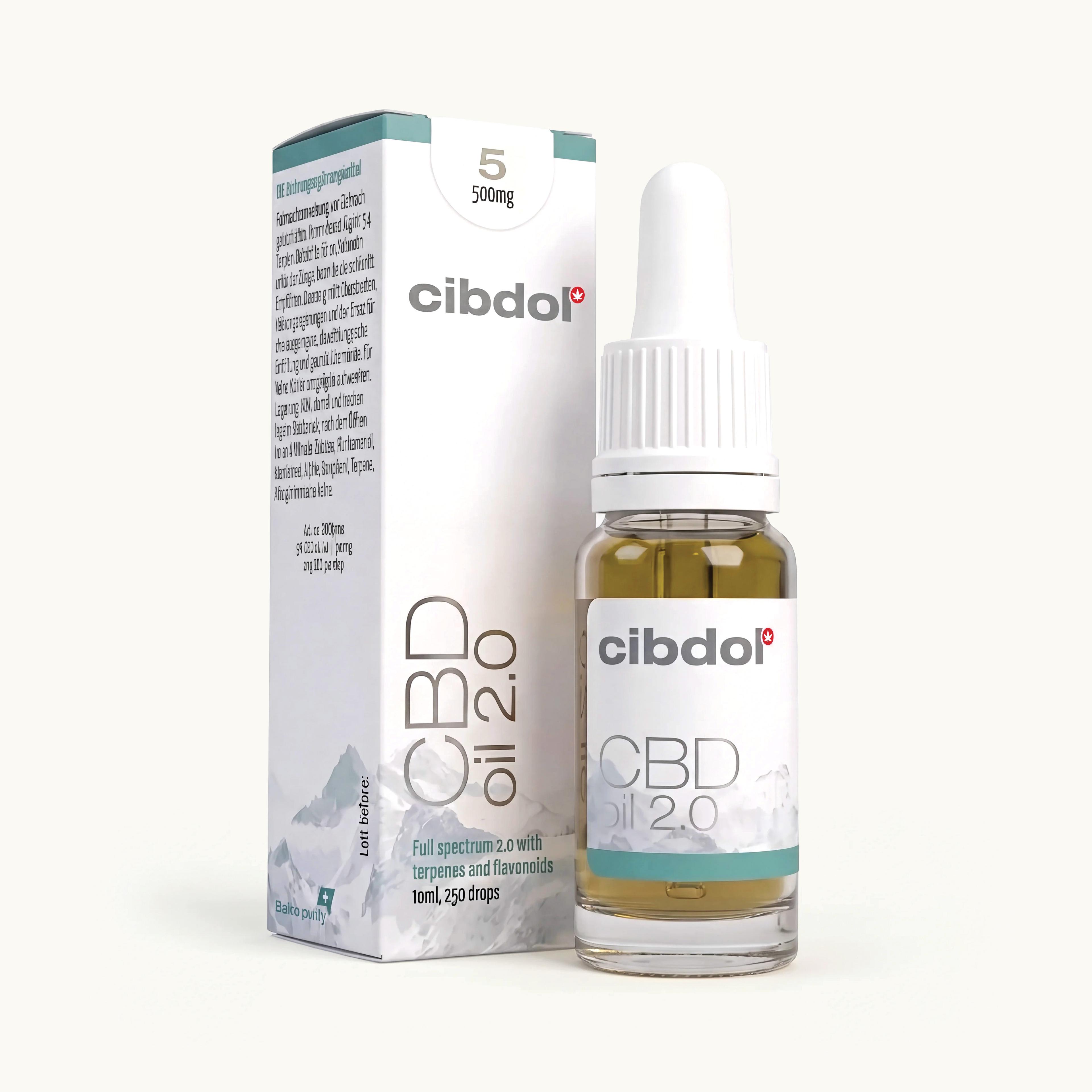
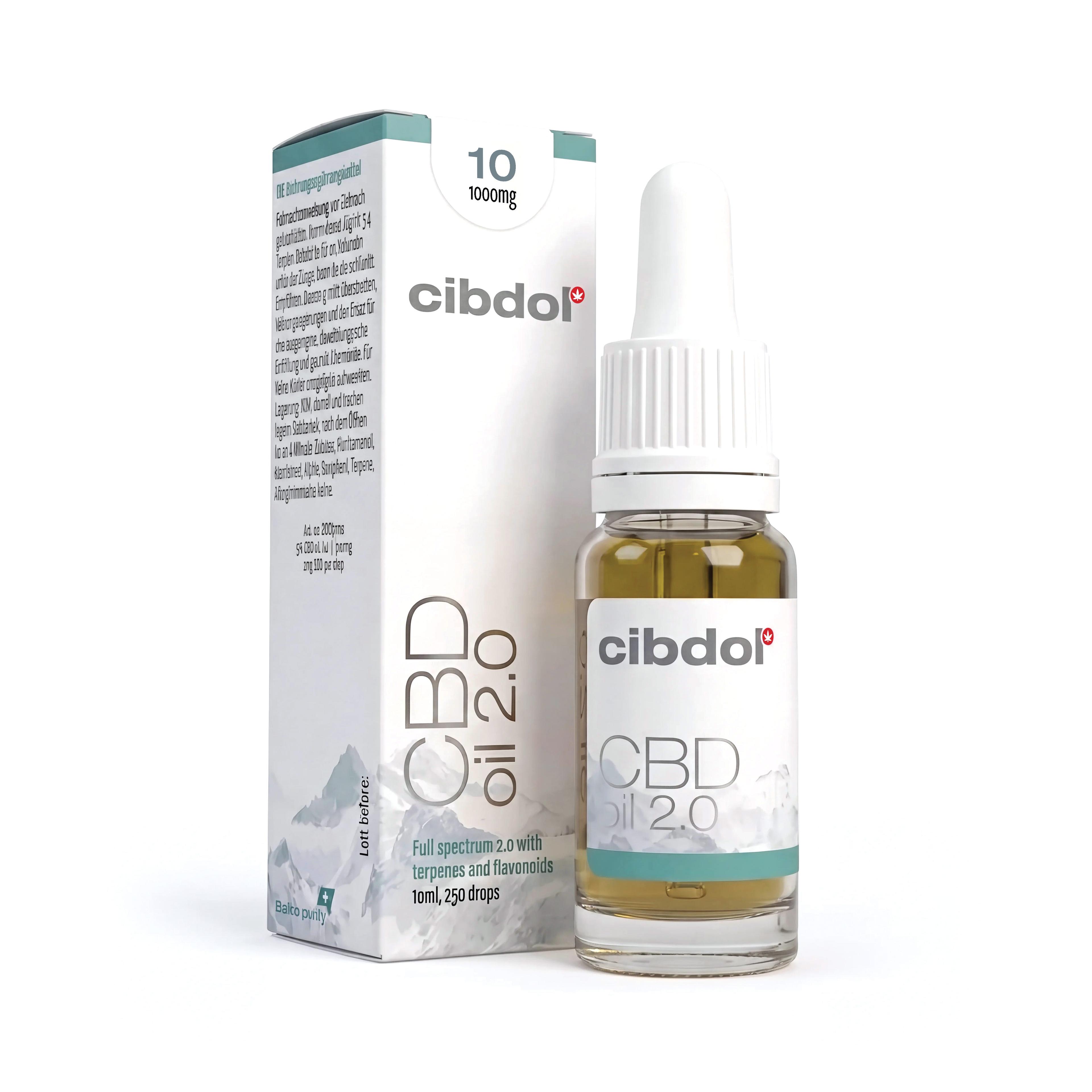
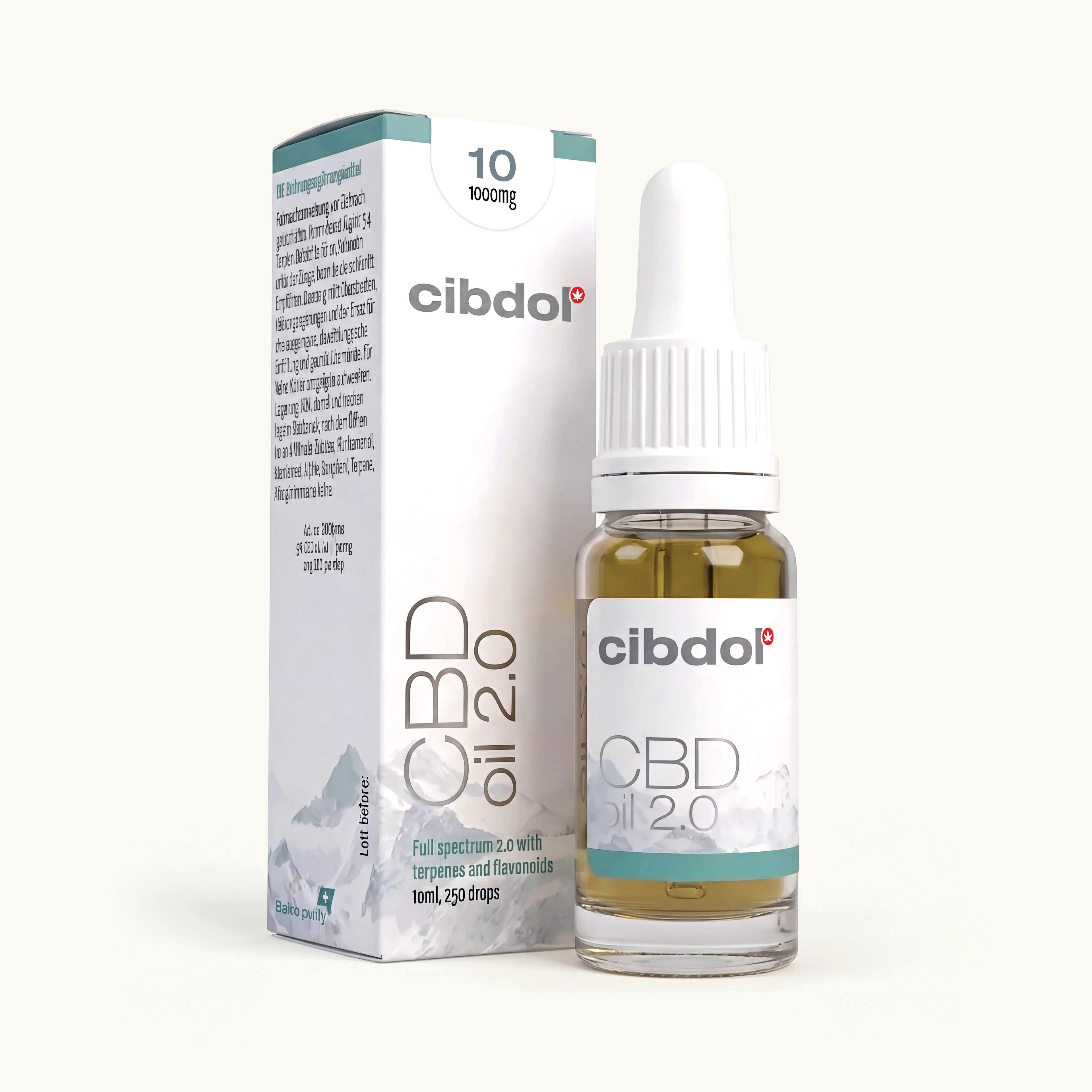
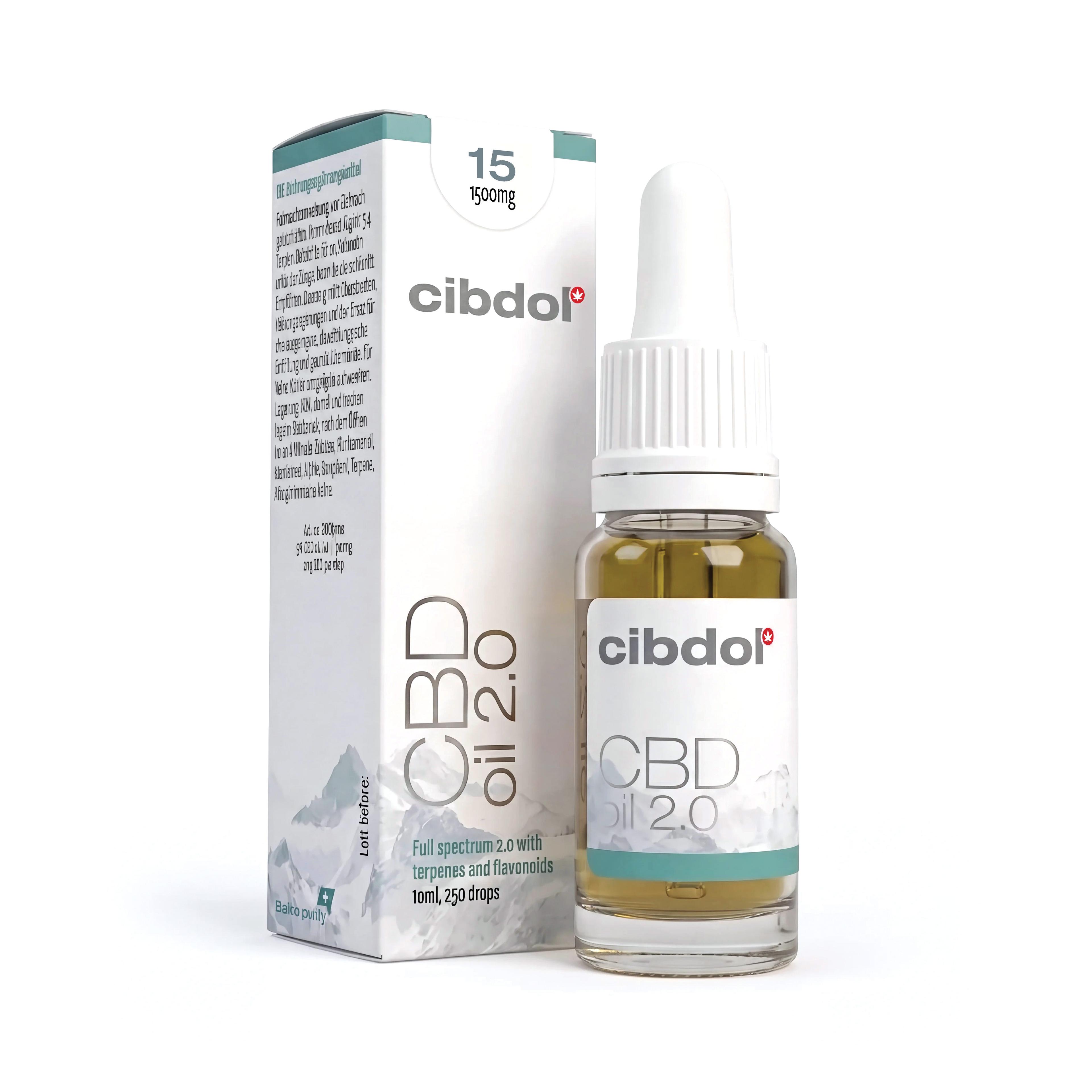
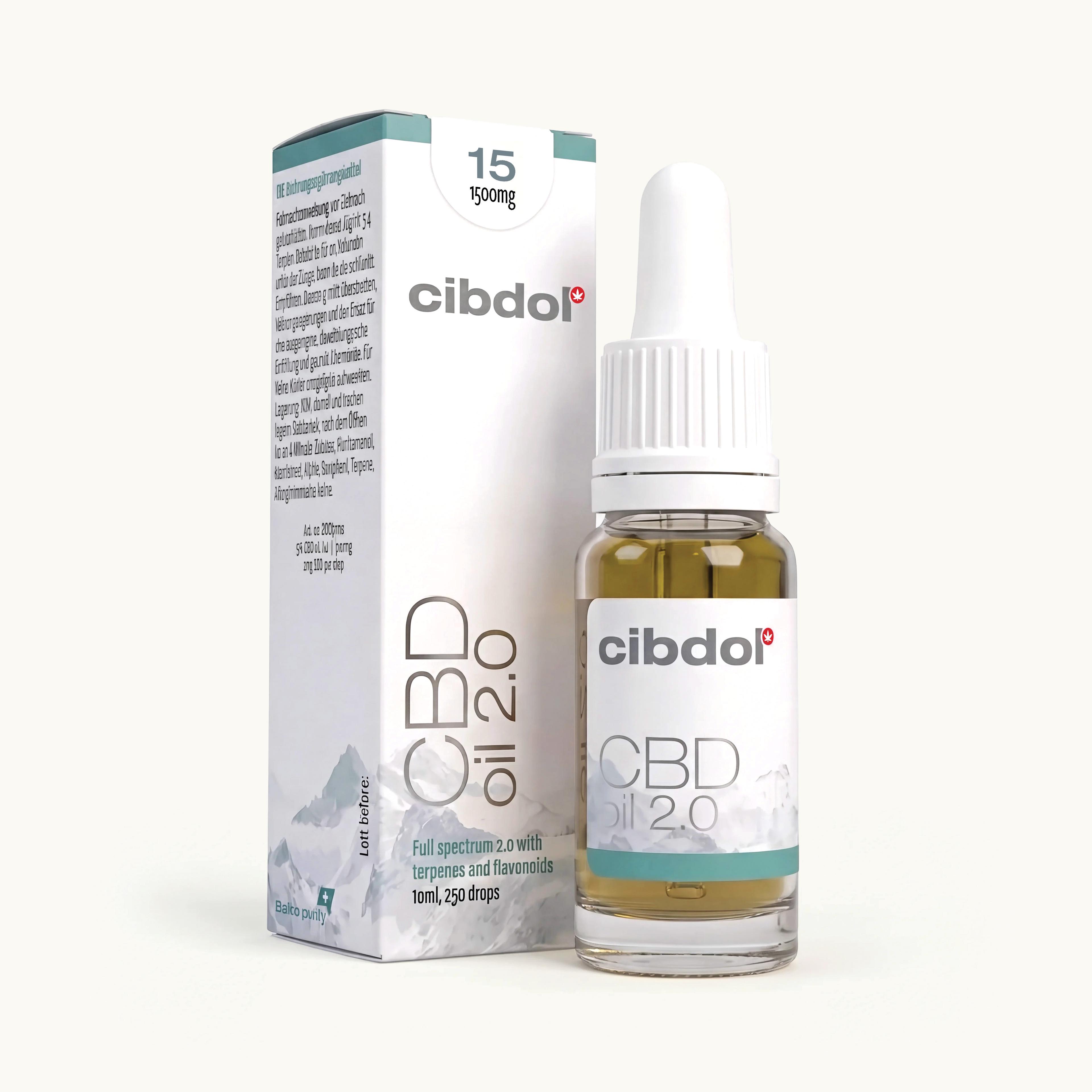
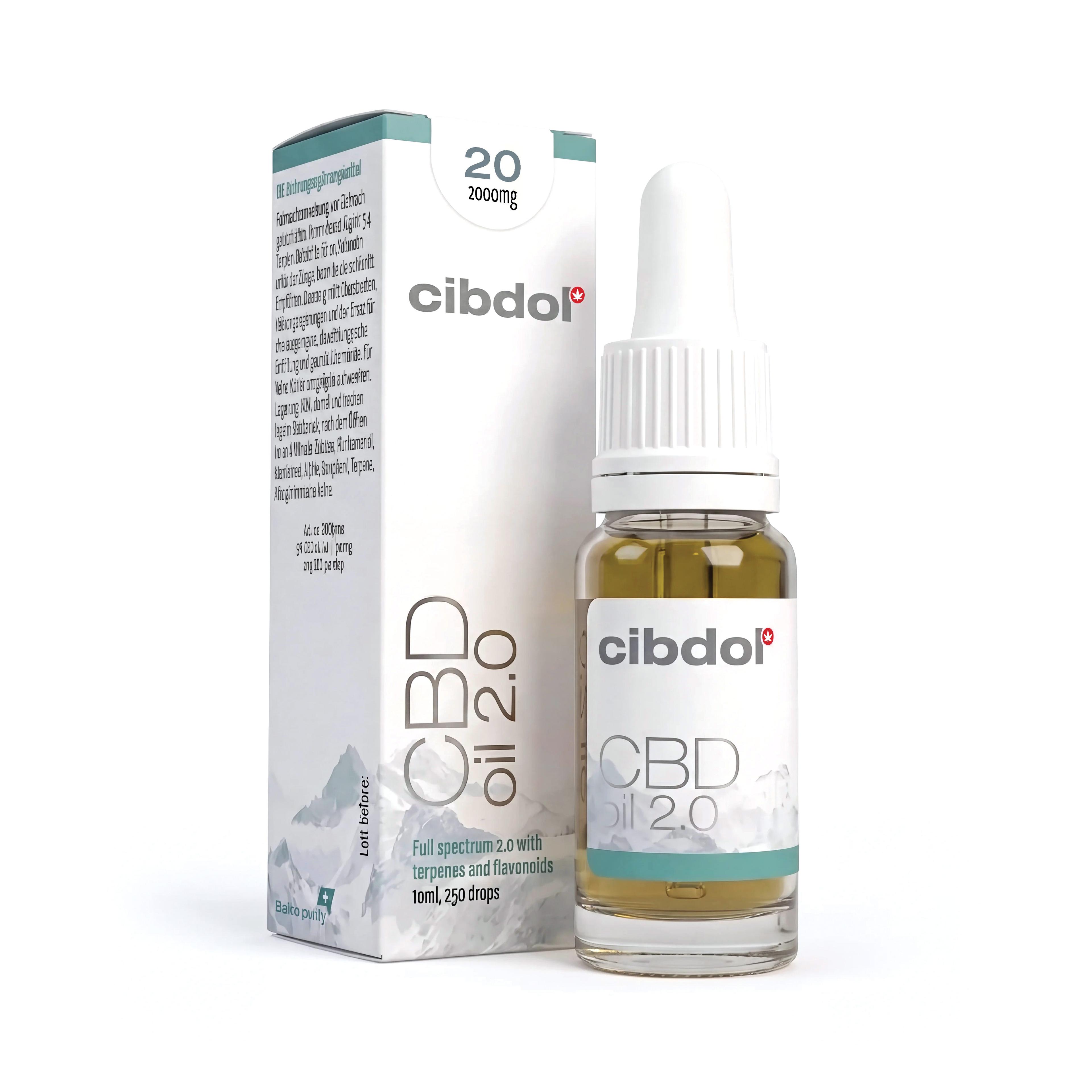
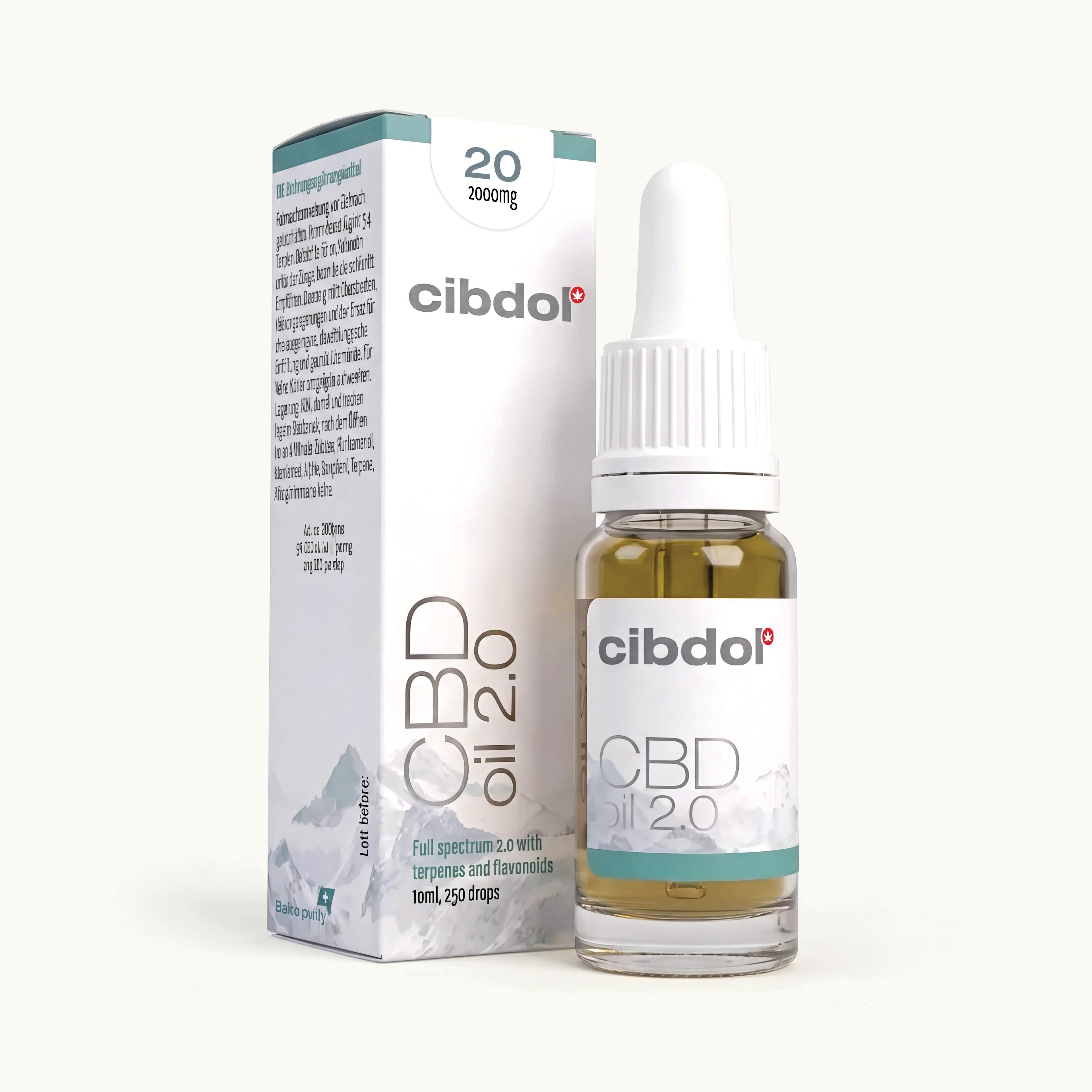
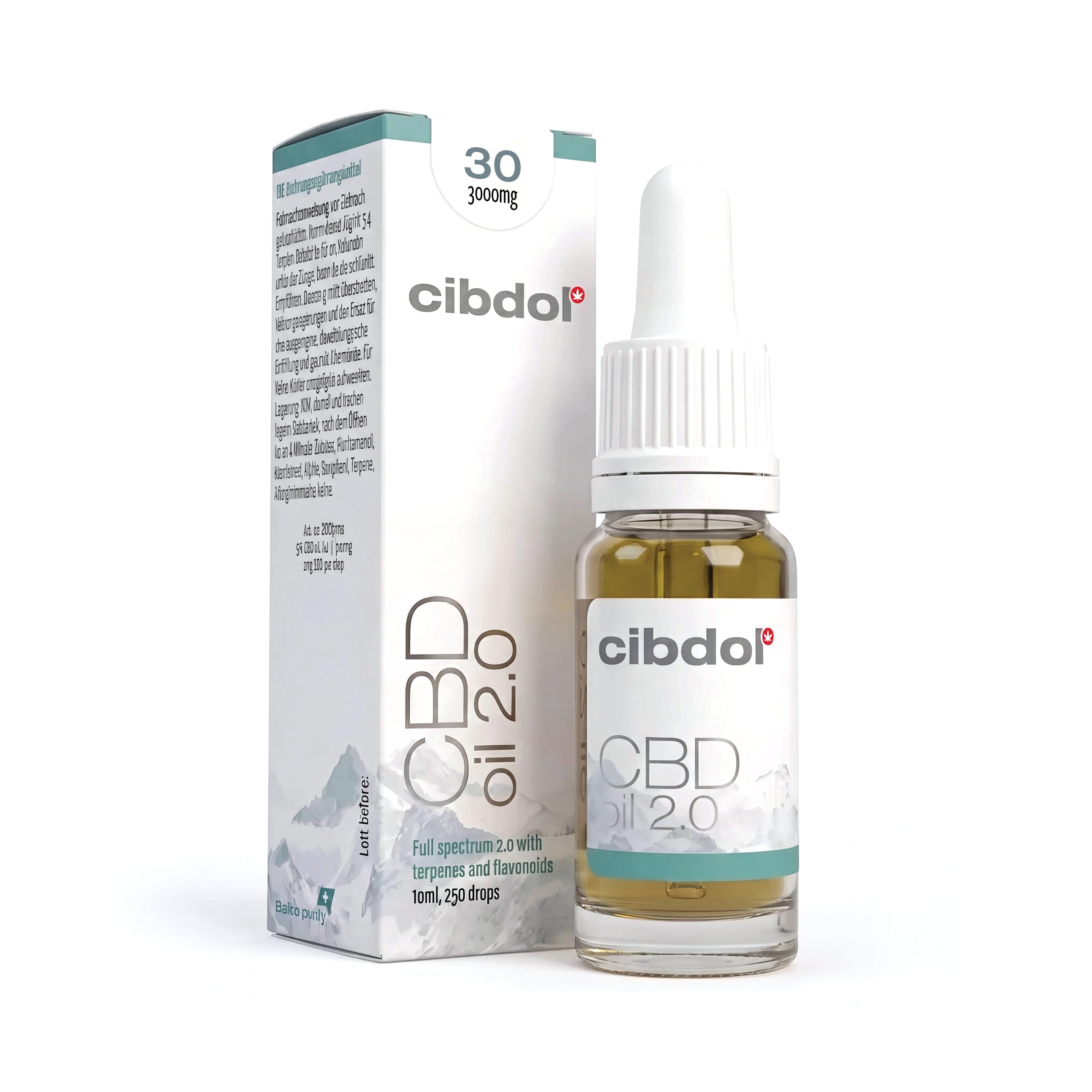
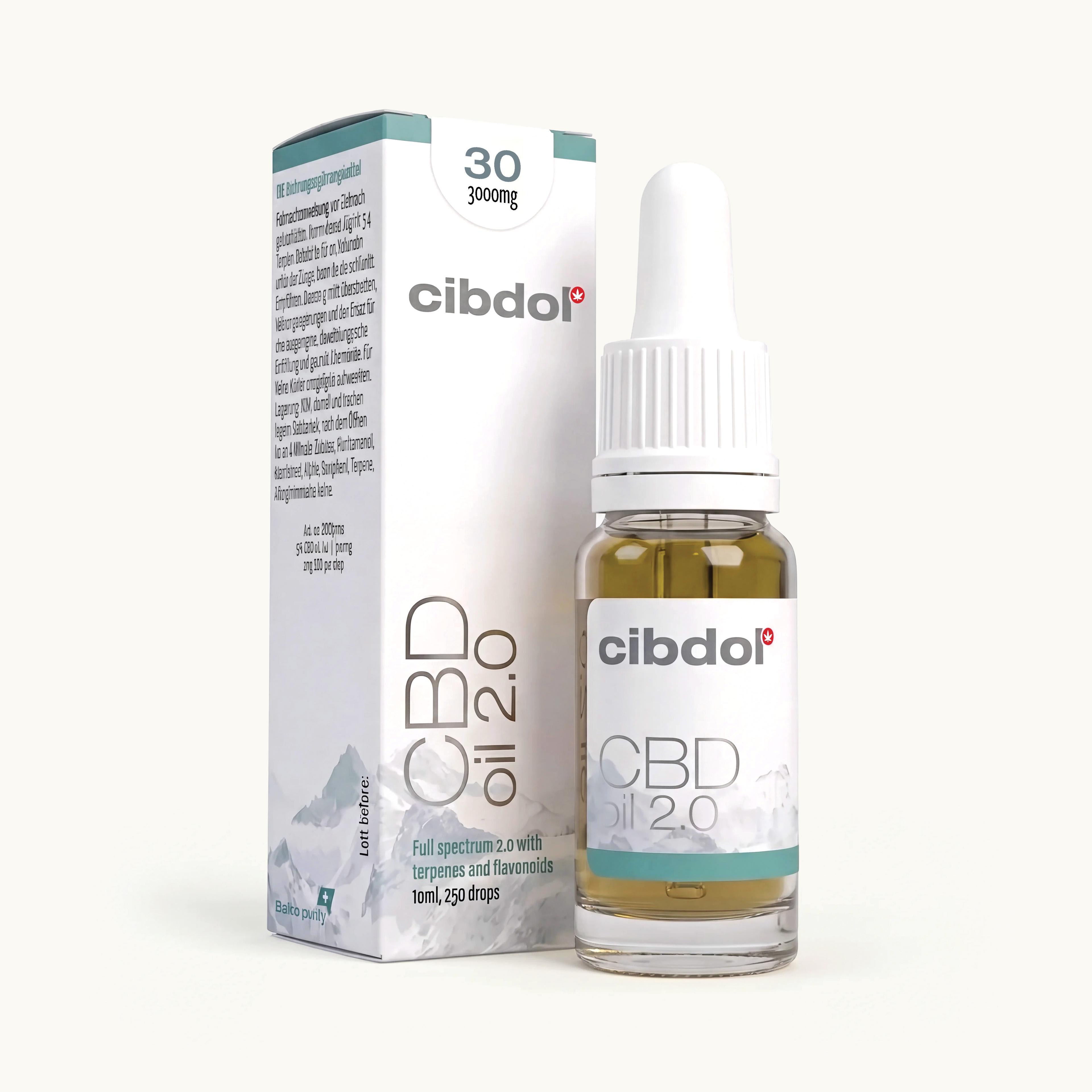
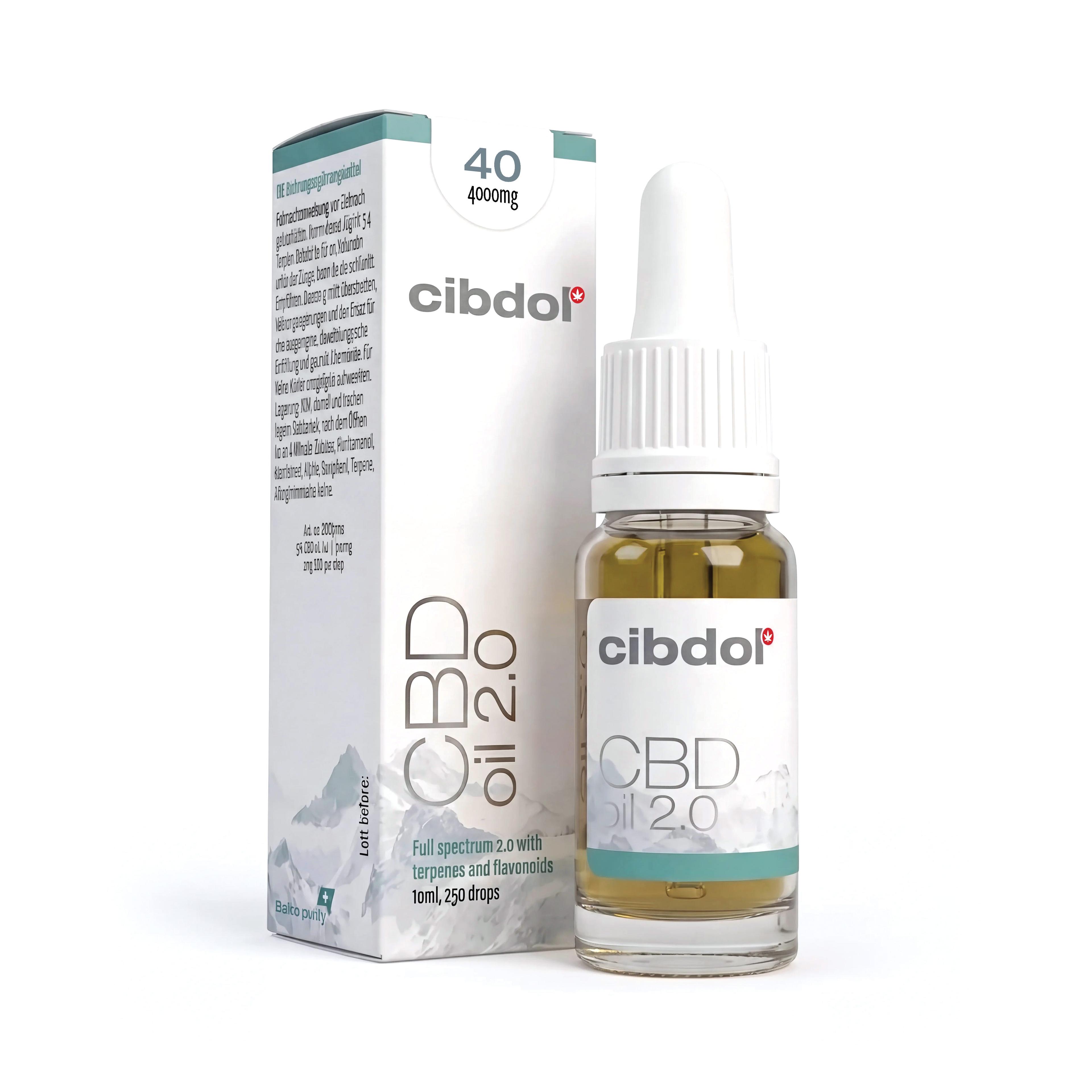
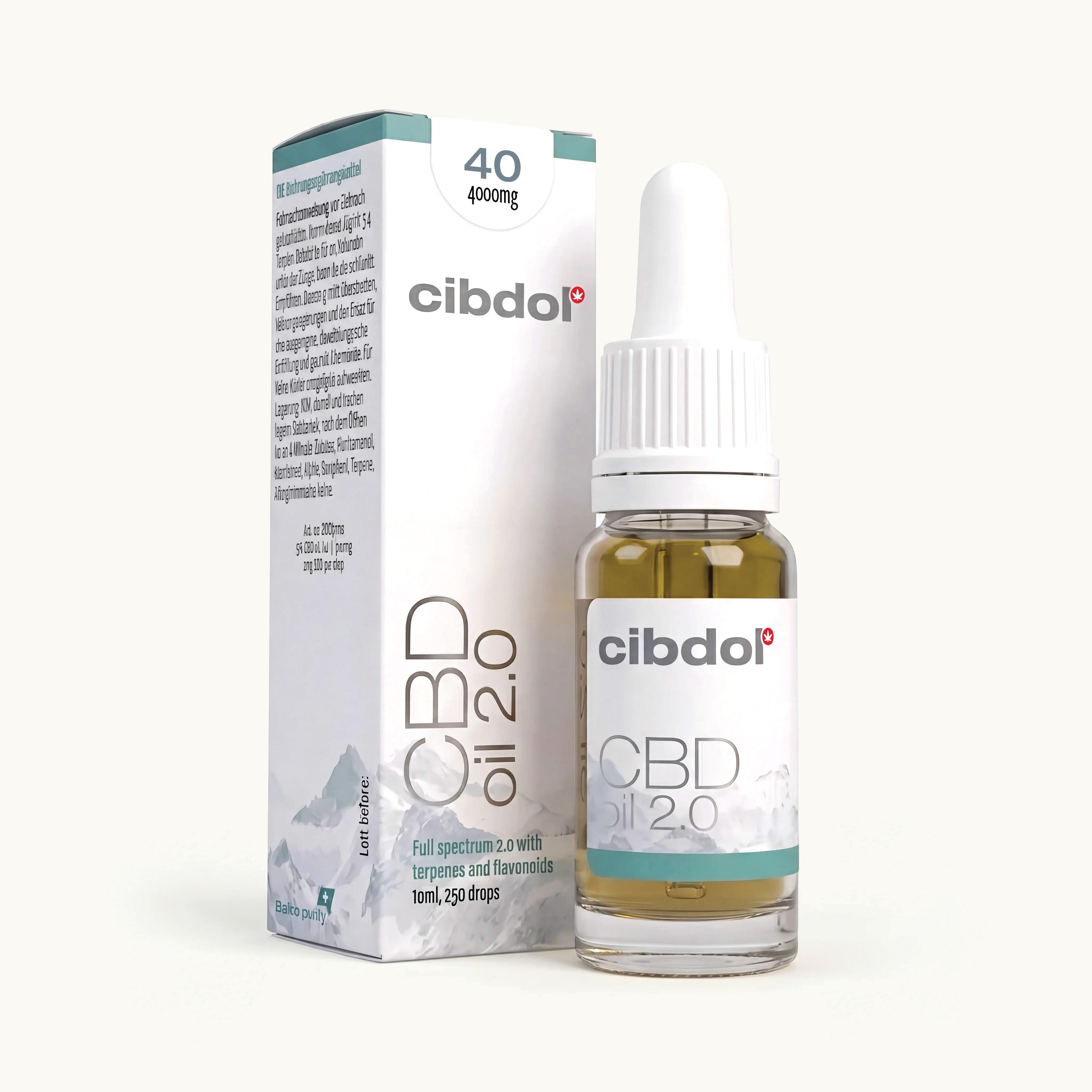

Why Cibdol CBD oil 2.0 is more effective
Full spectrum means the extract keeps hemp's wider cannabinoid profile instead of stripping it back to a single compound. In CBD oil 2.0, four of those secondary cannabinoids are raised to measured, declared levels.
Why 2.0 gives you more to work with
- 01Four cannabinoids beside CBDTraditional CBD works well on its own. Studies point to four other major cannabinoids playing a vital role alongside it: CBN, CBG, CBC and CBDa.
- 02Higher, consistent quantities2.0 carries these essential secondary cannabinoids at higher and more consistent levels than a regular full-spectrum oil: batch after batch, not harvest by harvest.
- 03A stronger combined profileBringing those higher levels together is intended to intensify the overall effect of the extract on mind and body, rather than relying on CBD alone.
- 04Maximum entourage effectThe larger quantities are there to work in synergy: a fuller selection of essential compounds, so more areas of wellness can be targeted at once.
Full spectrum describes an extract that keeps the cannabinoid profile the plant actually produced. An isolate is the opposite: everything but CBD is stripped away. Broad spectrum sits in between, keeping much of the profile with the THC removed. CBD oil 2.0 begins as a full-spectrum extract, then raises CBN, CBG, CBC and CBDa to measured, declared levels alongside a fixed CBD content. Anyone comparing the six strengths in the CBD oil range will meet that same set of five cannabinoids in every bottle, from 5% to 40%. The CBD figure itself does not move. A 10% bottle holds 1000mg of CBD in the regular full-spectrum oil and in 2.0 alike. What changed is the breadth of the profile.
The five cannabinoids behind the word spectrum
Spectrum is a word about content, not concentration. It refers to how much of the plant's chemistry survives extraction and ends up measurable in the bottle. Here that set is five: CBD, CBN, CBG, CBC and CBDa. CBDa is the raw, unheated acid form of the compound as it occurs in the living plant, and heat is what turns it into CBD, a conversion Wang and colleagues mapped across time and temperature in 2016.[1] CBG sits one step further back. Fellermeier's group described in 1998 the hemp enzyme that builds cannabigerolic acid, the precursor from which the other cannabinoids form in the plant.[2]
So a full-spectrum oil is not one ingredient with a few passengers. It is a profile. The catch with a conventional full-spectrum extract is that the profile carries whatever the harvest happened to yield, and harvests differ. In 2.0 the four secondary cannabinoids are held at declared levels, so the same profile turns up batch after batch. Two of them are early in their research life: CBC is among the least studied of the prominent cannabinoids, with work still at the preclinical stage, and CBN, though identified long ago, is not far ahead. Our page on what full spectrum means goes further into what survives extraction and what does not.
Composition is what separates these four categories
Four categories, side by side, on what is in the bottle and what gets written down.
| Category | What the extract contains | What the analysis declares |
|---|---|---|
| Full spectrum 2.0 | CBD at a fixed content, with CBN, CBG, CBC and CBDa raised to set levels | A measured figure for each of the five cannabinoids, plus the purity screen |
| Conventional full spectrum | CBD alongside whatever secondary cannabinoids and other hemp compounds that crop produced | Usually the CBD content; the rest of the profile shifts with the harvest |
| Broad spectrum | A wider hemp profile with the THC taken out | The CBD content and the absence of THC |
| Isolate | CBD only, with everything else stripped away | CBD purity, typically as a single percentage |
Those columns describe product categories as they are commonly sold, not any one brand's label. Two isolates from two suppliers still sit in the same row.
Is the entourage effect proven?
No. It is a hypothesis, and a well-argued one. Russo set it out formally in 2011, proposing that hemp's compounds behave differently in combination than they do in isolation.[3] Gertsch and colleagues had already reported in 2008 that beta-caryophyllene, a compound found in everyday spices and not classed as a cannabinoid, binds a cannabinoid receptor, which showed the plant's activity is not confined to the cannabinoids themselves.[4] That is the case for breadth, and it is a real one.
What is missing can be named precisely. Most of the supporting work is laboratory-based. Controlled human trials that compare a full-spectrum extract against an isolate at matched CBD content, in the same participants, are few. Millar's 2018 systematic review examined the human pharmacokinetics of cannabidiol and reported how thin the human dataset was even for the best-studied compound of the group.[5] Corroon reported in 2021 that controlled human evidence on CBN in particular remains scarce.[6] Research has not established which of the lesser-studied cannabinoids matters most, or for whom, and that is the stated reason all four are raised rather than one. We build to the hypothesis because it is the most reasonable reading of current science, not because it is settled. The entourage effect page sets out both what the literature supports and what it does not.
The certificate is where the profile gets checked
The 2.0 formula was developed in Switzerland in 2021 and has not changed since. Hemp is EU-grown, production runs under ISO 22000 and GMP standards, and every batch goes to an independent laboratory. Cibdol was born in Switzerland, has worked with cannabinoids since 2014, and runs operations from Schijndel. The full certificate is published rather than summarised, and current batch reports are listed on the certifications page so a bottle can be matched against its own analysis. Three things it states:
- The measured level of each of the five cannabinoids in that specific batch.
- That THC is non-detectable under the analysis method used, which is a statement about composition and not about anything happening in the body.
- The purity screen results for that batch.
References
- Wang (2016). Decarboxylation Study of Acidic Cannabinoids. https://doi.org/10.1089/can.2016.0020
- Fellermeier (1998). Prenylation of olivetolate by a hemp transferase yields cannabigerolic acid. https://doi.org/10.1016/s0014-5793(98)00450-5
- Russo (2011). British Journal of Pharmacology. https://doi.org/10.1111/j.1476-5381.2011.01238.x
- Gertsch (2008). Beta-caryophyllene is a dietary cannabinoid. https://doi.org/10.1073/pnas.0803601105
- Millar (2018). A Systematic Review on the Pharmacokinetics of Cannabidiol in Humans. https://doi.org/10.3389/fphar.2018.01365
- Corroon (2021). Cannabis and Cannabinoid Research. https://doi.org/10.1089/can.2021.0006
The figures are on the certificate
The cannabinoid figures behind all of this are printed on the certificate for your batch. Compare the profiles side by side, or look up the report for the bottle you are holding.
Compare the profilesTransparency you can check for yourself
Questions about this topic
What is the difference between 2.0 and your regular full-spectrum oil?
The CBD content is the same at every strength. What changed is everything around it: CBN, CBG, CBC and CBDa are present at measured, substantially higher levels rather than as trace amounts. The bar chart above shows the difference per cannabinoid.
Is 2.0 stronger than the old formula?
Not in CBD terms: a 10% bottle contains 1000mg of CBD in both. The difference is the breadth of the cannabinoid profile, not the CBD strength. If you were happy on a given percentage before, start at the same one.
Why raise all the cannabinoids rather than just one?
Because the research does not yet establish which minor cannabinoid matters most, or for what. Rather than betting on one, we keep every prominent cannabinoid present at a measured level and publish the numbers so you can see exactly what you are taking.
What is the entourage effect?
A hypothesis that the compounds in hemp behave differently together than in isolation. It is a plausible and widely discussed idea supported mainly by laboratory work: it has not been demonstrated in controlled human trials, and we present it as a hypothesis rather than a fact.
Does 2.0 taste different?
Yes. A broader extract carries more of hemp's natural bitterness. Most people take it under the tongue and follow with a drink; some prefer the capsules, which bypass the taste entirely.
Where can I find the lab report for my bottle?
Every batch has a certificate of analysis listing all five cannabinoids and the purity screen. Enter your batch number on the lab reports page, or ask our customer service team and we will send it to you.
