CBD and acne: what the sebocyte research measured
Definition
Acne involves sebum, the oil produced by the sebaceous glands, and one 2014 laboratory paper recorded a change in sebum production when human sebocytes in culture were exposed to cannabidiol. That is a cell-culture finding, not a clinical one. No controlled human studies have established cannabidiol for acne, which makes this an open research question rather than a settled one.
Half past seven, and a jar of cream
The mirror, the phone, the claim
Bathroom light at half past seven is honest to the point of rudeness. Two new spots along the jawline, roughly where last month's were. The kettle is boiling and you're scrolling with one hand.
Somebody on a forum writes that a CBD cream cleared their skin in three weeks. Somebody two replies down says it did nothing at all. Both sound completely sure of themselves. Neither points to anything you can read.
So the question sits there next to the jar. Is there actual research behind this, or is it just people talking?
There is research. It's narrower than the internet suggests, and knowing how narrow turns out to be more useful than any before-and-after photo.
Where the claim comes from
Follow the CBD-and-acne conversation back far enough and it tends to land on one paper: Oláh and colleagues, 2014 [2]. That is the concrete laboratory finding on record for this question. One study. Everything else in the conversation is built on top of it.
The model was human sebocytes in culture. Sebocytes are the cells of the sebaceous glands, the ones that produce sebum, the oil that keeps skin supple and that also collects in a blocked pore. In this experiment those cells were grown outside the body, in a dish, under lab conditions.
The exposure was cannabidiol. The outcome measured was sebum production, and that outcome changed [2].
That's the whole finding, stated plainly. Cells responded, and the response was measurable. On the record, the interpretation goes exactly that far: a measurable sebocyte response gives researchers a reason to keep working on the question. It is not the same thing as a result on somebody's face.
One experiment, read line by line
A cell-culture design does one job well. It fixes a single cell type, a single exposure and a single measured outcome, and strips out everything else. That's why the result is clean, and it's also why it's limited. Skin on a face isn't one cell type in a dish. There's a barrier layer, a blood supply, hormones, resident bacteria, immune cells, and a formulation that has to get through the first of those to reach anything at all.
Around that single experiment sits a broader descriptive literature on cannabinoid signalling in skin, collected by Tóth and colleagues in 2019 [1]. Descriptive is the operative word. It maps what has been observed and where receptors and signalling molecules have been described. It doesn't count lesions on volunteers.
Laid out as separate lines, the record looks like this.
- The model was human sebocytes, grown in culture rather than in living skin [2].
- The exposure was cannabidiol, applied to those cells under controlled laboratory conditions [2].
- The measured outcome was sebum production, and a change in it was recorded [2].
- The interpretation on record is modest: sebocytes respond measurably to cannabidiol, which is a rationale for further work [2].
- The surrounding literature is descriptive work on cannabinoid signalling in skin, not clinical work [1].
- What is absent are controlled human studies. There are none to cite, so any page that speaks as though the matter is decided is leaning on research nobody has published.
- The accurate label for the whole thing, until trials are published, is an open research question.
The distance from a dish to a face
First, small human studies
Preclinical work like the 2014 experiment is a starting point, and the path out of it is well worn. The next step isn't a large trial. It's a small one, and it asks unglamorous questions.
You need a defined formulation before anything else. Not "CBD", but a specific cream or serum at a specific cannabinoid content, in a specific base, made the same way each time. Then two things get checked. Does the compound reach the target tissue when the product is applied to skin, and does it behave predictably from person to person and from day to day. A formulation that reaches nothing, or that behaves differently every time, cannot be tested for anything useful afterwards.
For cannabidiol and acne, that step has not been run and published. This is precisely where the gap between cell culture and the clinic sits.
Then trials big enough to read
After the small studies come randomised controlled trials. Participants are allocated by chance, one group gets the formulation, another gets a comparison, and the size of the study is chosen for a reason.
That reason is noise. Any repeated measurement in people varies on its own, for reasons that have nothing to do with what's being tested. In a study with too few participants, a difference between groups can come from that variation alone, and no amount of careful writing afterwards can separate the two. Enough participants, and a real effect starts to stand apart from the wobble.
No trials of that kind establishing cannabidiol for acne exist. That sentence is dull, and it is the most important one on this page.
Two papers, four columns
| Source or step | What it is | What it recorded | What it leaves open |
|---|---|---|---|
| Oláh and colleagues, 2014 [2] | A laboratory experiment on human sebocytes kept in culture, outside the body. | Exposure to cannabidiol, with sebum production as the measured outcome, and a change in that outcome. | Whether anything comparable happens in living skin, on a face, under everyday conditions. |
| Tóth and colleagues, 2019 [1] | Descriptive literature on cannabinoid signalling in skin, gathered in one place. | What had been described about cannabinoid activity in skin tissue up to that point. | Any clinical endpoint. A descriptive review measures the literature, not patients. |
| Small human studies | The step that normally follows a preclinical signal: a defined formulation tested in a small group. | Nothing yet for this question, because the step has not been run and published. | Whether a given cream reaches the target tissue, and whether it behaves predictably. |
| Randomised controlled trials | Larger studies with a comparison group, sized so a real effect can be told apart from ordinary variation. | Nothing yet. There are no trials establishing cannabidiol for acne to cite. | The central question itself, which is why it stays an open research question. |
| Claims that the case is closed | Forum certainty or marketing copy running ahead of the published record. | Nothing checkable. Whatever they rest on is unpublished, so you cannot go and read it. | Everything, since a source nobody can read settles nothing at all. |
| Cibdol creams and serums | Cosmetic products under EU and UK rules, with published ingredient lists. | Cannabinoid content, tested, so a label can be checked against an analysis. | Anything about acne. A cosmetic classification is a legal category, not evidence. |
What a cosmetic is, by definition
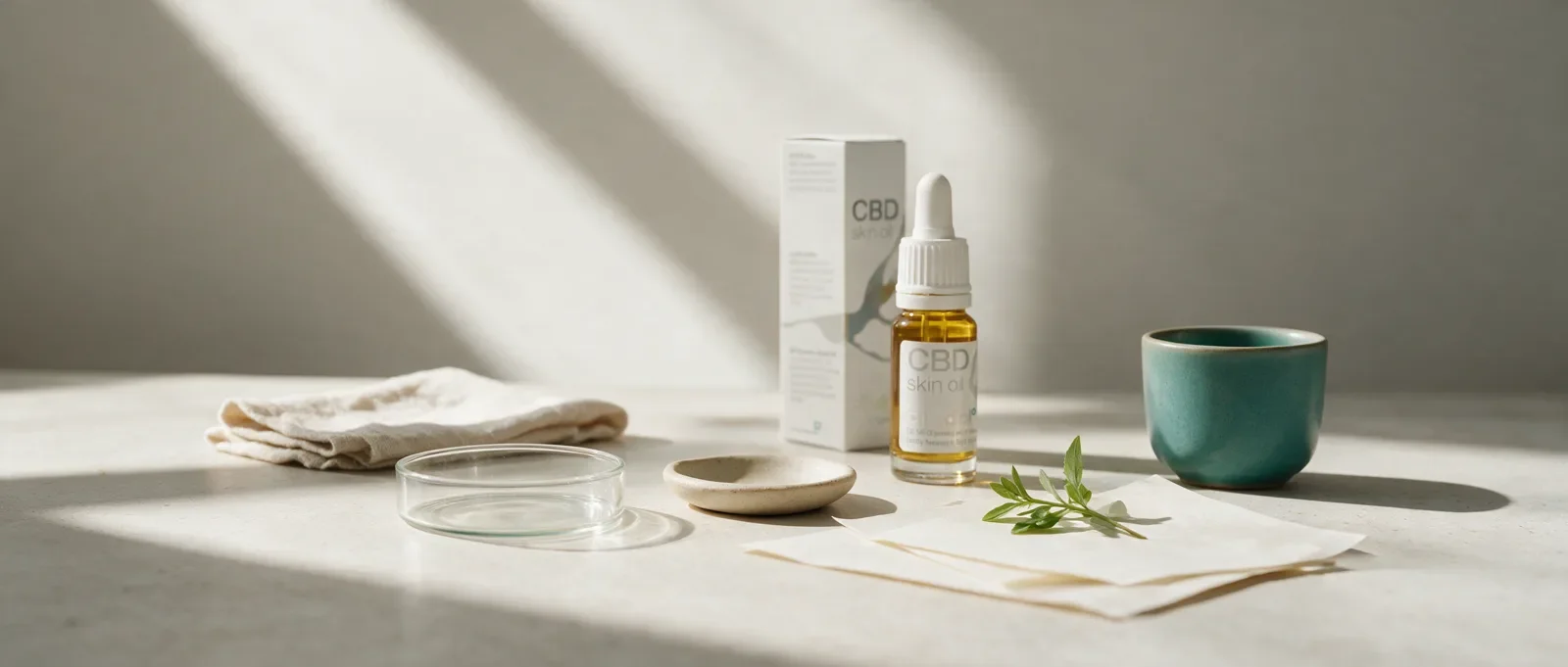
This part confuses people, and it's worth two minutes. In the EU and the UK, a cosmetic product is defined by function, not by ingredient. The functions are cleansing, perfuming, changing appearance, protecting, and keeping skin in good condition. That's the list.
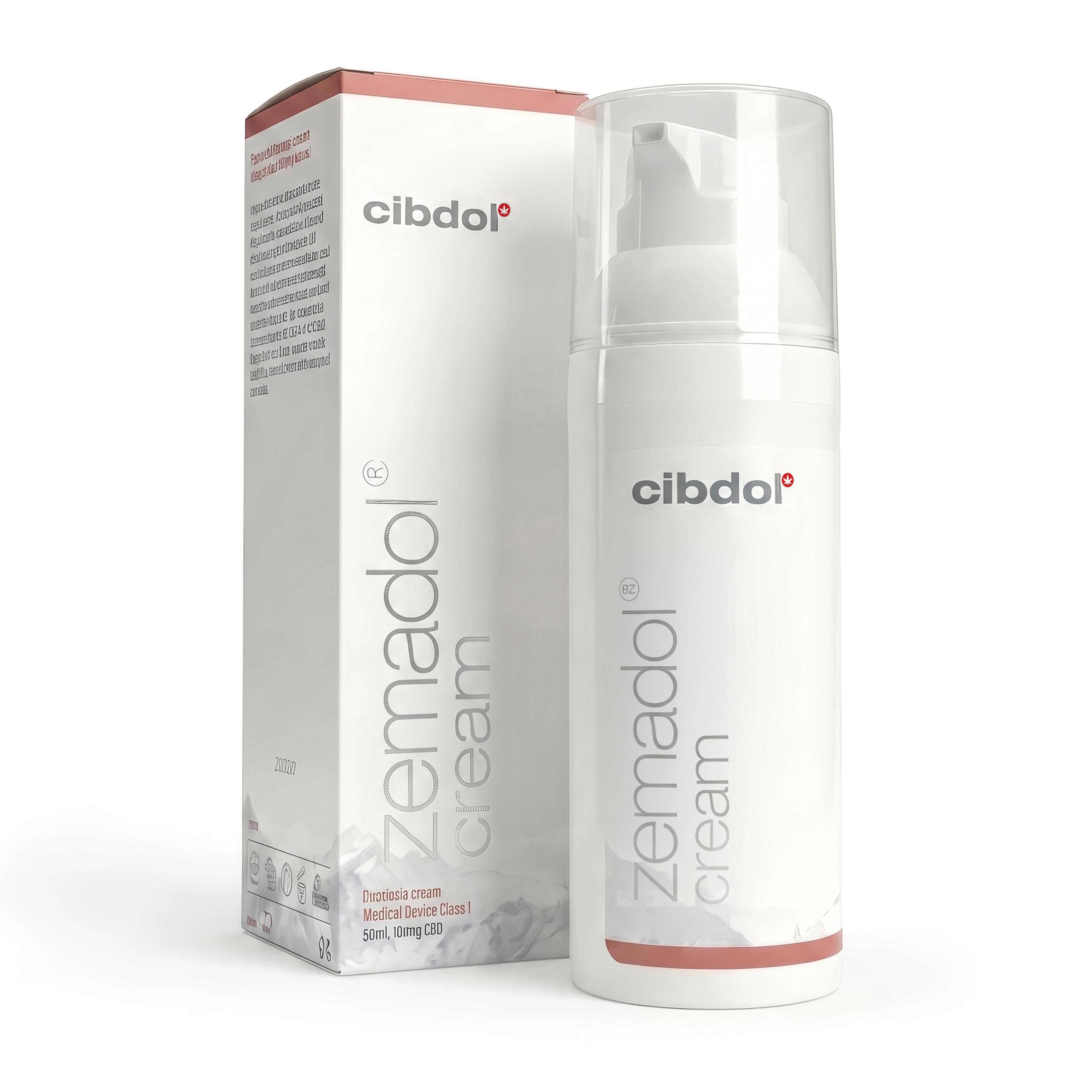
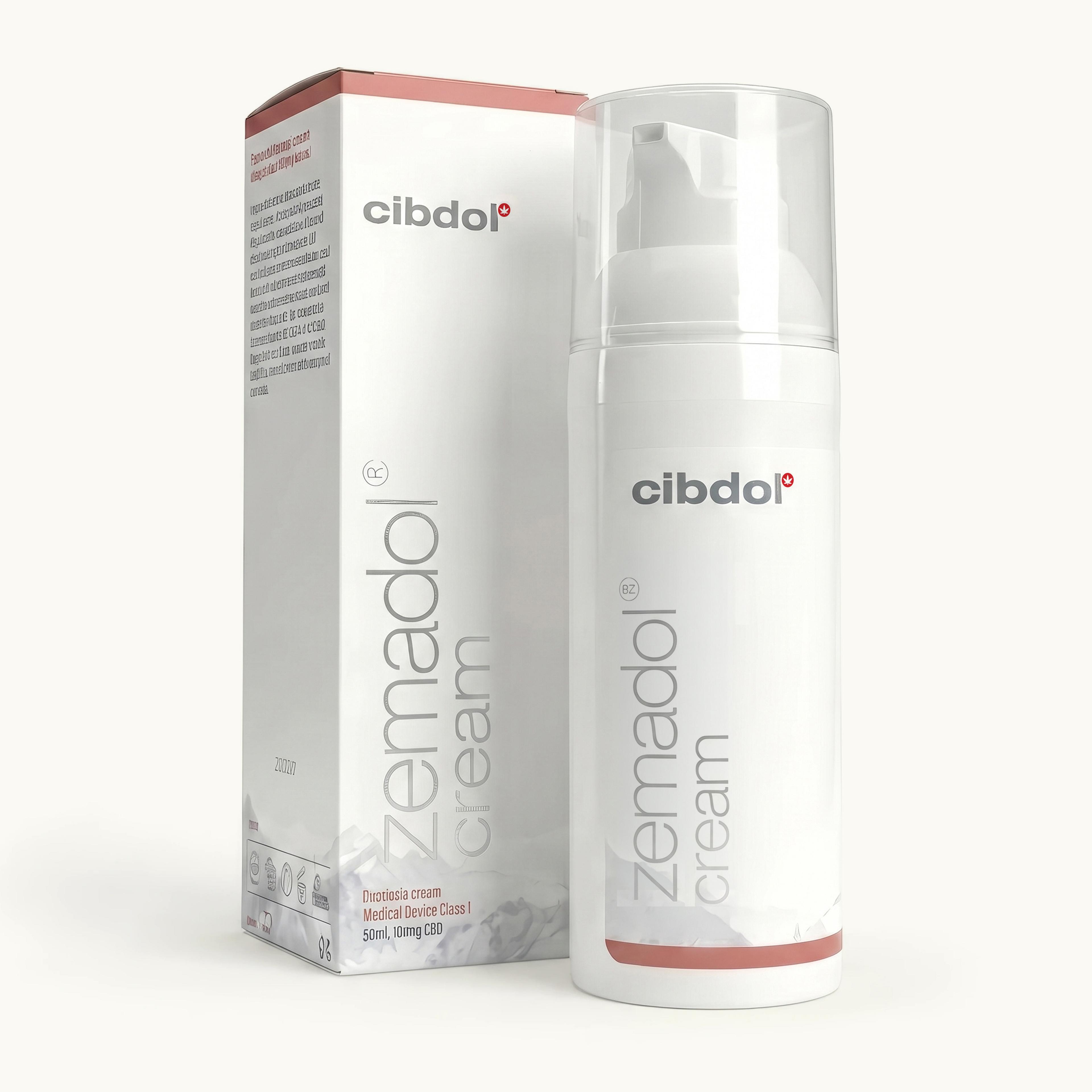
A cosmetic isn't a mild version of a medicine. It's a different category with a different job and different paperwork. Cibdol's CBD skincare range, the creams and serums, sits in that category. So when a cream contains cannabidiol, the classification tells you what kind of product it is. It says nothing about clinical evidence, in either direction.
Ingredient list, and content that was tested
What you can check on a cosmetic is what's in it. The ingredient lists are published, and the cannabinoid content is tested rather than asserted, so the figure on the label has an analysis behind it.
That's a narrow kind of certainty, and it's the kind worth having. You know which base the formula uses. You know how much cannabidiol is in it. You know the product is a cosmetic under EU and UK rules. Those three facts are separate from the research question, and mixing them up is how most of the confusion online gets made.
An open research question, and what that means
Until human trials are published, "an open research question" is the accurate description. Not promising. Not disproven. Open.
So if a page tells you cannabidiol clears acne, ask what it's citing. There are no controlled human studies to point to. Anything more confident than the 2014 cell work [2] and the descriptive skin literature [1] is drawing on research that hasn't been published, which means you have no way of judging it.
Persistent or painful acne is worth an appointment with a doctor or a dermatologist. That conversation has options behind it, and a cosmetic doesn't stand in for it.
One standard across oils and creams
Since 2014, Cibdol has worked to the same standard whether the product is an oil or a cream. State what's inside. Cite the research that exists. Mark the point where the evidence stops.
On this subject, that point arrives early. One line of cell-culture work, a body of descriptive literature on cannabinoid signalling in skin, and a clinical gap nobody has closed yet. When trials are published, this page changes. That's how it should work.
Frequently Asked Questions
4 questionsDoes CBD help with acne?
Why isn't a cell-culture result enough?
Are Cibdol CBD creams and serums medicines?
Some websites say the research is settled. What should I make of that?
About this article

Luke Sholl has been writing about cannabinoids, CBD, and the broader benefits of nature since 2011. His background includes first-hand cannabis cultivation experience spanning the full seed-to-harvest lifecycle across so
This wiki article was drafted with AI assistance and reviewed by Luke Sholl, CBD & wellness writer. Editorial oversight by Joshua Askew.
Medical disclaimer. This content is for informational purposes only and does not constitute medical advice. Consult a qualified healthcare provider before use of any substance.
Last reviewed August 27, 2026
References (2)
- [1]Tóth, K.F. et al. (2019). Molecules. DOI: https://doi.org/10.3390/molecules24050918
- [2]Oláh, A. et al. (2014). Journal of Clinical Investigation. DOI: https://doi.org/10.1172/JCI64628
Related Articles
Can You Be Allergic to CBD? Two Papers, One Protein
Two published papers characterise a cannabis plant protein called Can s 3 as an allergen. Here is what they cover, what they leave open, and where the carrier oil and softgel shell fit in.
CBD and Ibuprofen: One Shared Liver Enzyme
Ibuprofen depends on a single liver enzyme, and cannabidiol has been described as an inhibitor of it. Here is what the 2011 and 2019 research documented, and where the record simply stops.
CBD That Mixes Into Water: The Actual Chemistry
The phrase exists because of one physical fact: cannabidiol and water do not mix on their own. Here is what emulsions and liposomes actually are, and where the published human measurements stop.
CBD Oil or Gummies: Where the Amount Gets Decided
The pipette leaves the counting to you; the gummy carton arrives with the number already on it. Here is what the published human data covers, and where it stops.
One Gummy, 25 mg, and What the Studies Measured
25 mg per gummy, ten in a pack, THC-free printed on the box. What happens after chewing is the part human trials are still measuring [1].
Travelling With CBD: Check Three Countries First
A country-by-country permission list for CBD is wrong by design. Here is the checking order instead: three countries per ticket, the airline's own conditions, and a clear rule for unresolved cases.
What Is A CBD Tincture? The Word And The Bottle
Tincture once described a method: extraction with alcohol. Here is how the word travelled to CBD dropper bottles, and what the ingredient list settles that the front label does not.
Combining CBD Products: Counting The Day's Milligrams
An oil in the morning and a capsule at night belong to the same daily figure, counted in milligrams. Here is how that arithmetic works, what the human pharmacokinetic literature covers, and why a topical sits in a column of its own.
Ways To Take CBD, Route By Route
A pipette bottle, a capsule and a chewable piece are not three sizes of the same thing. They sit on different routes, and published human reviews keep those routes in separate columns.
