Do Cannabinoids Pass Through The Skin?
Definition
Skin permeation means a molecule moving from the surface into and through skin tissue, measured in the lab as flux: mass per area of skin per unit of time. For cannabinoids, the most cited measurement of this comes from a 2004 in vitro study on human skin [1]. Separately, skin has been described as carrying its own cannabinoid receptors and signalling lipids [2].
Does anything get past the surface?
Rub a cream into your forearm and the visible part is easy. It soaks in, the shine goes, and the jar goes back in the cabinet. What happens underneath is the actual question, and the honest place to start is a laboratory rather than a bathroom mirror. Skin is built to keep things out. So does anything cannabinoid-shaped get through it at all?
In 2004, Stinchcomb and colleagues put human skin into a permeation setup and measured three cannabinoids crossing it: delta-8-tetrahydrocannabinol, cannabidiol and cannabinol, run side by side in the same model [1]. All three permeated, at rates that could be written down as numbers [1]. The rates were not equal [1]. Cannabidiol and cannabinol moved roughly ten times faster than delta-8-tetrahydrocannabinol in those conditions [1].
The quantity behind those figures is flux: mass per area of skin per unit of time, read once the movement settles into a steady state [1]. Plain version, it is a speed. Its value is comparison. Because one skin model carried all three molecules, the numbers can be laid next to each other and mean something [1]. The gap between them was attributed to the physicochemical behaviour of the molecules themselves, not to anything unique about cannabinoids as a group [1].
- Source type: an in vitro permeation study on human skin, the most cited one on this question dating from 2004 [1].
- Three compounds in one design: delta-8-tetrahydrocannabinol, cannabidiol and cannabinol [1].
- Measured quantity: flux, expressed as mass per area of skin per unit of time [1].
- Reporting point: steady state, once the rate stops climbing [1].
- Outcome: all three crossed, at measurable and unequal rates [1].
- The ratio worth remembering: cannabidiol and cannabinol about tenfold faster than delta-8-tetrahydrocannabinol, in those conditions [1].
A signalling system already in place
Crossing skin is one question. Meeting something on the way in is a different one. A 2009 review by Bíró and colleagues described an endocannabinoid signalling system inside skin tissue itself [2]. Not borrowed from elsewhere in the body. Local.
That review recorded cannabinoid receptors on keratinocytes, the cells that make up most of the outer skin, and also on sebaceous gland cells, hair follicle cells and resident immune cells [2]. The same paper noted that skin produces its own signalling lipids, anandamide and 2-AG, along with the enzymes that build them and the enzymes that break them down [2]. A full set of parts, in other words, rather than a single receptor sitting on its own.
A decade later, the 2019 review led by Tóth mapped cannabinoid signalling across a wider slice of skin biology, collecting laboratory work on cell growth, barrier function and immune activity [3]. Broader scope, same kind of material underneath.
Worth being exact about what these two documents are. Both are reviews, and what they gather is cell work and preclinical research, with no human outcomes reported [2][3]. That is not a small footnote. It is the difference between a map and a journey.
- Cell types listed with cannabinoid receptors in 2009: keratinocytes, sebaceous gland cells, hair follicle cells, resident immune cells [2].
- Signalling lipids made by skin itself: anandamide and 2-AG [2].
- Enzymes for both directions, synthesis and degradation, recorded in the same review [2].
- Wider scope in 2019: laboratory findings on cell growth, barrier function and immune activity [3].
- Evidence type across both papers: cell work and preclinical research, no human outcomes [2][3].
Rates, ratios and the limits
- The 2004 work asked a narrow question, and narrow is a compliment here: how much of a compound crosses human skin, per unit of area, per unit of time [1].
- Three cannabinoids went into the same setup instead of three separate ones, which is precisely what makes the comparison worth reading: delta-8-tetrahydrocannabinol, cannabidiol and cannabinol, side by side [1].
- Flux was the readout, and it was taken at steady state, the point where the rate stops climbing and holds a stable value [1].
- The first result is the plain one. All three permeated. Every one of the three produced a measurable rate rather than a flat zero [1].
- The second result is the one people quote. Cannabidiol and cannabinol crossed roughly ten times faster than delta-8-tetrahydrocannabinol in those conditions [1].
- The authors put that gap down to the physicochemical behaviour of the molecules, so it reads as chemistry rather than as proof that cannabinoids are a special case at the skin surface [1].
- First limit: this was in vitro. Skin in an apparatus, without the blood flow, temperature shifts and movement of a living arm, and without a finished cosmetic formula wrapped around the molecule [1].
- Second limit: those conditions. The tenfold ratio belongs to that experiment and that model, and it is not a constant to be carried across to any product on any skin [1].
- What the design does not contain is a person, an outcome or a pattern of everyday use, which is why the 2004 figures sit in the permeation column and nowhere else [1].
- Read as a whole, the useful part is the comparison rather than any single value: one skin model, three molecules, three different speeds [1].
Creams, cosmetics and one careful word
- Transdermal has a specific meaning, and it is an engineering one. A transdermal product is built so that a compound crosses the skin and reaches the bloodstream. The skin is the route, not the destination.
- A topical product is the other arrangement. The skin itself is the target, and the formula is made to stay where your hand put it. Same gesture, different destination on paper.
- The 2004 permeation numbers describe molecules moving through a laboratory model of human skin, which is a measurement of that model and not a statement about any finished jar [1].
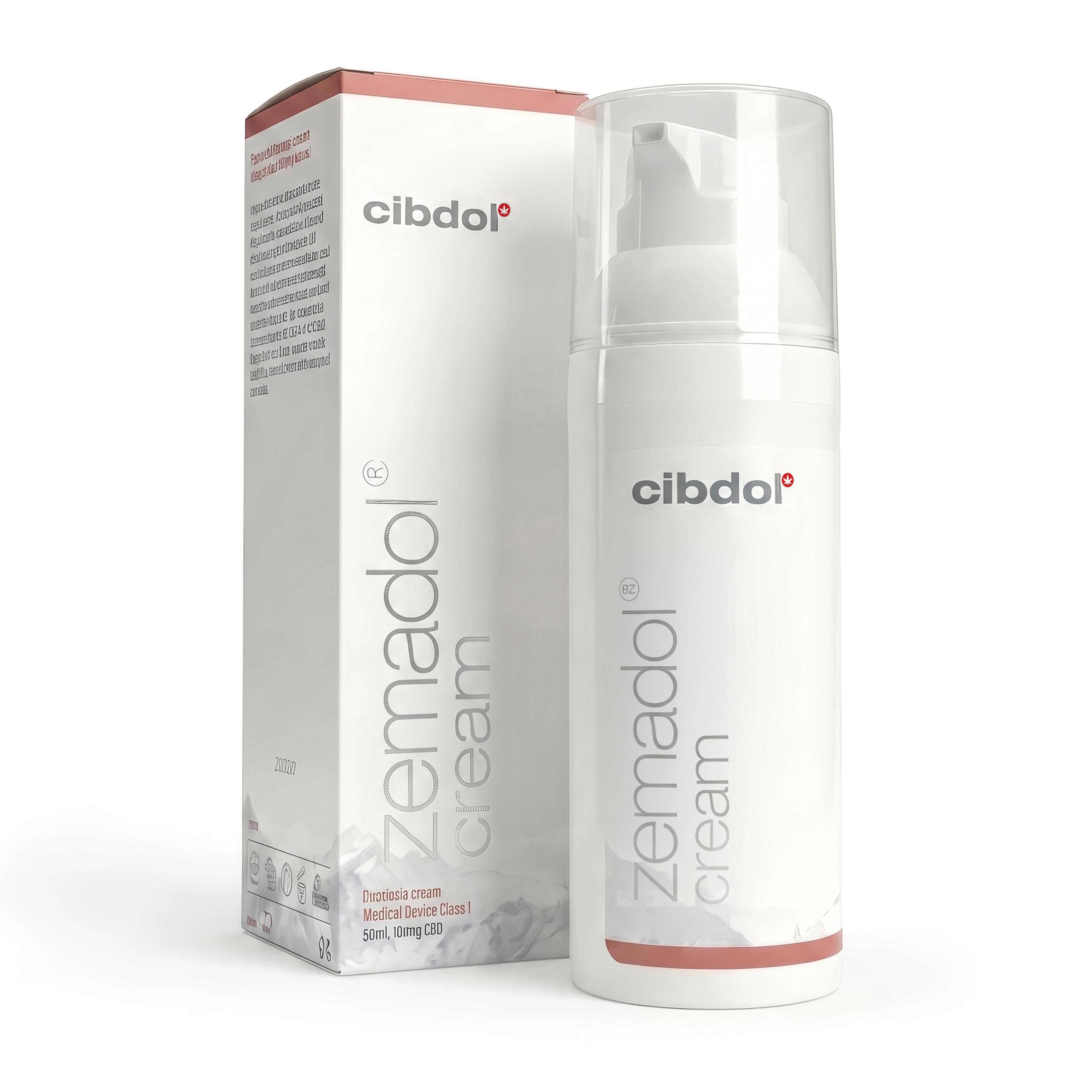
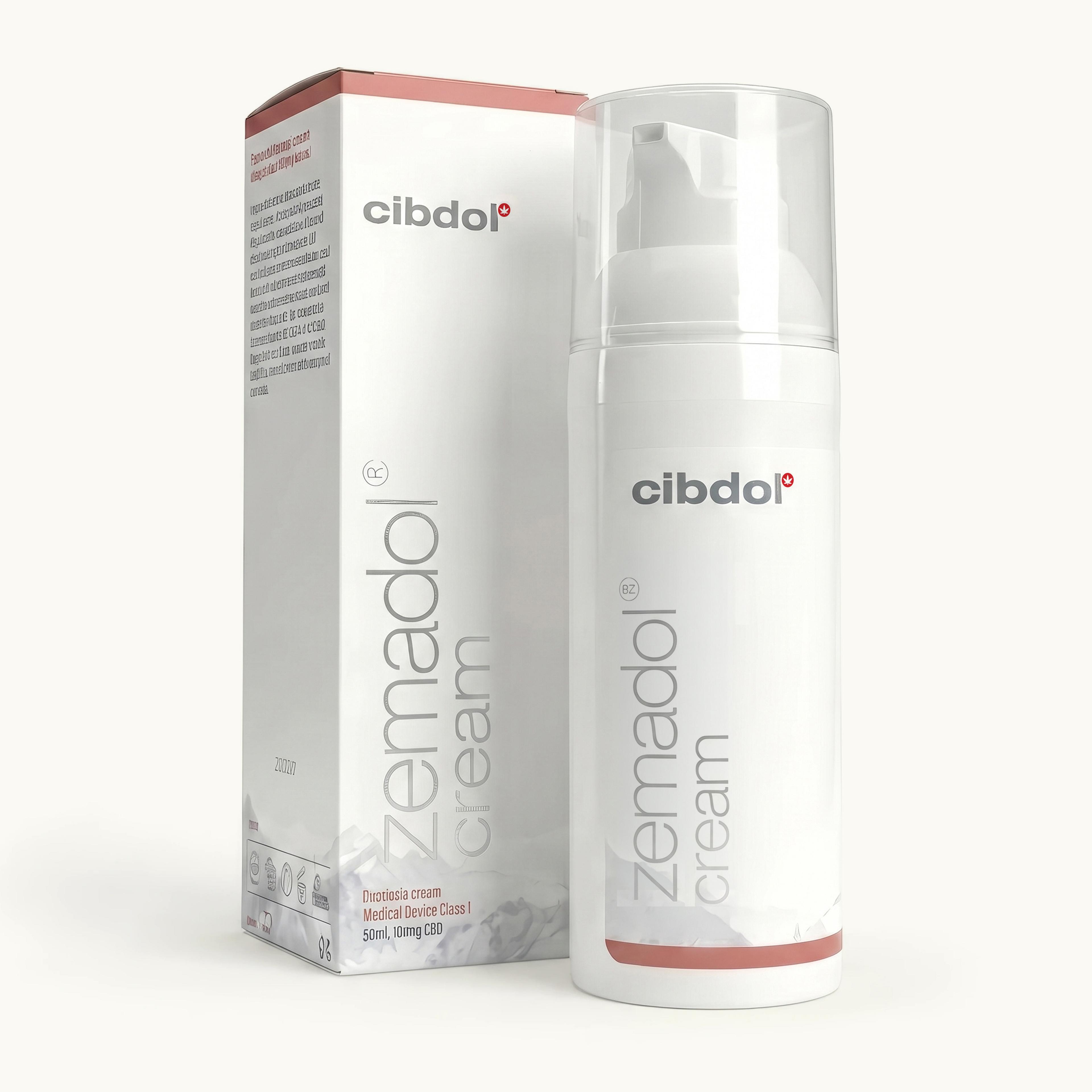
- Cibdol creams are cosmetics. They are formulated on a hemp seed oil base, and they sit in the CBD skincare part of the range rather than among the oils.
- Cosmetic is a category with a defined purpose, and that purpose is the skin the product is applied to. It is also why the word transdermal has no place on a cream of this kind.
- Every batch is independently analysed, so what the carton says about cannabinoid content is something you can look up in a report instead of taking on trust. That has been the standard here since 2014.
- The hemp is grown for low THC, and the finished cosmetics are non-intoxicating and within legal limits. Worth stating plainly, because it is the first thing most people ask.
- One distinction that search results tend to blur: an oil taken by mouth and a cream spread on skin share a compound, not a route. Separate rows in any sensible comparison.
- If you are comparing two creams, the readable parts are the base oil, the complete ingredient list and the batch analysis. All three printed, none of them implied.
Where the evidence currently stops
Here is the state of it, stated without decoration. Cannabinoid permeation through human skin has been measured in vitro, with numbers attached, and the 2004 work by Stinchcomb and colleagues is still the most cited example [1]. Skin carries its own cannabinoid receptors, its own signalling lipids and the enzymes to make and clear them, as recorded in the 2009 review by Bíró and colleagues [2]. The 2019 review led by Tóth then pulled together laboratory findings on cell growth, barrier function and immune activity in skin [3].
What none of that delivers is a human result. Both reviews collect cell work and preclinical research, and neither reports outcomes in people [2][3]. The 2004 figures describe movement across skin samples in an apparatus, not what a cosmetic cream does on a forearm on a Tuesday evening [1]. Two sober sentences. They are worth more than a confident third one.
Which leaves the part you can genuinely inspect. Read the base of a cream: in ours, that is hemp seed oil. Read the whole ingredient list rather than the front of the pack. Then read the batch analysis, because a percentage printed on a carton should be traceable to a document.
That habit is older than most of the marketing in this category. Cibdol has been working with cannabinoids since 2014, from Basel, back when CBD needed explaining in every single conversation. The method has not shifted since: choose the compound carefully, formulate precisely, test the batch, then describe what the research covers and what it leaves open.
Skin and cannabinoid signalling is an active research area, and it is moving mainly inside laboratories [2][3]. When human data on topical cannabinoids arrives in quantity, it will deserve close reading. For now, a measurement stays a measurement, a review stays a review, and a cosmetic stays a cosmetic.
Frequently Asked Questions
3 questionsHave cannabinoids actually been measured crossing human skin?
Is a CBD cream a transdermal product?
Which skin cells were listed in the 2009 review?
About this article


Luke Sholl has been writing about cannabinoids, CBD, and the broader benefits of nature since 2011. His background includes first-hand cannabis cultivation experience spanning the full seed-to-harvest lifecycle across so
This wiki article was drafted with AI assistance and reviewed by Luke Sholl, CBD & wellness writer. Editorial oversight by Joshua Askew.
Medical disclaimer. This content is for informational purposes only and does not constitute medical advice. Consult a qualified healthcare provider before use of any substance.
Last reviewed August 27, 2026
References (3)
- [1]Stinchcomb, A.L. et al. (2004). Human skin permeation of delta-8-tetrahydrocannabinol, cannabidiol and cannabinol. DOI: https://doi.org/10.1211/0022357022791
- [2]Bíró, T. et al. (2009). Trends in Pharmacological Sciences. DOI: https://doi.org/10.1016/j.tips.2009.05.004
- [3]Tóth, K.F. et al. (2019). Molecules. DOI: https://doi.org/10.3390/molecules24050918
Related Articles

Can You Be Allergic to CBD? Two Papers, One Protein
Two published papers characterise a cannabis plant protein called Can s 3 as an allergen. Here is what they cover, what they leave open, and where the carrier oil and softgel shell fit in.
CBD and Ibuprofen: One Shared Liver Enzyme
Ibuprofen depends on a single liver enzyme, and cannabidiol has been described as an inhibitor of it. Here is what the 2011 and 2019 research documented, and where the record simply stops.
CBD That Mixes Into Water: The Actual Chemistry
The phrase exists because of one physical fact: cannabidiol and water do not mix on their own. Here is what emulsions and liposomes actually are, and where the published human measurements stop.
CBD Oil or Gummies: Where the Amount Gets Decided
The pipette leaves the counting to you; the gummy carton arrives with the number already on it. Here is what the published human data covers, and where it stops.

One Gummy, 25 mg, and What the Studies Measured
25 mg per gummy, ten in a pack, THC-free printed on the box. What happens after chewing is the part human trials are still measuring [1].
Travelling With CBD: Check Three Countries First
A country-by-country permission list for CBD is wrong by design. Here is the checking order instead: three countries per ticket, the airline's own conditions, and a clear rule for unresolved cases.

What Is A CBD Tincture? The Word And The Bottle
Tincture once described a method: extraction with alcohol. Here is how the word travelled to CBD dropper bottles, and what the ingredient list settles that the front label does not.
Combining CBD Products: Counting The Day's Milligrams
An oil in the morning and a capsule at night belong to the same daily figure, counted in milligrams. Here is how that arithmetic works, what the human pharmacokinetic literature covers, and why a topical sits in a column of its own.

Ways To Take CBD, Route By Route
A pipette bottle, a capsule and a chewable piece are not three sizes of the same thing. They sit on different routes, and published human reviews keep those routes in separate columns.
