What is melatonin, and how the body uses it

Definition
Melatonin is an internal chemical messenger that signals darkness rather than a sedative. Here is how your body synthesises it, how light regulates it, and what clinical trials report.
When examining what is melatonin, the most essential biological distinction is that it operates as a chemical signal for darkness rather than a sedative. Melatonin is a hormone the body makes for itself, not a plant extract and not a sedative, chemically identified as 5-methoxy-N-acetyltryptamine. It is synthesised and released primarily by the pineal gland, a structure located near the centre of the brain, as well as locally in the retina. Production follows an innate circadian rhythm, maintaining low circulating concentrations during daytime hours and elevated levels throughout the night.
Endogenous production and the biological clock
The body builds melatonin from the essential amino acid tryptophan through intermediate conversion into serotonin. The critical rate-limiting rhythm is driven by an enzyme called arylalkylamine N-acetyltransferase, whose marked day-night fluctuation led researchers to term it the timezyme [4]. Because this enzymatic activity accelerates drastically after dusk, endogenous levels surge while you sleep and drop sharply as morning approaches.
The discovery of melatonin in 1958
Melatonin was isolated in 1958 by Aaron Lerner and colleagues at Yale from bovine pineal tissue. They named the substance for its ability to lighten pigment cells called melanocytes, without any initial focus on sleep [2]. Because the hormone was discovered through dermatology research rather than somnology, its name reflects cellular pigmentation rather than nighttime rest.

Darkness as a physiological signal
What melatonin reports is darkness rather than tiredness, rising in the evening and falling before waking to provide an internal temporal cue. Because this nightly rise is consistent, sleep researchers use the onset of melatonin secretion in dim light as their reference marker for circadian phase position [3]. Physical activity and wakefulness do not alter the timing of this biological threshold.
Environmental illumination serves as the primary regulator. In a 1980 study, bright artificial light suppressed night-time melatonin secretion in six healthy human volunteers, whereas standard room light failed to suppress it. This experimental finding demonstrated that sufficient illumination abruptly halts nocturnal production [5].
Specific cellular receptors
Melatonin interacts directly with two dedicated high-affinity binding sites, named the MT1 and MT2 receptors, both of which are G protein-coupled receptors. These direct pathways differentiate it from compounds that act without dedicated targets [1]. By binding these receptors across the brain and peripheral organs, the hormone coordinates downstream physiological processes aligned with the nocturnal period.
Oral absorption and metabolic clearance
When taken orally, melatonin is absorbed and cleared rapidly from circulation. In a crossover trial involving 12 healthy male volunteers receiving oral and intravenous doses on separate days, oral plasma concentrations reached their peak at roughly 41 minutes, with an elimination half-life of approximately 54 minutes and a median oral bioavailability of around 3 percent due to extensive first-pass metabolism by the liver. These kinetic parameters explain why oral compounds act and clear within a relatively short window [6].
Because systemic clearance occurs rapidly, swallowed doses do not linger through the late hours of the night. Furthermore, circulating availability varies substantially between individuals based on hepatic metabolism.
What clinical trials have documented
A meta-analysis of 19 randomised placebo-controlled trials covering 1683 participants found that melatonin shortened sleep onset latency by an average of 7.06 minutes, with a 95 percent confidence interval of 4.37 to 9.75 minutes, and lengthened total sleep time by 8.25 minutes, with a 95 percent confidence interval of 1.74 to 14.75 minutes, with authors characterising the overall effects as modest. Furthermore, these measured differences did not diminish across extended treatment durations [7].
Evaluating this pooled evidence requires balancing both statistical significance and practical magnitude. A reduction in sleep onset latency of approximately seven minutes is measurable across large groups, but it represents an incremental physiological shift rather than profound sedation.
Regulatory status and product labelling
Under Regulation (EU) No 432/2012, exactly two health claims are authorised across the European Union for melatonin: one about the time taken to fall asleep and one about the subjective feelings of jet lag, and each may be used only under stated conditions.
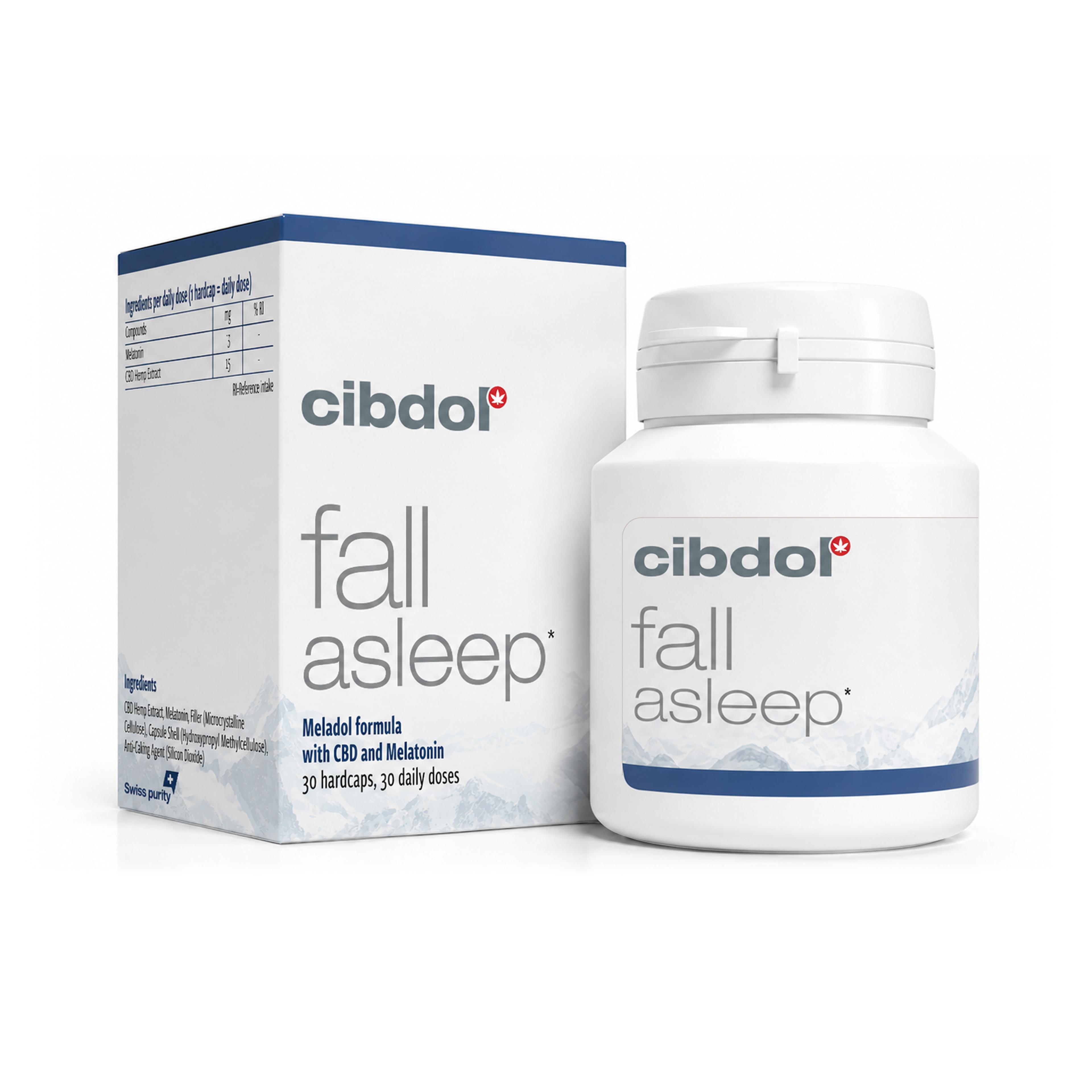
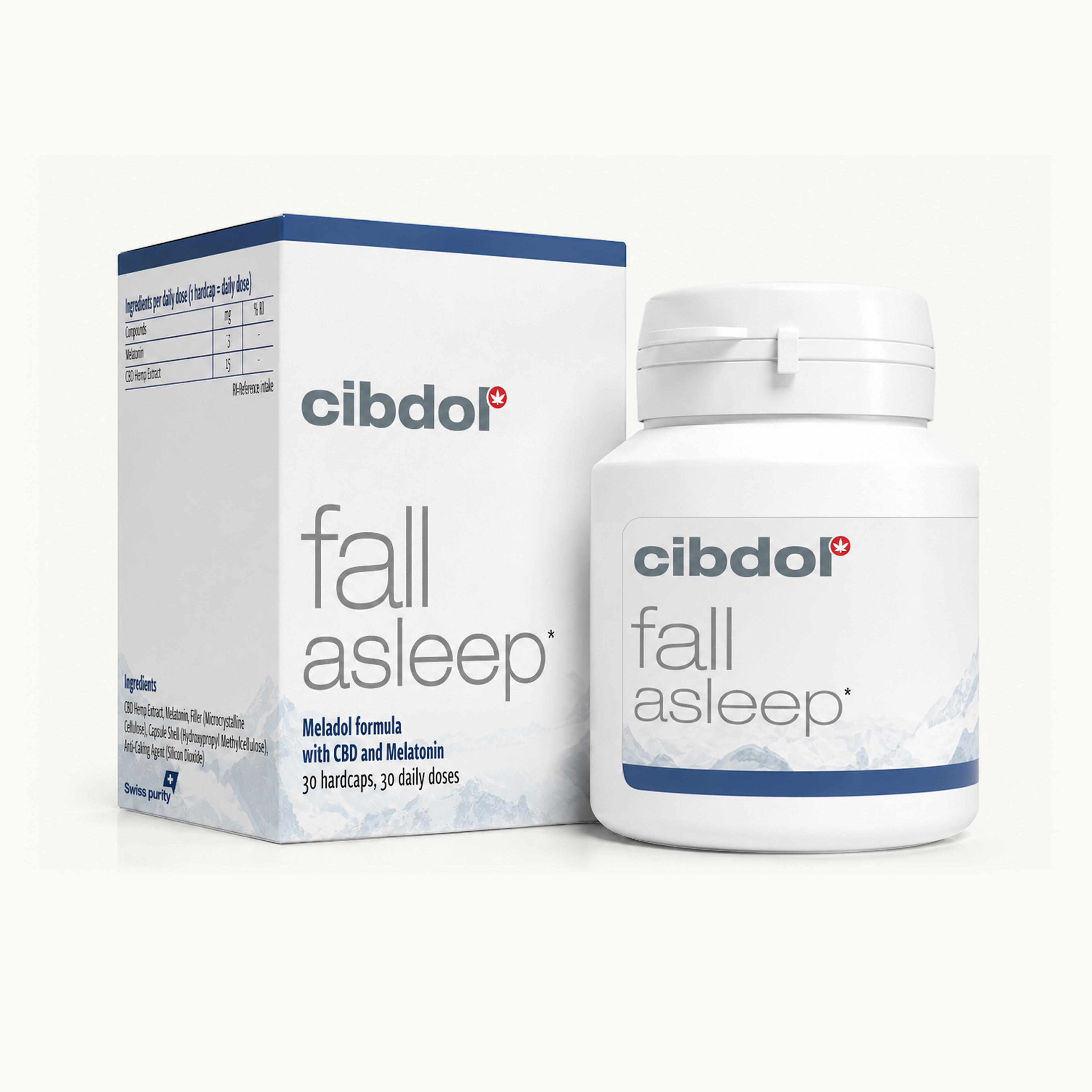
Melatonin is not treated the same way in every country. In some European states it is sold as a food supplement, in others only as a medicine, and the permitted amount per daily dose differs between member states. The packaging of Cibdol Fall Asleep Liquid reflects these regional standards directly, listing distinct daily amounts for the Netherlands, Germany, and the remainder of the European Union.
Two Cibdol products declare melatonin on the label, Fall Asleep Liquid and Fall Asleep Capsules. Stay Asleep Capsules, Complete Sleep and CBN Oil do not contain it. This article describes published research and product labels. It does not give medical advice.
Frequently Asked Questions
8 questionsIs melatonin a hormone or a medication?
Does melatonin induce sleep directly?
Where is melatonin synthesised in the body?
When was melatonin first discovered?
What environmental factor inhibits melatonin production?
How quickly does oral melatonin leave the body?
How much does melatonin alter sleep duration in trials?
What health claims are permitted for melatonin?
About this article


Luke Sholl has been writing about cannabinoids, CBD, and the broader benefits of nature since 2011. His background includes first-hand cannabis cultivation experience spanning the full seed-to-harvest lifecycle across so
This wiki article was drafted with AI assistance and reviewed by Luke Sholl, CBD & wellness writer. Editorial oversight by Joshua Askew.
Medical disclaimer. This content is for informational purposes only and does not constitute medical advice. Consult a qualified healthcare provider before use of any substance.
References (7)
- [1]Liu J, Clough SJ, Hutchinson AJ, Adamah-Biassi EB, Popovska-Gorevski M, Dubocovich ML. MT1 and MT2 melatonin receptors: a therapeutic perspective. Annual Review of Pharmacology and Toxicology 2016;56:361-383. doi:10.1146/annurev-pharmtox-010814-124742 Source
- [2]Lerner AB, Case JD, Takahashi Y, Lee TH, Mori W. Isolation of melatonin, the pineal gland factor that lightens melanocytes. Journal of the American Chemical Society 1958;80(10):2587. doi:10.1021/ja01543a060 Source
- [3]Lewy AJ, Sack RL. The dim light melatonin onset as a marker for circadian phase position. Chronobiology International 1989;6(1):93-102. doi:10.3109/07420528909059144, PMID 2706705 Source
- [4]Klein DC. Arylalkylamine N-acetyltransferase: the timezyme. Journal of Biological Chemistry 2007;282(7):4233-4237. doi:10.1074/jbc.R600036200, PMID 17164235 Source
- [5]Lewy AJ, Wehr TA, Goodwin FK, Newsome DA, Markey SP. Light suppresses melatonin secretion in humans. Science 1980;210(4475):1267-1269. doi:10.1126/science.7434030, PMID 7434030 Source
- [6]Andersen LPH, Werner MU, Rosenkilde MM, et al. Pharmacokinetics of oral and intravenous melatonin in healthy volunteers. BMC Pharmacology and Toxicology 2016;17:8. doi:10.1186/s40360-016-0052-2, PMID 26893170 Source
- [7]Ferracioli-Oda E, Qawasmi A, Bloch MH. Meta-analysis of randomised placebo-controlled melatonin trials. PLoS ONE 2013;8(5):e63773. doi:10.1371/journal.pone.0063773, PMID 23691095 Source
Related Articles

Pink noise and the evidence behind coloured sound
A review of acoustic colour definitions, evidence ratings for continuous sound, and laboratory findings on pink noise and sleep structure.
What core sleep means on a wearable device
Core sleep on modern smartwatches corresponds to laboratory light sleep, stages N1 and N2. Earlier research used the term differently, while consumer devices show measurable differences from clinical polysomnography.

Why do we sleep and what the research measures
Researchers have proposed several explanations for sleep, from energy conservation to neural maintenance. This review examines what empirical studies have measured in humans and animals.

Biphasic sleep across history and modern science
This article outlines historical and modern research on biphasic sleep, contrasting preindustrial accounts with field studies and controlled polyphasic trials.
The military sleep method, origins and evidence
The military sleep method traces back to a 1981 book by track coach Bud Winter. Popular retellings claim fast results, but the method itself has not been tested.

Understanding sleep debt and how recovery sleep works
Sleep debt reflects the cumulative difference between required and obtained rest. Laboratory trials reveal how performance deficits accumulate over time and examine the dynamics of subsequent recovery.
How accurate is a sleep tracker at scoring rest stages
Validation studies compare consumer sleep technology with laboratory recordings. Trackers detect sleep reliably but misclassify wakefulness and show inconsistent agreement on stages.

Yoga nidra session steps and scientific evidence
Yoga nidra is a structured guided relaxation practice. Research has evaluated its physiological patterns and measured overnight sleep changes with mixed results.

What objective studies reveal about sleeping positions
Sensor data show adults spend over half the night on their side, with shifts decreasing as age increases. Evidence linking spinal symptoms to specific positions remains thin.
