
How accurate is a sleep tracker at scoring rest stages
Definition
Consumer devices record body signals through optical sensors and motion, but laboratory validation studies reveal clear patterns of agreement and error across different sleep metrics.
A consumer sleep tracker relies on sensors that detect movement and pulse characteristics rather than direct brain activity, meaning its nightly figures represent indirect estimates of your rest. Understanding how these tools perform requires looking at what their hardware detects, the laboratory standards used to evaluate them, and the systematic findings from independent validation research.
What wearable sleep technology senses
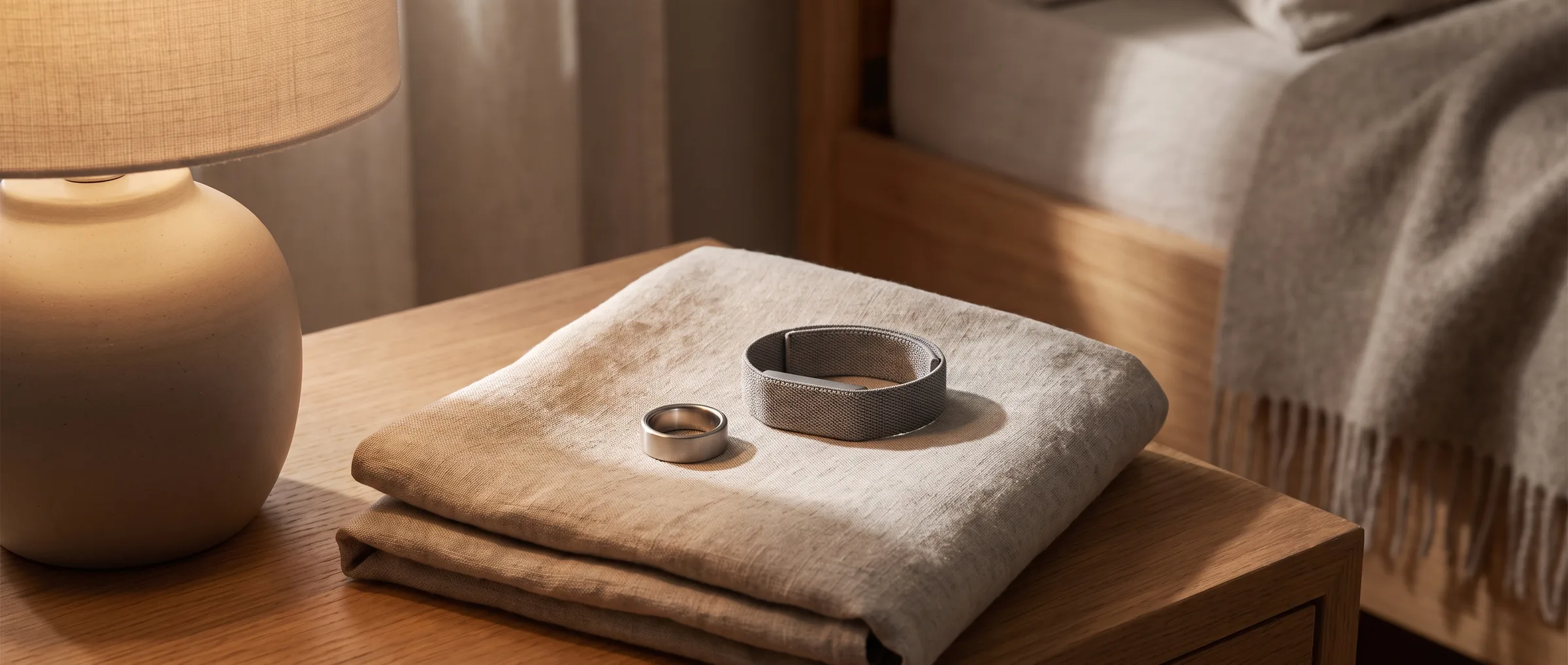
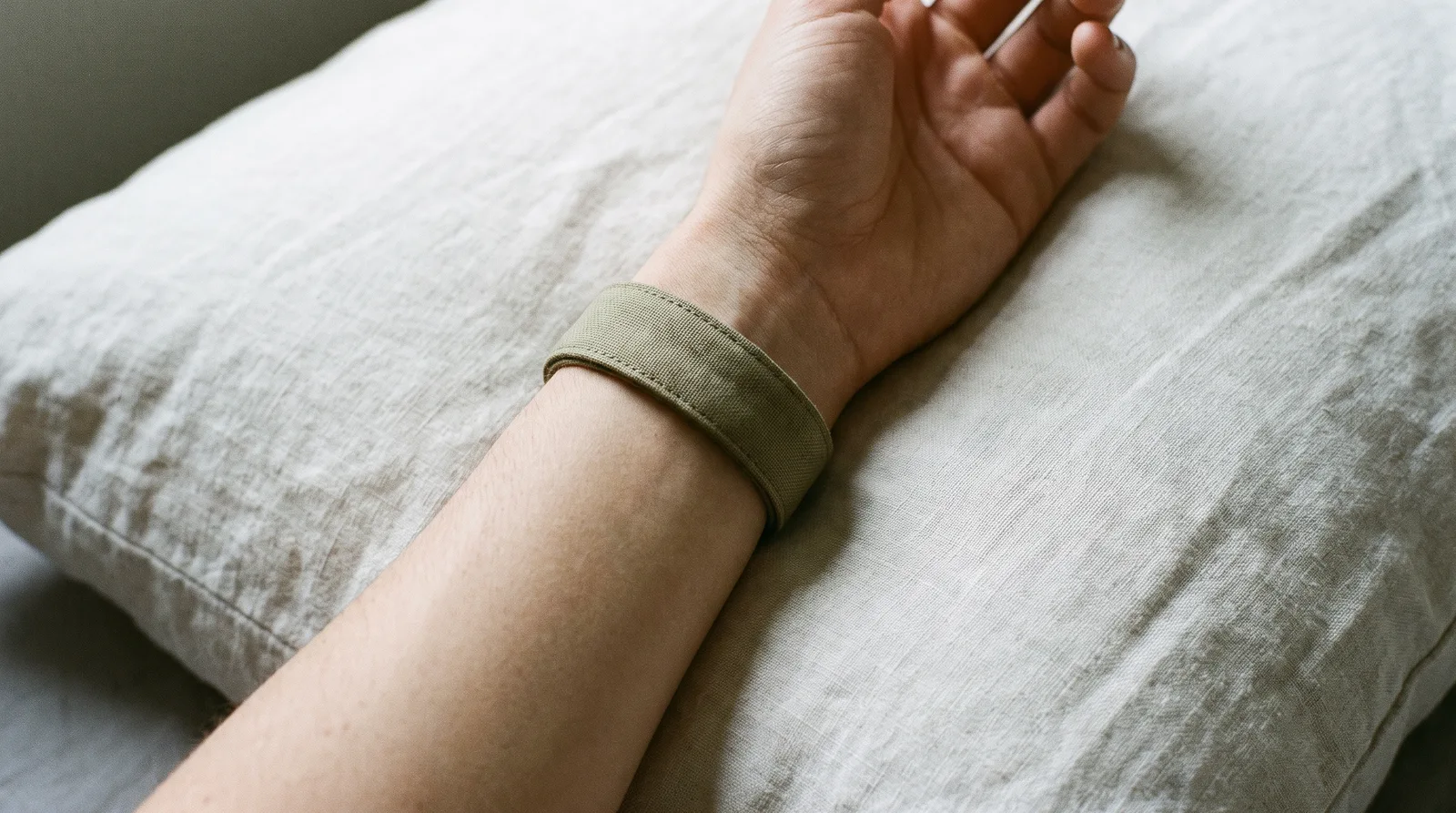
Consumer devices gather physiological signals to generate estimates of nightly rest. A 2019 review of wearable sleep technology describes consumer devices that collect signals such as heart rate and its variability, skin conductance and temperature in addition to movement, from which they claim to extract information about sleep [1]. A 2024 scoping review of 35 articles covering 62 wearable setups found a trend towards combining an accelerometer with photoplethysmography, the optical pulse sensor, and reported that devices using accelerometer data alone distinguished sleep from wake reasonably well but fell short at identifying multiple sleep stages, unlike setups that added the pulse signal [8].
The laboratory reference and human scoring
Validation studies evaluate commercial monitors against polysomnography, a comprehensive laboratory setup that records brain waves, eye movements and muscle tone. Even this benchmark involves human judgment. In a reliability programme with more than 2,500 scorers, 1,800 epochs and over 3.2 million scoring decisions, agreement with the majority score averaged 82.6 percent, was 67.4 percent for stage N3 and was lowest for stage N1 at 63.0 percent [10].
Detection of sleep versus wake periods
Across validation studies, wearable monitors consistently identify periods of sleep while struggling to recognise quiet wakefulness. In a sleep laboratory, 34 healthy young adults were recorded with polysomnography on three consecutive nights, one of them with deliberately disrupted sleep, each wearing research actigraphy and using a subset of the seven consumer devices tested, four wearable and three nonwearable [3]. Epoch by epoch, every device detected sleep with a sensitivity of at least 0.93, but specificity, the ability to detect wake, ranged from 0.18 to 0.54; sleep stage comparisons were mixed and the devices tended to perform worse on nights with poorer or disrupted sleep [3]. Most devices matched or exceeded research actigraphy on sleep and wake measures [3].
A study of 62 adults, 52 men and 10 women with a mean age of 46, who spent one night in a sleep laboratory wearing two to four of six wrist-worn devices, found that all devices detected more than 90 percent of sleep epochs but specificity for wake ranged from 29.39 to 52.15 percent, and Cohen's kappa ranged from 0.21 to 0.53, which the authors call fair to moderate agreement [5]. Most devices differed significantly from polysomnography on total sleep time, sleep efficiency, wake after sleep onset and light sleep, and the main epoch-by-epoch errors were wake, deep sleep and REM epochs that the devices scored as light sleep [5].
Agreement across specific sleep stages
When devices attempt to break rest into distinct phases, agreement with laboratory measurements drops. When 53 adults with a mean age of 25.4 spent one night in a sleep laboratory wearing six devices at once, agreement with polysomnography on whether each period was sleep or wake ranged from 86 to 89 percent, with Cohen's kappa from 0.30 to 0.51 [4]. Agreement on the specific stage or wake fell to between 50 and 65 percent, kappa 0.20 to 0.52 [4]. The authors conclude that all six devices were valid for field-based assessment of the timing and duration of sleep but all required improvement for specific sleep stages [4].
Hardware design also influences results. A multicentre study in Korea enrolled 75 participants at a tertiary hospital and a sleep clinic and compared 11 consumer trackers with in-lab polysomnography: 5 wearables and 6 devices that the authors call nearables and airables, 3 of each [6]. Across 349,114 epochs, agreement on sleep stage classification varied widely, with macro F1 scores ranging from 0.26 to 0.69 across the trackers [6]. Wearables showed a high proportional bias in sleep efficiency and nearables a high proportional bias in sleep latency [6].
Contactless hardware presents a different profile. A systematic review and meta-analysis of consumer sleep trackers that do not touch the body included 26 articles, 22 of them with data for pooling [9]. It found better accuracy in healthy participants using mattress-based devices with piezoelectric sensors, and reported that these contactless devices distinguished wake from sleep as well as actigraphy while also providing sleep stage estimates that actigraphy does not [9].
Pooled evidence and subjective experience
Broad reviews show systematic differences between device metrics and laboratory standards. A meta-analysis of 24 studies with 798 participants using wrist-worn consumer devices found significant differences between the devices and polysomnography in total sleep time, sleep efficiency, sleep latency and wake after sleep onset [7]. In subgroup analyses, one group of devices showed no significant difference from polysomnography in wake after sleep onset and the remaining devices none in sleep latency [7]. The authors conclude that the devices are not as reliable as polysomnography for measures such as total sleep time, sleep efficiency and sleep latency and that users should interpret results carefully, while noting that they can still be useful for tracking general sleep patterns [7].
A state-of-the-science review published in 2024 of wearables in sleep and circadian research states that the available evidence suggests consumer-grade devices exceed the performance of traditional actigraphy against polysomnography, but lists clear limitations: misclassifying wake during the sleep period, problems tracking sleep outside the main sleep bout or nighttime period, artefacts, and unclear performance in people with certain characteristics, noting that person-specific factors such as skin colour can reduce sensor performance [2]. The 2019 review of wearable sleep technology notes that little guidance exists on using these devices and names proprietary algorithms, device malfunction and firmware updates as critical factors to consider before a consumer tracker is used in clinical or sleep research protocols [1].
Recorded numbers also diverge from how people feel upon waking. A 2026 systematic review of five observational studies with 2,006 adults found poor to moderate agreement between consumer wrist-worn devices and validated subjective measures of sleep quality: device metrics explained only 2.5 to 16.2 percent of the variance in subjective ratings, device total sleep time correlated with same-day sleep diaries at r = 0.367, and the devices did not capture Pittsburgh Sleep Quality Index scores [11]. The authors conclude that device data should complement, not replace, validated subjective assessments [11]. Furthermore, the authors of a 2017 clinical report write that a growing number of patients are seeking treatment for sleep problems they have diagnosed themselves from periods of light or restless sleep shown by their trackers [12]. For these patients the tracker data often felt more consistent with their experience of sleep than validated methods such as polysomnography or actigraphy, and the authors write that the link these patients inferred between tracker data and daytime fatigue may become a perfectionistic quest for the ideal sleep [12].
Frequently Asked Questions
8 questionsWhy does a tracker overestimate total time asleep
How closely do tracker stages match laboratory polysomnography
Do trained human scorers always agree on sleep stages
Can skin tone alter sensor readings on wrist wearables
How do bedside and mattress sensors compare to wristbands
Why do manufacturer firmware updates affect data consistency
Does a high tracker score guarantee feeling refreshed
Can monitoring nightly data cause unnecessary worry
About this article

Luke Sholl has been writing about cannabinoids, CBD, and the broader benefits of nature since 2011. His background includes first-hand cannabis cultivation experience spanning the full seed-to-harvest lifecycle across so
This wiki article was drafted with AI assistance and reviewed by Luke Sholl, CBD & wellness writer. Editorial oversight by Joshua Askew.
Medical disclaimer. This content is for informational purposes only and does not constitute medical advice. Consult a qualified healthcare provider before use of any substance.
References (12)
- [1]de Zambotti M, Cellini N, Goldstone A, Colrain IM, Baker FC. Wearable Sleep Technology in Clinical and Research Settings. Medicine & Science in Sports & Exercise 2019;51(7):1538-1557. doi:10.1249/MSS.0000000000001947, PMID 30789439 Source
- [2]de Zambotti M, Goldstein C, Cook J, Menghini L, Altini M, Cheng P, Robillard R. State of the science and recommendations for using wearable technology in sleep and circadian research. Sleep 2024;47(4):zsad325 (published online 2023-12-27). doi:10.1093/sleep/zsad325, PMID 38149978 Source
- [3]Chinoy ED, Cuellar JA, Huwa KE, Jameson JT, Watson CH, Bessman SC, Hirsch DA, Cooper AD, et al. Performance of seven consumer sleep-tracking devices compared with polysomnography. Sleep 2021;44(5):zsaa291. doi:10.1093/sleep/zsaa291, PMID 33378539 Source
- [4]Miller DJ, Sargent C, Roach GD. A Validation of Six Wearable Devices for Estimating Sleep, Heart Rate and Heart Rate Variability in Healthy Adults. Sensors 2022;22(16):6317. doi:10.3390/s22166317, PMID 36016077 Source
- [5]Schyvens AM, Peters B, Van Oost NC, Aerts JM, Masci F, Neven A, Dirix H, Wets G, et al. A performance validation of six commercial wrist-worn wearable sleep-tracking devices for sleep stage scoring compared to polysomnography. Sleep Advances 2025;6(2):zpaf021. doi:10.1093/sleepadvances/zpaf021, PMID 40303381 Source
- [6]Lee T, Cho Y, Cha KS, Jung J, Cho J, Kim H, Kim D, Hong J, et al. Accuracy of 11 Wearable, Nearable, and Airable Consumer Sleep Trackers: Prospective Multicenter Validation Study. JMIR mHealth and uHealth 2023;11:e50983. doi:10.2196/50983, PMID 37917155 Source
- [7]Lee YJ, Lee JY, Cho JH, Kang YJ, Choi JH. Performance of consumer wrist-worn sleep tracking devices compared to polysomnography: a meta-analysis. Journal of Clinical Sleep Medicine 2025;21(3):573-582. doi:10.5664/jcsm.11460, PMID 39484805 Source
- [8]Birrer V, Elgendi M, Lambercy O, Menon C. Evaluating reliability in wearable devices for sleep staging. npj Digital Medicine 2024;7:74. doi:10.1038/s41746-024-01016-9, PMID 38499793 Source
- [9]Zhai H, Yan Y, He S, Zhao P, Zhang B. Evaluation of the Accuracy of Contactless Consumer Sleep-Tracking Devices Application in Human Experiment: A Systematic Review and Meta-Analysis. Sensors 2023;23(10):4842. doi:10.3390/s23104842, PMID 37430756 Source
- [10]Rosenberg RS, Van Hout S. The inter-scorer reliability program: sleep stage scoring. Journal of Clinical Sleep Medicine 2013;9(1):81-87. doi:10.5664/jcsm.2350, PMID 23319910 Source
- [11]Srivali N, Cheungpasitporn W. Concordance of wearable device sleep metrics with patient-reported sleep quality: A systematic review. Sleep Medicine 2026;144:108941. doi:10.1016/j.sleep.2026.108941, PMID 41946254 Source
- [12]Baron KG, Abbott S, Jao N, Manalo N, Mullen R. Journal of Clinical Sleep Medicine 2017;13(2):351-354. doi:10.5664/jcsm.6472, PMID 27855740 Source
Related Articles
Pink noise and the evidence behind coloured sound
A review of acoustic colour definitions, evidence ratings for continuous sound, and laboratory findings on pink noise and sleep structure.
What core sleep means on a wearable device
Core sleep on modern smartwatches corresponds to laboratory light sleep, stages N1 and N2. Earlier research used the term differently, while consumer devices show measurable differences from clinical polysomnography.
Why do we sleep and what the research measures
Researchers have proposed several explanations for sleep, from energy conservation to neural maintenance. This review examines what empirical studies have measured in humans and animals.
Biphasic sleep across history and modern science
This article outlines historical and modern research on biphasic sleep, contrasting preindustrial accounts with field studies and controlled polyphasic trials.
The military sleep method, origins and evidence
The military sleep method traces back to a 1981 book by track coach Bud Winter. Popular retellings claim fast results, but the method itself has not been tested.
Understanding sleep debt and how recovery sleep works
Sleep debt reflects the cumulative difference between required and obtained rest. Laboratory trials reveal how performance deficits accumulate over time and examine the dynamics of subsequent recovery.
Yoga nidra session steps and scientific evidence
Yoga nidra is a structured guided relaxation practice. Research has evaluated its physiological patterns and measured overnight sleep changes with mixed results.
What objective studies reveal about sleeping positions
Sensor data show adults spend over half the night on their side, with shifts decreasing as age increases. Evidence linking spinal symptoms to specific positions remains thin.
How long can you go without sleep
Documented records describe individuals staying awake for days, but laboratory evaluations show that cognitive lapses and sensory changes begin within the first 24 hours.
