



Shilajit Practical Guide: Dosage, Absorption, and Quality
Shilajit has become a modern wellness buzzword, and with that comes plenty of confusion, bold claims, inconsistent products, and advice that isn’t always backed by solid evidence. This practical guide to shilajit cuts through the noise with clear, responsible information, so you can decide whether it fits your routine and how to use it sensibly.
We’ll start with what shilajit is and the basics of how it’s thought to work in the body, then look at the shilajit benefits most commonly discussed, separating plausible support from hype. From there, we’ll cover how to take shilajit in daily life, including the best way to take shilajit for absorption, what a typical shilajit dosage looks like, and how to adjust carefully.
Finally, we’ll address whether shilajit is safe, including practical safety considerations, interactions to be aware of, and what to look for when assessing quality, testing, and sourcing.
What does shilajit actually do?
Shilajit is best understood as a complex, naturally occurring substance that contains a broad spectrum of minerals and organic compounds, with fulvic acid often highlighted as a key component. While exact composition varies by source and processing, reputable products aim to preserve this mineral-rich profile while removing contaminants.
Fulvic acid is commonly discussed for its role in nutrient transport because it can bind to certain compounds and may support their movement and absorption in the digestive tract. In practical terms, that’s one reason shilajit is often positioned for everyday energy, vitality, and general wellness rather than as a targeted, pharmaceutical-style intervention.1
Traditional systems have long associated shilajit with rejuvenation and stamina. Modern evidence is more cautious: early research and mechanistic theories are promising in some areas, but not all popular shilajit benefits have been strongly proven in humans. A balanced view focuses on quality, realistic expectations, and how you respond over time.2
What is the best way to take shilajit for maximum absorption?
For most people, the most practical approach is to take a small, consistent serving daily, following the label instructions and choosing a format you’ll actually stick with. The best way to take shilajit is typically as a resin dissolved in a warm drink, because it mixes fully and is taken without a capsule shell.
Resin and capsules can both work, but they differ in their usability. Resin is closer to the traditional form and lets you dissolve it in warm water, tea, or milk, which may help it disperse evenly. Capsules are convenient and tasteless, but absorption can be influenced by how quickly the capsule dissolves and whether you take it with food.
Whatever you choose, consistency tends to matter more than the size of the dose. Slow, steady use makes it easier to judge how you respond and reduces the temptation to overdo it.
| Routine choice | Common approach | Practical note | If it feels too stimulating |
|---|---|---|---|
| Morning | Often preferred for gentle energy support | Easier to notice how you respond | Reduce serving; keep it earlier |
| Afternoon | Can suit steadier daytime wellbeing | Avoid late-evening use if sleep is affected | Move earlier or pause briefly |
| With breakfast | Often feels smoother on the stomach | Good default when starting | Keep timing stable; adjust dose slowly |
| Empty stomach | May feel “faster” for some people | Start conservatively and track comfort | Switch to with-food dosing |
How to determine the right shilajit dosage for daily use
Daily dosing is rarely one-size-fits-all, because products differ in concentration and format, and your body’s needs can vary with size, diet, sleep, and overall tolerance. Resin, powders, and capsules may deliver different amounts even when they look similar, so start with the manufacturer’s guidance and measure carefully.
A sensible shilajit dosage approach is to begin at the low end for the first week, then only increase if you feel comfortable and notice no unwanted effects. Many people find a small “beginner” amount is enough to assess response, while a “maintenance” amount is simply the lowest serving that feels supportive over time.3
Pay attention to individual signals such as energy, sleep quality, digestion, and any headaches or jitters. When in doubt, reduce the serving or take a short break rather than pushing higher.
| Step | What to do | Keep stable if you notice | Reduce or pause if you notice |
|---|---|---|---|
| Start | Use the lowest stated serving and measure carefully | Comfortable digestion; normal sleep; steady energy | Headaches, jitters, restlessness, digestive upset |
| Assess | Keep the same routine for 7–10 days | Small, consistent changes that feel supportive | Any unwanted effects that repeat |
| Adjust | Only increase if you tolerate it well | Clear tolerance and stable routine | Sleep disruption or “overstimulated” feeling |
| Maintain | Use the lowest serving that feels supportive over time | Benefits feel repeatable week to week | Temptation to chase bigger doses for faster results |
Shilajit dosage for beginners
Beginners do best with a cautious, measured start, particularly because product strength can vary widely between brands and formats. For resin, many labels suggest a pea-sized amount, which often works out at roughly 100–300 mg daily; with capsules, a common starting point is 250–500 mg per day, depending on the standardised extract.3
In practice, what is the recommended dosage of shilajit for beginners? It is best answered by starting at the lowest stated serving for 7–10 days and only stepping up if you tolerate it well. Resin can feel “stronger” simply because it’s more concentrated and easier to over-serve, while capsules provide a fixed amount that’s simpler to track.
Safety-first means gradual adjustment: avoid late-day dosing if it feels stimulating, and reduce the amount straight away if you notice headaches, restlessness, or digestive upset.
| Signal | What it may indicate in practice | Simple response |
|---|---|---|
| Jitters | Serving feels too high or timing is too late | Reduce serving; move earlier in the day |
| Headaches | Not tolerating current amount | Reduce serving or take a short break |
| Restlessness | Feels stimulating for you | Avoid late-day dosing; step down |
| Digestive upset | Stomach sensitivity or routine mismatch | Try with breakfast; reduce serving |
| Sleep disruption | Timing not working for you | Take earlier or pause and reassess |
When is the best time to take shilajit?
Many people prefer taking shilajit in the morning, as it’s most often used for gentle energy support and a “switched on” feeling during the day. An earlier dose also makes it easier to spot how you respond, especially when you’re new to it.
Afternoon use can suit those who want steadier daytime wellbeing, but it’s worth avoiding late-evening dosing if it feels stimulating or affects sleep. Timing doesn’t need to be perfect; regularity is usually more important than chasing an immediate lift.
Taking it with breakfast can feel smoother on the stomach, while taking it on an empty stomach may feel faster for some people. Start conservatively, then choose the routine that feels most comfortable.
How long does shilajit take to work?
Some people notice subtle effects within a few days, such as a steadier sense of energy or improved day-to-day resilience, especially when they take it at the same time each day. Others feel little at first, which can be completely normal.
Short-term expectations should stay modest: you’re more likely to spot small changes in focus, motivation, or general vitality than anything dramatic. Longer-term use is where many users report the most consistent value, typically over 2–4 weeks, as routine, sleep, diet, and stress levels settle into a more precise pattern.
Consistency matters because it helps you judge what’s actually changing. Keep the dose stable, make only one adjustment at a time, and give it enough time to be meaningful.
Shilajit resin vs powder vs capsules
Choosing between resin, powder, and capsules comes down to how much control you want over serving size and how confident you are in a product’s quality.
Resin is often seen as the “closest to source” option. It dissolves in warm liquid and is easy to adjust in small increments, but it can be messy and requires careful measuring. Powders vary the most in how they’re processed; they can be convenient for mixing into drinks, yet purity and standardisation are harder to judge without robust testing. Capsules offer the simplest routine and precise dosing, though you have less flexibility, and absorption may depend on how quickly the capsule dissolves.
A clear comparison can help weigh convenience against perceived effectiveness and quality checks:
| Form | Best for | Key consideration | Measuring & routine | Portability |
|---|---|---|---|---|
| Resin | Control and traditional use | Measure carefully; look for testing | Easy to adjust in small increments; can be messy | Can travel well if sealed; portion with clean utensil |
| Powder | Mixing into foods/drinks | Higher variation in processing | Convenient to mix; purity is harder to judge without robust testing | Generally portable; keep dry and sealed |
| Capsules | Convenience and consistency | Fixed dose; check extract standardisation | Simple routine; less flexible for micro-adjustments | Most portable and discreet |
How to take shilajit resin
Shilajit resin is traditionally taken by dissolving a small amount in a warm drink rather than swallowing it straight. Warm (not boiling) water helps it melt evenly, making the serving easier to control and the texture more pleasant.
For anyone learning how to take shilajit resin, start with a tiny amount and stir until fully dissolved; the taste is earthy and slightly bitter, so many people prefer it in warm water, herbal tea, or milk. Avoid mixing it into very acidic drinks, which can make the flavour harsher.
First-time tips include using a clean, dry utensil to portion the resin, measuring consistently, and taking it earlier in the day while you assess your response. If it feels too strong, reduce the amount rather than forcing through it.
How to tell if a shilajit supplement is real
Quality matters with shilajit because contamination and dilution are genuine concerns, and the best results depend on a clean, well-characterised extract. Start with the basics: reputable brands should be clear about origin (region and altitude), processing method, and provide recent third-party lab testing for heavy metals, microbes, and key markers such as fulvic compounds.4
With resin specifically, physical cues can help. Real resin is typically sticky and tar-like at room temperature, softening with warmth and dissolving in warm water into a brown-golden liquid. A resin that stays gritty, separates oddly, smells strongly perfumed, or tastes sharply sweet may be bulked out or flavoured to mask poor quality.
Low-quality products also tend to rely on vague “purified” claims, lack batch numbers, and offer unrealistically low pricing. When in doubt, prioritise transparent sourcing and lab reports over bold marketing promises.
| What to look for | Why it matters | What “good” looks like |
|---|---|---|
| Clear origin details (region and altitude) | Composition can vary by source | Specific sourcing information, not vague claims |
| Processing method explained | Reputable products aim to remove contaminants | Transparent description of purification/processing |
| Recent third-party lab testing | Contamination is a genuine concern | Heavy metals and microbial testing provided |
| Key markers disclosed (e.g., fulvic compounds) | Helps assess what you’re actually taking | Marker information and/or standardisation details |
| Batch numbers and traceability | Supports accountability and consistency | Batch/lot details aligned to lab reports |
How to incorporate shilajit into your daily routine
Consistency is what turns a supplement into a proper routine, and shilajit is no different. Pick a time of day that already has a stable cue, breakfast, your first hot drink, or your post-walk wind-down, and attach your dose to that habit rather than relying on motivation.
Many people find the best way to take shilajit is to keep it simple: choose one form (resin, powder, or capsules), take it at roughly the same time, and stick with a steady amount for a couple of weeks before deciding whether it’s helping. That approach also reduces the temptation to overdo it in pursuit of faster results.
Practical habit-building ideas include:
- Pre-portioning a week’s servings so you’re not estimating day to day.
- Keeping it next to your kettle or mug so it stays visible.
- Tracking sleep, energy, and digestion briefly so patterns are easier to spot.
If your schedule changes, prioritise regularity over perfection. Missing a day occasionally is normal; getting back to your baseline routine is what matters most.
Morning routines and habit stacking
Morning use suits people who take shilajit for gentle energy support, as it fits naturally into the start-of-day rhythm. Dissolving resin in warm water can work like a simple coffee alternative, particularly on days you want a steadier lift without extra caffeine.
Habit stacking makes it easier to stay consistent. Pair it with something you already do every morning, such as boiling the kettle, making breakfast, or taking other supplements, so it becomes part of one repeatable sequence rather than another task to remember.
Using shilajit on workdays and while travelling
Busy days reward the format that’s easiest to carry and take. Capsules are the most portable and discreet, while resin can travel well if it’s sealed properly and portioned with a clean utensil.
To maintain consistency, keep a small backup supply in your work bag or wash kit and tie it to a fixed cue such as your first hot drink. If you miss a dose, resume your usual amount the next day rather than doubling up to “catch up”.
Consistency strategies for long-term use
Long-term use is easier when it’s automated. A daily phone reminder or calendar prompt helps at first, but most people do best when the supplement stays in a visible place and is taken as part of a fixed routine.
Track your personal response in a simple way; notes on energy, sleep, training recovery, or digestion are often enough to spot trends. If you choose to adjust shilajit dosage over time, do it gradually, changing one variable at a time and pausing if you notice unwanted effects.
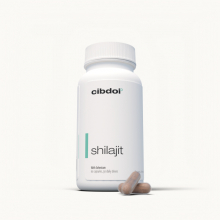
How to decide if shilajit fits your routine
Shilajit tends to suit people who value steady, repeatable habits and are willing to judge results over weeks rather than days. A quality-first choice matters: look for clear sourcing, sensible processing, and independent lab reports so you know what you’re taking.
Keep your approach evidence-aware and cautious. Start low, take it consistently, and track one or two practical markers that matter to you, such as afternoon energy, training recovery, or sleep quality. When expectations are realistic, shilajit benefits are easier to interpret without slipping into hype.
If it doesn’t fit your routine, or you notice unwanted effects, pause and reassess rather than pushing through. Informed experimentation, not overcompensation, is the best way to decide whether it earns a place in your day.
References
- Europe PMC. Europepmc.org. Published 2016. Accessed January 22, 2026. https://europepmc.org/article/PMC/3296184 ↩︎
- Keller JL, Housh TJ, Hill EC, Smith CM, Schmidt RJ, Johnson GO. The effects of Shilajit supplementation on fatigue-induced decreases in muscular strength and serum hydroxyproline levels. Journal of the International Society of Sports Nutrition. 2019;16(1). doi:https://doi.org/10.1186/s12970-019-0270-2 ↩︎
- Martinez V, McAngus K, Dickerson BL, et al. Effects of 12 Weeks of Chromium, Phyllanthus emblica Fruit Extract, and Shilajit Supplementation on Markers of Cardiometabolic Health, Fitness, and Weight Loss in Men and Women with Risk Factors to Metabolic Syndrome Initiating an Exercise and Diet Intervention: A Randomized Double-Blind, Placebo-Controlled Trial. Nutrients. 2025;17(12):2042. doi:https://doi.org/10.3390/nu17122042 ↩︎
- Hussain A, Saeed A. Hazardous or Advantageous: Uncovering the Roles of Heavy Metals and Humic Substances in Shilajit (Phyto-mineral) with Emphasis on Heavy Metals Toxicity and Their Detoxification Mechanisms. Biological Trace Element Research. Published online February 23, 2024. doi:https://doi.org/10.1007/s12011-024-04109-4 ↩︎