CBD Oil Smell and Taste: 3 Sources, 5 Notes
Definition
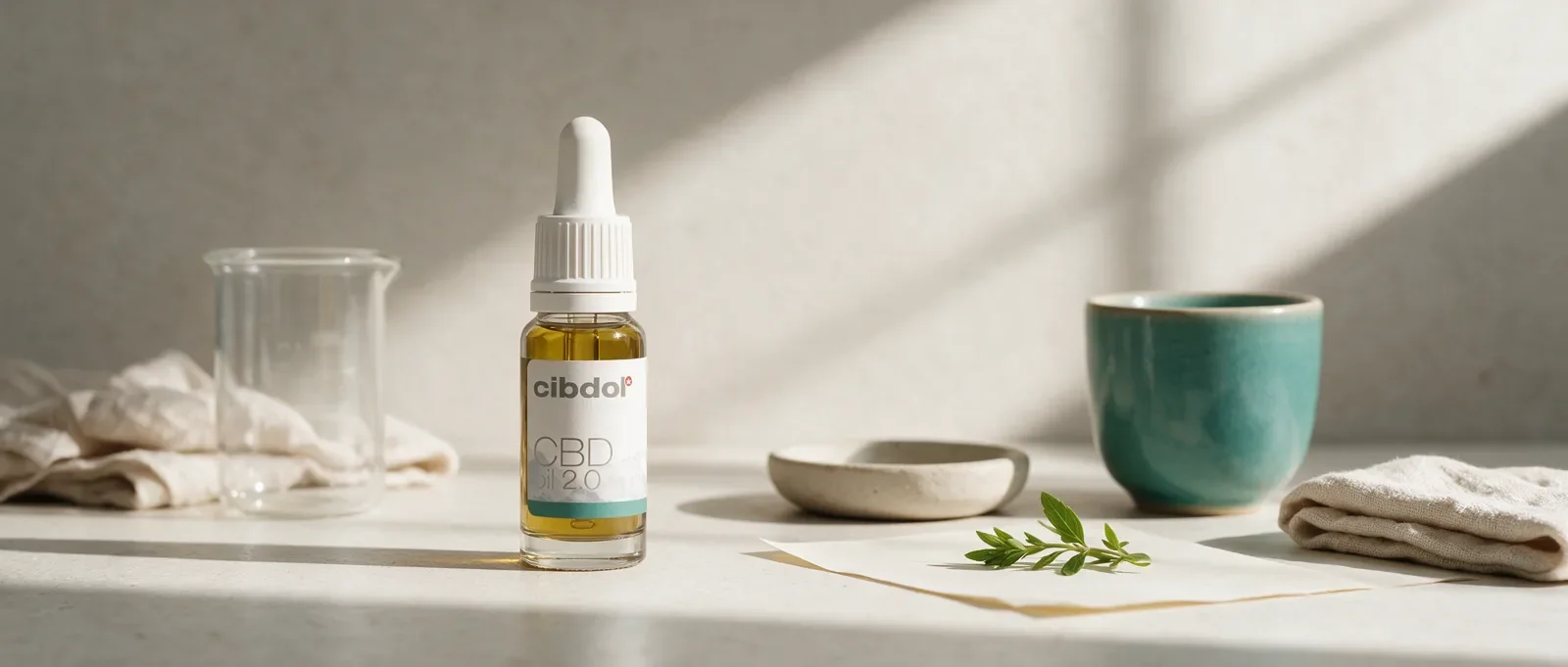
CBD oil usually smells earthy and green, with a resinous edge and a faint bitterness behind it. That aroma comes from three things at once: the terpenes in the plant, the rest of the full-spectrum extract, and the carrier oil diluting both. Taste follows the same three parts, which is why the flavour rarely surprises anyone who has already smelled the bottle.
3 sources of smell in one bottle
| Component | What it adds | Everyday reference | Worth knowing |
|---|---|---|---|
| Terpenes | The aromatic layer of hemp, and the part you notice first. Small volatile molecules that leave the oil on their own and reach the nose before anything heavier does. | Pine needles, lemon peel, lavender: all three contain the same molecules. | Cataloguing work on cannabis terpenoids has found these compounds across plant families with no botanical link to hemp, so an oil can smell of pine, citrus or hops without any of those plants in it [1]. The plant is not borrowing a smell; the same chemistry shows up independently. |
| Full-spectrum extract | The darker, earthier base under the top notes. Waxes and plant pigments come along with the cannabinoids and terpenes, and carry a bitterness with them. This layer holds the taste more than the top notes do. | Strong hemp tea, dried herbs, a forest floor after rain. | Terpenes, waxes and pigments are the seat of both smell and taste. Refine them out and what is left is CBD isolate, a crystalline powder at around 99% purity that smells of close to nothing. |
| Carrier oil | Dilution, and the background everything else sits in. It softens the notes above it and sets how loud the whole thing reads. Extract is a small fraction of a 10ml bottle; oil is the rest. | Plain vegetable oil, faintly nutty, sometimes grassy. | This is the part that can turn. An over-aged carrier goes sour, a little like wax crayon. Lindholst's 2010 work on resin and extracts held in long-term storage under varied conditions points at the storage environment rather than time on its own [2]. Heat, light and air in the room do more than the date on the box. |
Why hemp smells of pine
Terpenes are the aromatic layer of hemp. Small molecules, volatile, which is the technical way of saying they leave the oil by themselves and travel to your nose. Open a bottle and they arrive first. Everything else in there is heavier and slower.
The odd part is where else they turn up. Cataloguing work on cannabis terpenoids keeps finding the same molecules in plant families with no botanical connection to hemp at all [1]. Pine needles. Lemon peel. Lavender flowers. Black pepper. Hemp is not copying those plants, and they are not copying hemp. They just build some of the same compounds, so the nose files them in the same drawer.
That explains a reaction we hear a lot: this smells like hops. Or pine sap. Or a herbal tea somebody left to steep far too long. None of those things are in the bottle. A full-spectrum extract and a carrier oil, and that is the whole ingredient list. The pine note is a molecule, not an ingredient.
The carrier decides how loud any of it gets. Dilution pushes the whole aroma down and evens it out, which is why two oils with a similar cannabinoid content can still read very differently the moment you unscrew the cap. Same idea in a kitchen: a drop of vanilla in a jug of milk, versus the same drop on your fingertip.
Taste rides along on the same beginnings. The molecules that reach your nose over the rim of the bottle are the molecules on your tongue a second later, so people tend to describe the flavour with the words they had already used for the smell. Earthy. Green. A bit bitter at the back.
5 notes you can put a name to
The useful move with hemp aroma is not learning chemistry. It is naming the other thing that smells that way. Once you have a reference smell, the note stops being vague and becomes something you can point at. These five are the ones most people pick out of a full-spectrum oil [1].
- Myrcene: damp herbs and overripe fruit, plus a low earthiness. This is the note most people mean when they call an oil hempy.
- Limonene: citrus peel. Closer to the pith and zest of an orange than to lemon juice, and it sits high above the earthy base.
- Pinene: pine needles and fresh rosemary. The resinous, slightly sharp note at the front of the smell.
- Linalool: lavender. Soft, floral, a little soapy, and easier to catch in the aftertaste than in the first sniff.
- Beta-caryophyllene: black pepper and clove. Warm and dry, and it usually shows up last.
No two batches read identically, because a plant is not a machine. Ratios shift with the cultivar, the harvest and the season, so the same product can lean greener one year and more peppery the next. That is not a fault in the bottle. Flavour moves with it, since smell and taste are drawing on the same components. Hold the oil in your mouth for a moment and the peppery, herbal end of the profile comes forward while the citrus fades. Nothing here is a quality signal on its own.
One change worth acting on
A sour note, a bit like wax crayon
Earthy, grassy, faintly bitter: that is the profile, not a problem. There is one exception. If the smell turns sour and slightly waxy, close to a box of crayons, that is the carrier oil changing rather than the terpene profile shifting. It is the only sensory signal we would tell anyone to act on. Lindholst's 2010 measurements on cannabis resin and extracts kept in long-term storage under varied conditions put the weight on the storage environment rather than on elapsed time by itself [2]. In practice that means the sunny windowsill, the shelf above the stove and the glovebox in summer matter more than the number of weeks since you opened it. Cap closed, somewhere cool and dark, and the aroma stays where it started for far longer.
Before your nose, the batch report
Smell tells you which parts of the plant survived refinement. It tells you almost nothing about how much CBD is in the bottle. Terpenes, waxes and pigments are exactly what gets removed on the way to CBD isolate, so a near-odourless product is a refined one, not a weak one. Equally, a strong herbal punch is not proof of strength. Since 2014, the more reliable place to look has been the printed figure on the label and the independent analysis behind the batch. Ours are published, so you can check the cannabinoid content before the bottle becomes part of your routine, then use the smell for what it is good at: telling you the oil is still the oil you bought.
Frequently Asked Questions
4 questionsDoes a stronger smell mean a stronger oil?
Why do two bottles of the same oil smell slightly different?
Do the smell and the taste line up?
Where should the bottle be kept so the aroma stays stable?
About this article


Luke Sholl has been writing about cannabinoids, CBD, and the broader benefits of nature since 2011. His background includes first-hand cannabis cultivation experience spanning the full seed-to-harvest lifecycle across so
This wiki article was drafted with AI assistance and reviewed by Luke Sholl, CBD & wellness writer. Editorial oversight by Joshua Askew.
Medical disclaimer. This content is for informational purposes only and does not constitute medical advice. Consult a qualified healthcare provider before use of any substance.
Last reviewed 27 серпня 2026 р.
References (2)
- [1]Russo, E.B. (2011). Taming THC: potential cannabis synergy and phytocannabinoid-terpenoid entourage effects. DOI: https://doi.org/10.1111/j.1476-5381.2011.01238.x
- [2]Lindholst, C. (2010). Long term stability of cannabis resin and cannabis extracts. DOI: https://doi.org/10.1080/00450610903258144
Related Articles
Can You Be Allergic to CBD? Two Papers, One Protein
Two published papers characterise a cannabis plant protein called Can s 3 as an allergen. Here is what they cover, what they leave open, and where the carrier oil and softgel shell fit in.
CBD and Ibuprofen: One Shared Liver Enzyme
Ibuprofen depends on a single liver enzyme, and cannabidiol has been described as an inhibitor of it. Here is what the 2011 and 2019 research documented, and where the record simply stops.
CBD That Mixes Into Water: The Actual Chemistry
The phrase exists because of one physical fact: cannabidiol and water do not mix on their own. Here is what emulsions and liposomes actually are, and where the published human measurements stop.
CBD Oil or Gummies: Where the Amount Gets Decided
The pipette leaves the counting to you; the gummy carton arrives with the number already on it. Here is what the published human data covers, and where it stops.
One Gummy, 25 mg, and What the Studies Measured
25 mg per gummy, ten in a pack, THC-free printed on the box. What happens after chewing is the part human trials are still measuring [1].
Travelling With CBD: Check Three Countries First
A country-by-country permission list for CBD is wrong by design. Here is the checking order instead: three countries per ticket, the airline's own conditions, and a clear rule for unresolved cases.
What Is A CBD Tincture? The Word And The Bottle
Tincture once described a method: extraction with alcohol. Here is how the word travelled to CBD dropper bottles, and what the ingredient list settles that the front label does not.
Combining CBD Products: Counting The Day's Milligrams
An oil in the morning and a capsule at night belong to the same daily figure, counted in milligrams. Here is how that arithmetic works, what the human pharmacokinetic literature covers, and why a topical sits in a column of its own.
Ways To Take CBD, Route By Route
A pipette bottle, a capsule and a chewable piece are not three sizes of the same thing. They sit on different routes, and published human reviews keep those routes in separate columns.
