
How long does melatonin take to work, and what it does
Definition
Laboratory measurements demonstrate that swallowed melatonin peaks in the bloodstream at roughly 40.8 minutes, clearing faster than the duration of an entire night.
For anyone asking how long does melatonin take to work, laboratory measurements provide an exact timeline. In a crossover trial evaluating 12 healthy male volunteers, oral melatonin was absorbed rapidly with a half-life of roughly 6 minutes, reaching peak plasma concentrations at an average of 40.8 minutes post-dose, though values differed substantially between individuals. [2] Under three quarters of an hour to peak concentrations represents a swift arrival, yet the wide variance observed between people highlights that individual response times vary.
Clearance rates and hepatic metabolism
Melatonin leaves the circulation almost as swiftly as it arrives. The elimination half-life recorded in the same trial was approximately 54 minutes after oral ingestion and roughly 39 minutes following intravenous delivery, meaning most of an oral dose clears within several hours, well before a normal sleep period concludes. [2] Half-life describes how fast a substance is cleared, not how long an effect lasts and not how much anyone should take.
Because the liver clears most of the compound during first-pass hepatic metabolism, the same researchers found a median absolute oral bioavailability of roughly 3 percent, alongside a several-fold variance between individual subjects. [2] Only a small fraction of an ingested amount reaches systemic circulation, with significant differences from one person to the next.
How different formulations alter uptake
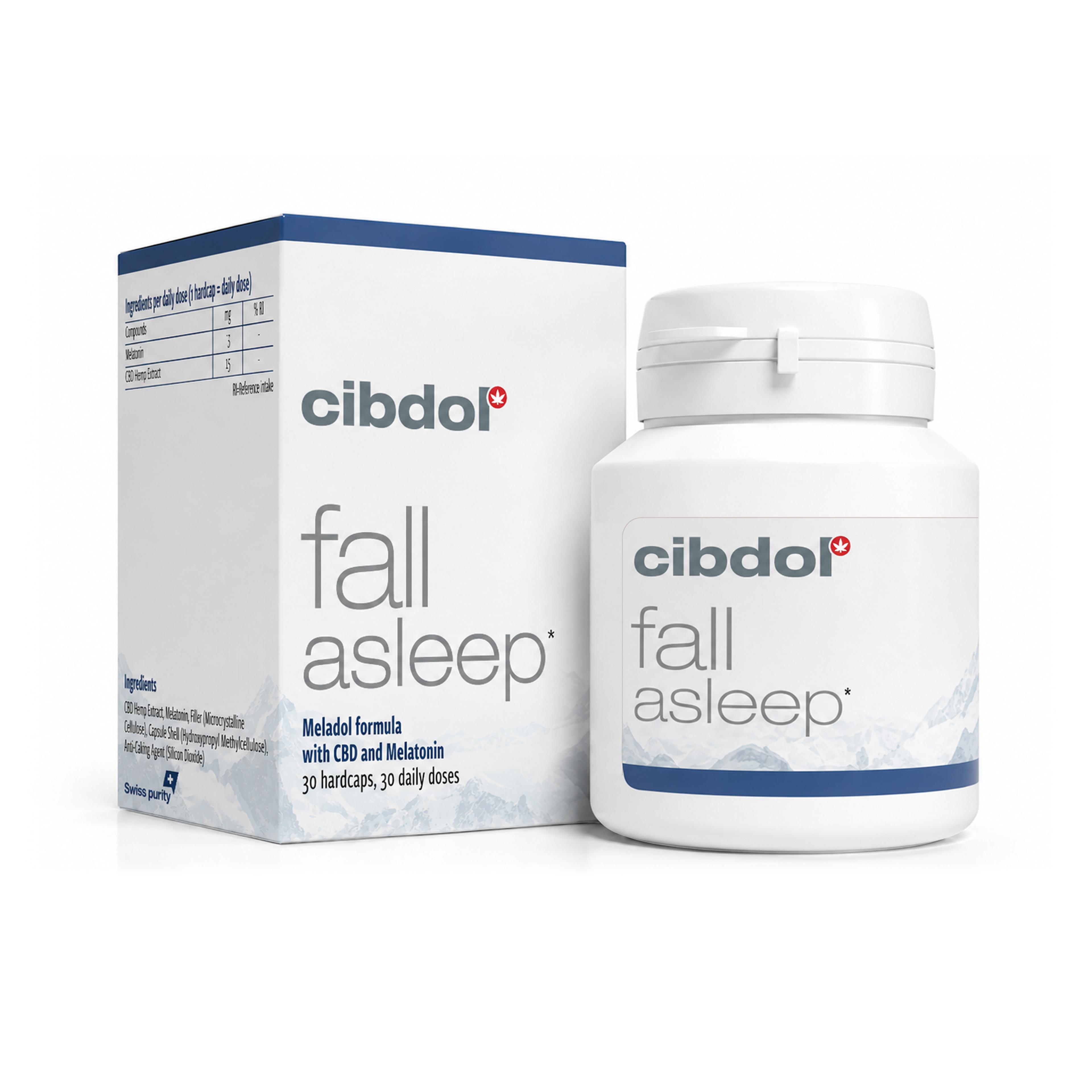
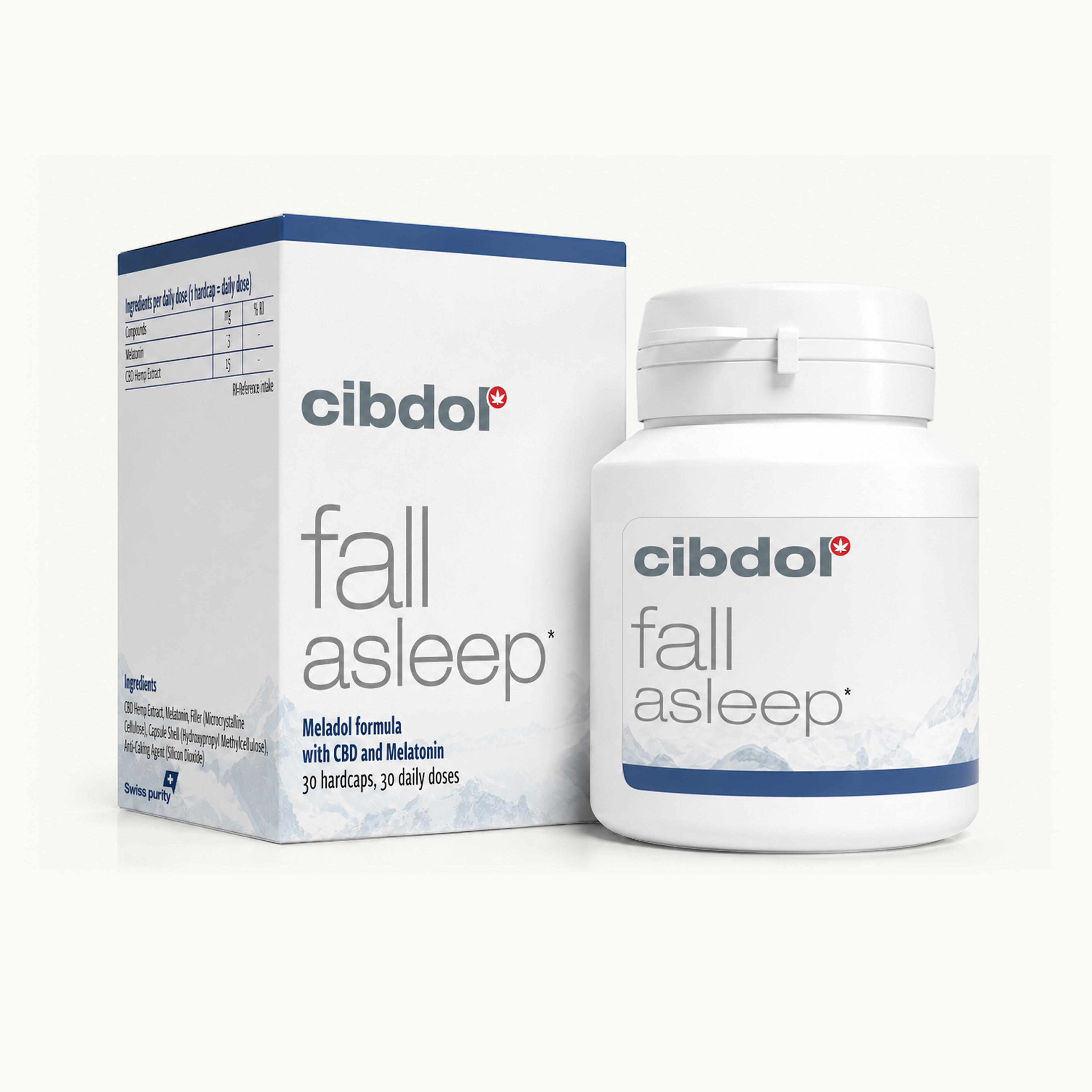
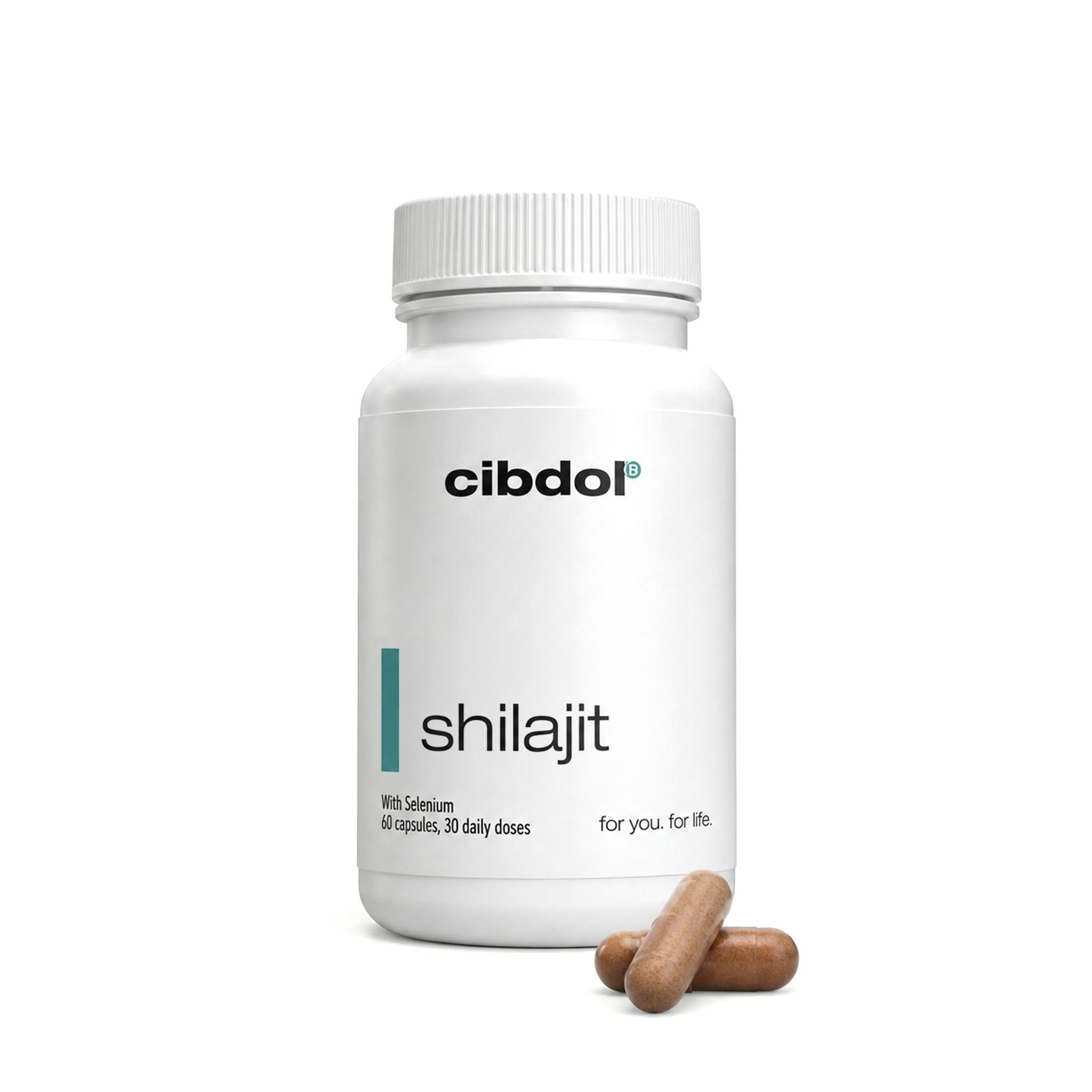
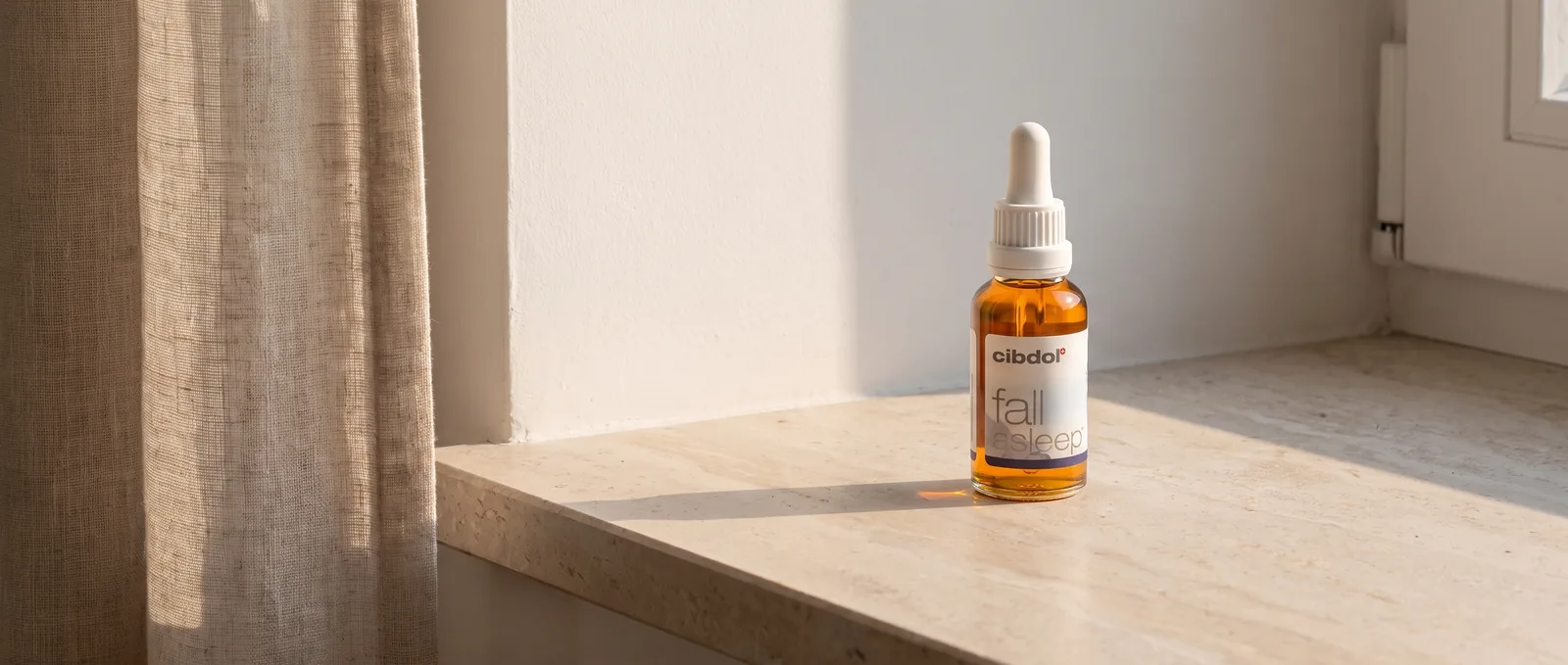
Delivery format significantly alters this pharmacokinetic profile, as demonstrated in a randomised crossover trial of 14 healthy male volunteers where a sublingual spray generated an early peak concentration at roughly 23 minutes, compared to a prolonged-release tablet that peaked at about 64 minutes before sustaining an extended plateau and a slower decline. [3] Cibdol sells melatonin in two forms, a liquid and a capsule, under the Fall Asleep name. Selecting between formats allows individuals to match uptake speed with their preferred routine.
Receptors and circadian signaling
Melatonin operates through two dedicated high-affinity G protein-coupled receptors, designated MT1 and MT2, which it activates directly to signal the biological night to surrounding tissues. [1] These two receptors are also why melatonin has a pharmacology at all, and progress in understanding how they modulate sleep and circadian rhythms led to the discovery of a class of compounds designed to activate them. [1]
Researchers use the onset of the body's own evening melatonin rise, sampled under dim light, as a reliable marker of where a person's clock is set, because the rise appears to be masked only by bright light while sleep and activity do not appear to influence it. [5]
What clinical trials recorded for sleep onset and duration
When evaluated across large cohorts, the measurable differences in sleep parameters remain modest. A meta-analysis pooling 19 randomised placebo-controlled trials with 1683 participants recorded an average reduction in sleep onset latency of 7.06 minutes, with a 95 percent confidence interval of 4.37 to 9.75 minutes, and an increase in total sleep time of 8.25 minutes, with a 95 percent confidence interval of 1.74 to 14.75 minutes, which the authors characterised as modest effects that did not fade with ongoing use. [4]
Frequently Asked Questions
8 questionsHow long does melatonin take to work?
How long does melatonin stay in the body?
Does the elimination half-life reflect how long the effect lasts?
How much of an oral melatonin dose reaches circulation?
How do different product formats change absorption?
What biological mechanism does melatonin use?
Why is the evening melatonin rise used as a circadian marker?
What sleep changes did clinical trials record?
About this article


Luke Sholl has been writing about cannabinoids, CBD, and the broader benefits of nature since 2011. His background includes first-hand cannabis cultivation experience spanning the full seed-to-harvest lifecycle across so
This wiki article was drafted with AI assistance and reviewed by Luke Sholl, CBD & wellness writer. Editorial oversight by Joshua Askew.
Medical disclaimer. This content is for informational purposes only and does not constitute medical advice. Consult a qualified healthcare provider before use of any substance.
References (5)
- [1]Liu J, Clough SJ, Hutchinson AJ, Adamah-Biassi EB, Popovska-Gorevski M, Dubocovich ML. MT1 and MT2 melatonin receptors: a therapeutic perspective. Annual Review of Pharmacology and Toxicology 2016;56:361-383. doi:10.1146/annurev-pharmtox-010814-124742 Source
- [2]Andersen LPH, Werner MU, Rosenkilde MM, et al. Pharmacokinetics of oral and intravenous melatonin in healthy volunteers. BMC Pharmacology and Toxicology 2016;17:8. doi:10.1186/s40360-016-0052-2, PMID 26893170 Source
- [3]Ait Abdellah S, Raverot V, Gal C, Guinobert I, Bardot V, Blondeau C. Bioavailability of melatonin after administration of an oral prolonged-release tablet and an immediate-release sublingual spray in healthy male volunteers. Drugs in R&D 2023;23(3):257-265. doi:10.1007/s40268-023-00431-9 Source
- [4]Ferracioli-Oda E, Qawasmi A, Bloch MH. Meta-analysis of randomised placebo-controlled melatonin trials. PLoS ONE 2013;8(5):e63773. doi:10.1371/journal.pone.0063773, PMID 23691095 Source
- [5]Lewy AJ, Sack RL. The dim light melatonin onset as a marker for circadian phase position. Chronobiology International 1989;6(1):93-102. doi:10.3109/07420528909059144, PMID 2706705 Source
Related Articles
Pink noise and the evidence behind coloured sound
A review of acoustic colour definitions, evidence ratings for continuous sound, and laboratory findings on pink noise and sleep structure.
What core sleep means on a wearable device
Core sleep on modern smartwatches corresponds to laboratory light sleep, stages N1 and N2. Earlier research used the term differently, while consumer devices show measurable differences from clinical polysomnography.
Why do we sleep and what the research measures
Researchers have proposed several explanations for sleep, from energy conservation to neural maintenance. This review examines what empirical studies have measured in humans and animals.

Biphasic sleep across history and modern science
This article outlines historical and modern research on biphasic sleep, contrasting preindustrial accounts with field studies and controlled polyphasic trials.
The military sleep method, origins and evidence
The military sleep method traces back to a 1981 book by track coach Bud Winter. Popular retellings claim fast results, but the method itself has not been tested.

Understanding sleep debt and how recovery sleep works
Sleep debt reflects the cumulative difference between required and obtained rest. Laboratory trials reveal how performance deficits accumulate over time and examine the dynamics of subsequent recovery.
How accurate is a sleep tracker at scoring rest stages
Validation studies compare consumer sleep technology with laboratory recordings. Trackers detect sleep reliably but misclassify wakefulness and show inconsistent agreement on stages.
Yoga nidra session steps and scientific evidence
Yoga nidra is a structured guided relaxation practice. Research has evaluated its physiological patterns and measured overnight sleep changes with mixed results.
What objective studies reveal about sleeping positions
Sensor data show adults spend over half the night on their side, with shifts decreasing as age increases. Evidence linking spinal symptoms to specific positions remains thin.
