Chamomile tea sleep, what was actually measured
Definition
Centuries of bedtime routine rest on traditional use, but human trial data on chamomile and sleep quality comes from a single study in older adults.
The common interest in chamomile tea sleep rests on centuries of routine, yet direct clinical testing is remarkably rare. While hot infusions remain a staple of evening habits, understanding what the plant does requires looking closely at formal research.
A traditional botanical in the review record
Chamomile is one of the oldest documented medicinal herbs, and its traditional uses and chemistry are set out in the review literature. [1] Centuries of bedtime routine have established its reputation in folk practice. However, historical popularity is a reason to examine a plant systematically rather than confirmation of an outcome.
The clinical trial in older adults
A clinical trial gave chamomile extract to elderly participants and measured sleep quality as its outcome, which makes it one of the few direct tests of the association rather than an inference from tradition. [2]

That trial was conducted in older adults. Its result describes that population and does not automatically transfer to everyone. [2] Sleep architecture and nightly disruptions change across a lifespan, meaning findings gathered in 60-year-old or 70-year-old participants cannot be assumed to describe younger age brackets.
Infusion compared with standardised extract
A standard cup of tea prepared from dried flowers is chemically distinct from an extract. An infusion varies widely in temperature, steeping duration, and raw flower quality. A standardised extract delivers consistent concentrations of selected phytochemicals, such as flavonoids. Because the trial administered an extract, its recorded values do not quantify the impact of drinking a cup of brewed tea.
Formulation and regulatory context
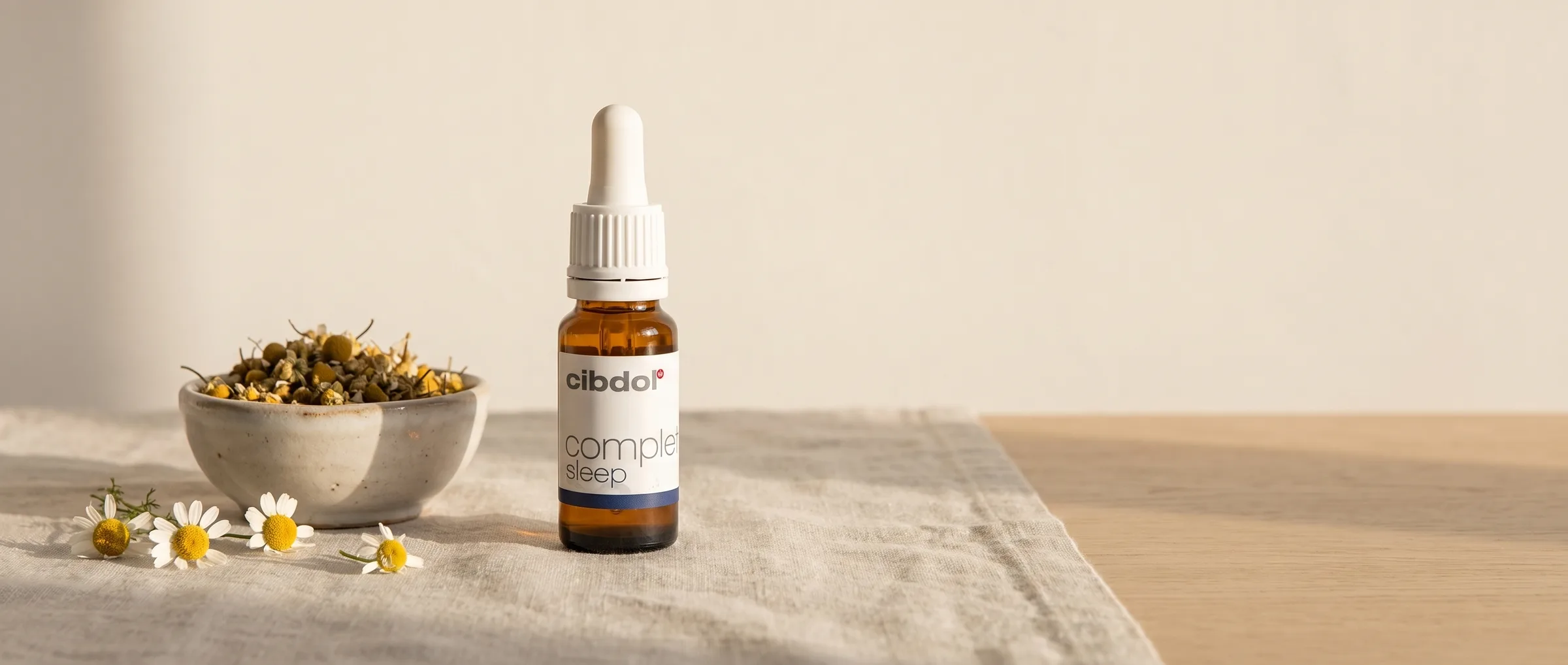
Cibdol uses chamomile, listed as matricaria extract, in Complete Sleep alongside lavender extract, CBD and CBN.
No European health claim is authorised for chamomile and sleep, so no label may state one.
This article reports a review and one clinical trial. It is not medical advice and recommends nothing.
Frequently Asked Questions
8 questionsWhat does clinical testing show regarding chamomile and sleep?
Is tea identical to the extract examined in the trial?
Who participated in the chamomile clinical trial?
How thoroughly is chamomile documented in scientific literature?
Can a product label claim that chamomile supports sleep?
Which Cibdol formula includes chamomile?
Does widespread traditional use confirm that an herb works?
Does this summary make a product recommendation?
About this article

Luke Sholl has been writing about cannabinoids, CBD, and the broader benefits of nature since 2011. His background includes first-hand cannabis cultivation experience spanning the full seed-to-harvest lifecycle across so
This wiki article was drafted with AI assistance and reviewed by Luke Sholl, CBD & wellness writer. Editorial oversight by Joshua Askew.
Medical disclaimer. This content is for informational purposes only and does not constitute medical advice. Consult a qualified healthcare provider before use of any substance.
References (2)
- [1]Srivastava JK, Shankar E, Gupta S. Chamomile: a herbal medicine of the past with a bright future. Molecular Medicine Reports 2010;3(6):895-901. doi:10.3892/mmr.2010.377 Source
- [2]Adib-Hajbaghery M, Mousavi SN. The effects of chamomile extract on sleep quality among elderly people: a clinical trial. Complementary Therapies in Medicine 2017;35:109-114. doi:10.1016/j.ctim.2017.09.010 Source
Related Articles
Pink noise and the evidence behind coloured sound
A review of acoustic colour definitions, evidence ratings for continuous sound, and laboratory findings on pink noise and sleep structure.
What core sleep means on a wearable device
Core sleep on modern smartwatches corresponds to laboratory light sleep, stages N1 and N2. Earlier research used the term differently, while consumer devices show measurable differences from clinical polysomnography.
Why do we sleep and what the research measures
Researchers have proposed several explanations for sleep, from energy conservation to neural maintenance. This review examines what empirical studies have measured in humans and animals.
Biphasic sleep across history and modern science
This article outlines historical and modern research on biphasic sleep, contrasting preindustrial accounts with field studies and controlled polyphasic trials.
The military sleep method, origins and evidence
The military sleep method traces back to a 1981 book by track coach Bud Winter. Popular retellings claim fast results, but the method itself has not been tested.
Understanding sleep debt and how recovery sleep works
Sleep debt reflects the cumulative difference between required and obtained rest. Laboratory trials reveal how performance deficits accumulate over time and examine the dynamics of subsequent recovery.
How accurate is a sleep tracker at scoring rest stages
Validation studies compare consumer sleep technology with laboratory recordings. Trackers detect sleep reliably but misclassify wakefulness and show inconsistent agreement on stages.
Yoga nidra session steps and scientific evidence
Yoga nidra is a structured guided relaxation practice. Research has evaluated its physiological patterns and measured overnight sleep changes with mixed results.
What objective studies reveal about sleeping positions
Sensor data show adults spend over half the night on their side, with shifts decreasing as age increases. Evidence linking spinal symptoms to specific positions remains thin.
