Liposomes: The Structure Behind The Word

Definition
A liposome is a very small closed sac whose wall is made of phospholipid, the molecule family that also forms the outer membrane of a living cell, curled round to enclose a pocket of water. The structure was described in a 1965 report by Bangham, Standish and Watkins, who found that phospholipids swollen in water arranged themselves into closed, membrane-bounded sacs [1]. Today liposomes are used as carrier structures in both food and pharmaceutical formulation [2].
A closed sac, not a droplet
A liposome is a very small closed sac with a wall made of phospholipid and a pocket of water inside it. Phospholipid is the fat-based molecule family that makes up the outer membrane of a living cell, which is why a liposome gets described as a copy of cell-membrane architecture, built at a tiny scale and holding water rather than a whole cell. Two ingredients, then: water and phospholipid.
The part that surprises people is that nobody builds the wall. Bangham, Standish and Watkins reported in 1965 that phospholipids swollen in water arranged themselves into closed sacs bounded by a membrane [1]. Self-assembly, in other words. The molecules take up a layered arrangement, and the layer curves round until it closes on itself, leaving water trapped in the middle and water on the outside.
That 1965 report uses the word lamellae for those layers [1]. Plural, because a liposome is not always a single wall. Some have one layer, some have several stacked around the same core, and sorting the family into classes is a documented part of the liposome literature [2]. The general word covers all of them.
It helps to say what a liposome is not. It isn't a droplet of oil suspended in water, and it isn't a coating sprayed onto the outside of something. The defining feature is the closed membrane and the water it encloses. Take the closure away and you have layers of lipid. You no longer have a sac with an inside and an outside.
That inside and outside is the whole point for anyone mixing a formula. A liposome offers two distinct spaces: the water pocket at the centre, and the lipid wall itself. For a formulator, that means a defined location for an ingredient rather than an ingredient loosely dispersed through a liquid.
Words drift, so it's worth pinning them down. A vesicle is the general term for a small sac bounded by a membrane. A liposome is the vesicle whose membrane is made of phospholipid. Liposomal is the adjective, and it describes a format, the shape of the carrier a formula uses, and nothing more than that on its own.
Scale is the other thing to hold on to. These are structures you need a laboratory to see, described in a scientific report from 1965 and worked on ever since [1]. They also turn up far outside cannabinoids: liposomes serve as carrier structures in both food and pharmaceutical formulation [2]. A familiar industrial tool, not a fashion.
None of this is unusual chemistry. Put the right phospholipid in water under the right conditions and the sacs form, which is what the 1965 work described [1]. The interesting questions come afterwards: which class of liposome, prepared how, carrying what, and documented where.
Bangham, 1965
The structure has a paper behind it. In 1965, Bangham, Standish and Watkins published a report on phospholipids swollen in water, and on what happened when univalent ions met the layers those phospholipids formed [1].
What they described first was the structure. Phospholipids, swollen in water, self-arranged into closed sacs bounded by a membrane [1]. The structure is older than its name, and that one observation is the origin of the research that came after it.
What they then measured was movement. The report examined the diffusion of univalent ions across the lamellae, the stacked layers formed by the swollen phospholipid [1]. Univalent means the ion carries a single unit of charge. So the study sits in the field of membrane behaviour: how a lipid layer behaves as a barrier, and what crosses it.
That is a narrower subject than most people expect from a paper this widely cited. It isn't about a supplement, a bottle or a person. It's about a physical system in a laboratory and the numbers you can get out of it [1].
Why a closed sac made the measurement possible
A closed sac is a boundary with two sides. That's what turns a quantity of lipid into something you can measure. Once there's a defined inside and a defined outside, you can ask how much of something moves from one to the other, which is precisely the question the 1965 report put to univalent ions [1].
Before the closed structure was described, there was no clean way to frame that question for a phospholipid layer. After it, there was a physical model: reproducible, made from water and phospholipid, and close enough in architecture to a cell membrane to be worth studying [1]. Models like this earn their place by being measurable.
Two things follow, and both are worth keeping straight. First, the structure of a liposome has been described in the scientific literature since 1965, so it's neither new nor anyone's private property [1]. Second, a report on ion diffusion across lipid layers is a report on ion diffusion across lipid layers [1]. It tells you the sacs form and that the layers can be studied as barriers. It doesn't describe what a finished formula does in a person, because that wasn't the question in front of Bangham's team.
The later literature is where the sorting happens. Classification, preparation methods and applications in food and pharmaceutical formulation have been reviewed as a field of their own [2]. That review is the bridge between the 1965 observation and a mixing tank: it sets out liposomes as carrier structures with named classes and named preparation routes [2].
Our own reason for caring about the year is plain. Cibdol was founded in Switzerland, liposomal formulas have been part of our range since 2014, and a format described in print since 1965 is a format you can explain to someone without hand-waving [1].
A carrier, in plain terms
Carrier is a plain word doing plain work. In a formula, the carrier is the thing that holds another ingredient and gives it a place to sit. Liposomes are used that way in both food and pharmaceutical formulation, a role documented in the 2013 review by Akbarzadeh and colleagues [2].
The place to sit is the useful bit. A liposome has a water pocket in the middle and a lipid wall around it, so an ingredient ends up in a defined location instead of loosely dispersed. Water-friendly material and the water pocket are an obvious pairing. The wall is lipid, so lipid-friendly material has somewhere it belongs too. Either way, the formulator knows where the ingredient is.
Note what that sentence does not say. A defined location is a structural fact, not an outcome. The two papers cited on this page cover membrane behaviour under laboratory conditions [1] and the classification, preparation and applications of liposomes as carriers [2]. Neither one is a study of a finished supplement in a person.
The same review sets out the classes and the preparation routes, and that's where the industrial side of the subject lives [2]. Number of layers, the phospholipid chosen, the method used to form the sacs: those are formulation decisions, each with its own literature behind it [2]. A front label rarely gets into any of it.
The scale of use is worth stating plainly, because it settles a common worry. Liposomes aren't a wellness invention. They're a formulation tool that food manufacturing and pharmaceutical manufacturing have both used, described in review literature as carrier structures [2]. That's the status of the format: familiar, documented, and no more than that by itself.
One more piece of vocabulary, since labels use it loosely. Liposomal describes how a formula is built, the way capsule or emulsion does. It tells you the shape of the carrier and leaves the quantities to the numbers printed elsewhere on the pack.
- Architecture: a wall of phospholipid, the same molecule family found in cell membranes, closed around a pocket of water.
- Origin: described in the 1965 report by Bangham, Standish and Watkins, who saw phospholipids swollen in water arrange themselves into closed, membrane-bounded sacs [1].
- Formation: self-assembly. Water plus phospholipid under the right conditions, and the sacs form rather than being assembled piece by piece [1].
- What was measured in 1965: the movement of univalent ions across the lamellae, with the closed sac serving as a physical model of membrane behaviour [1].
- Use: carrier structures in food and pharmaceutical formulation, with classes and preparation methods reviewed as a field in their own right [2].
- For the formulator: a defined location for an ingredient, either in the water pocket or within the lipid wall.
The bottle, the batch, the paper
Cibdol was founded in Switzerland, and liposomal formulas have been part of the range since 2014. The description we give them is the same one you've just read: phospholipid sacs used as carrier structures, a format described in print since 1965 [1] with a documented role in food and pharmaceutical formulation [2].
The standard behind every Cibdol product is a batch certificate of analysis. One batch, one report. It confirms what that batch contains, which is a different kind of statement from an adjective on the front of a box. Front labels describe. Reports measure.
That applies across the range, not only to the liposomal formulas. The remaining CBD products are documented on the same basis: the batch is analysed, and the figures are there to read before the bottle becomes part of anyone's routine.
There's a plain reason we work this way. A format word can be printed by anybody. A batch analysis has to be produced, and it either matches the pack or it doesn't. That's the part worth reading, and it has been our standard since 2014.
Two small notes, so the word doesn't do more work than it should. Liposomal is not a strength: strength is the amount of an ingredient a formula carries, and that figure sits with the numbers, not with the format. And a liposome is defined by its closed phospholipid membrane [1], which means the same word can cover formulas built in different ways, from different classes and different preparation routes [2].
If you like checking things before you buy, that instinct is the right one, and the list of what's checkable is short.
- The format word. Liposomal tells you the carrier is a phospholipid sac closed around water, the structure described since 1965 [1].
- The amount. Milligrams per bottle and per serving are printed on the pack. They are never implied by the format.
- The batch number. It's the link between the bottle in your hand and one specific analysis, so it's the first thing to note down.
- The certificate of analysis. Cibdol publishes one per product batch, which is how the contents get confirmed on paper rather than in adjectives.
- The match. A certificate belongs to a batch, and a batch has a number, so the report you read should be the one that belongs to your pack.
- The rest of the ingredient list. The phospholipid and the base are ingredients like any other, and they appear in the list with everything else.
- The scope of the science. The work cited here describes membrane behaviour in the laboratory [1] and the classification, preparation and applications of liposomes as carriers [2].
Lessons from nanomedicine
In clinical research, liposomes are evaluated as engineered nanomedical structures rather than simple dietary additions. A liposome is a small vesicle with a lipid bilayer around an aqueous core, used as a delivery device in medicine, and its behaviour depends on how it is made rather than on the word itself. [3] The lipid bilayer can vary in composition, electrical charge, size and surface chemistry, meaning two preparations that share the same general classification can display completely different physical stability in a biological fluid. [3]
The practical realities of working with these structures became clear through regulatory history. The first liposomal drug approved by the US regulator has been the subject of a review summarising the lessons learned from its development and use. [4] In that landmark development, researchers found that encapsulating an active compound did not automatically alter its intrinsic chemical properties. Instead, the lipid carrier altered circulation persistence and distribution volume, showing that vesicle design requires meticulous control over lipid stability and manufacturing reproducibility. [4]
Delivery device versus label marketing
In commercial retail spaces, the term is frequently used as if the presence of lipids guarantees higher absorption or immediate performance. The peer-reviewed literature approaches the subject from the opposite direction. Describing a preparation as liposomal states how it is formulated, not what it will do. The pharmaceutical review literature describes how liposome behaviour depends on their components, size, surface charge and lipid organisation. [3]
A carrier format indicates physical architecture, not a promised outcome. Whether a vesicle remains intact, protects an encapsulated compound, or releases it at a specific rate depends entirely on membrane stiffness, vesicle diameter, and the chemical environment it enters. [3] Without published documentation of physical characteristics, the presence of the word on a package only confirms the intended formulation category.
Reading the product specification
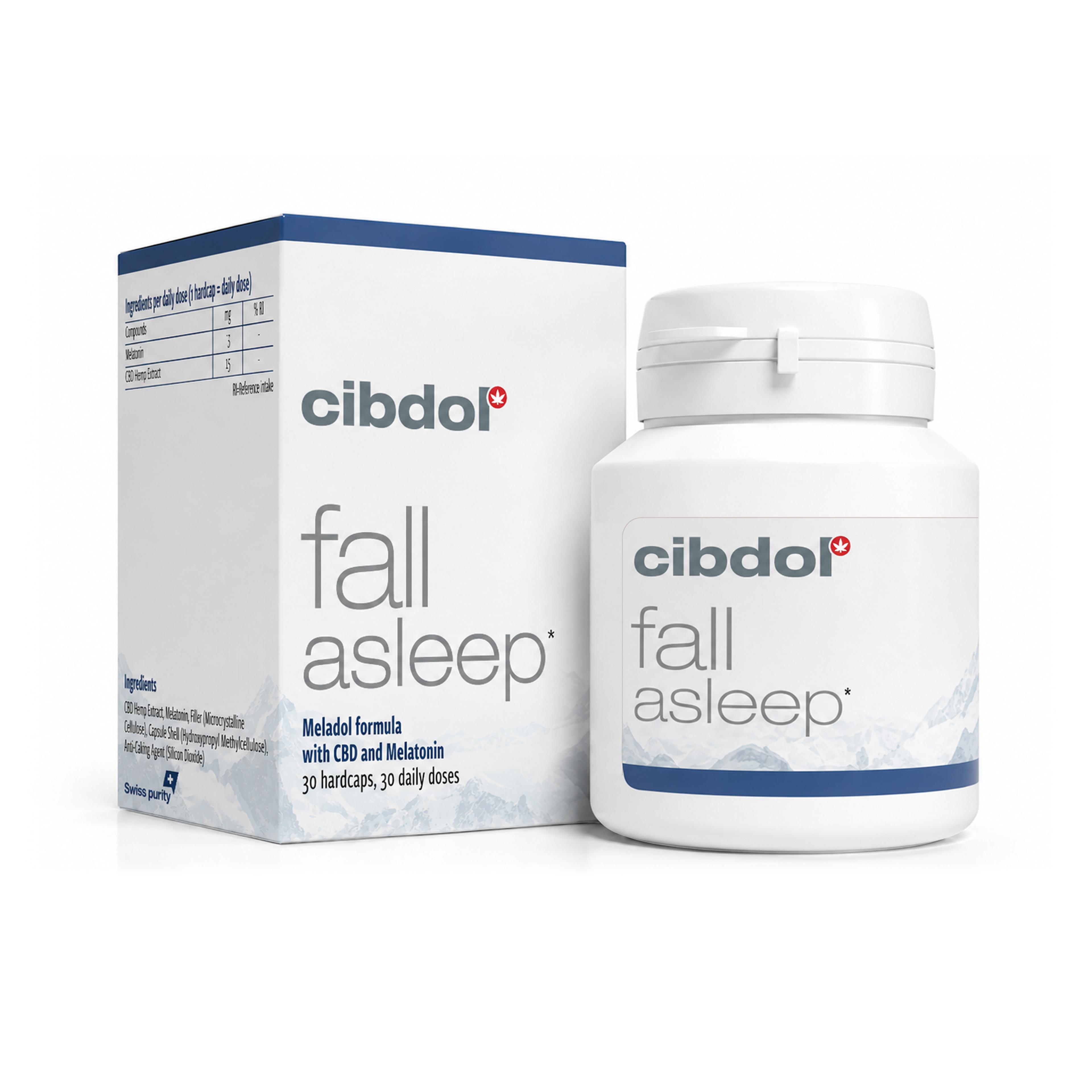
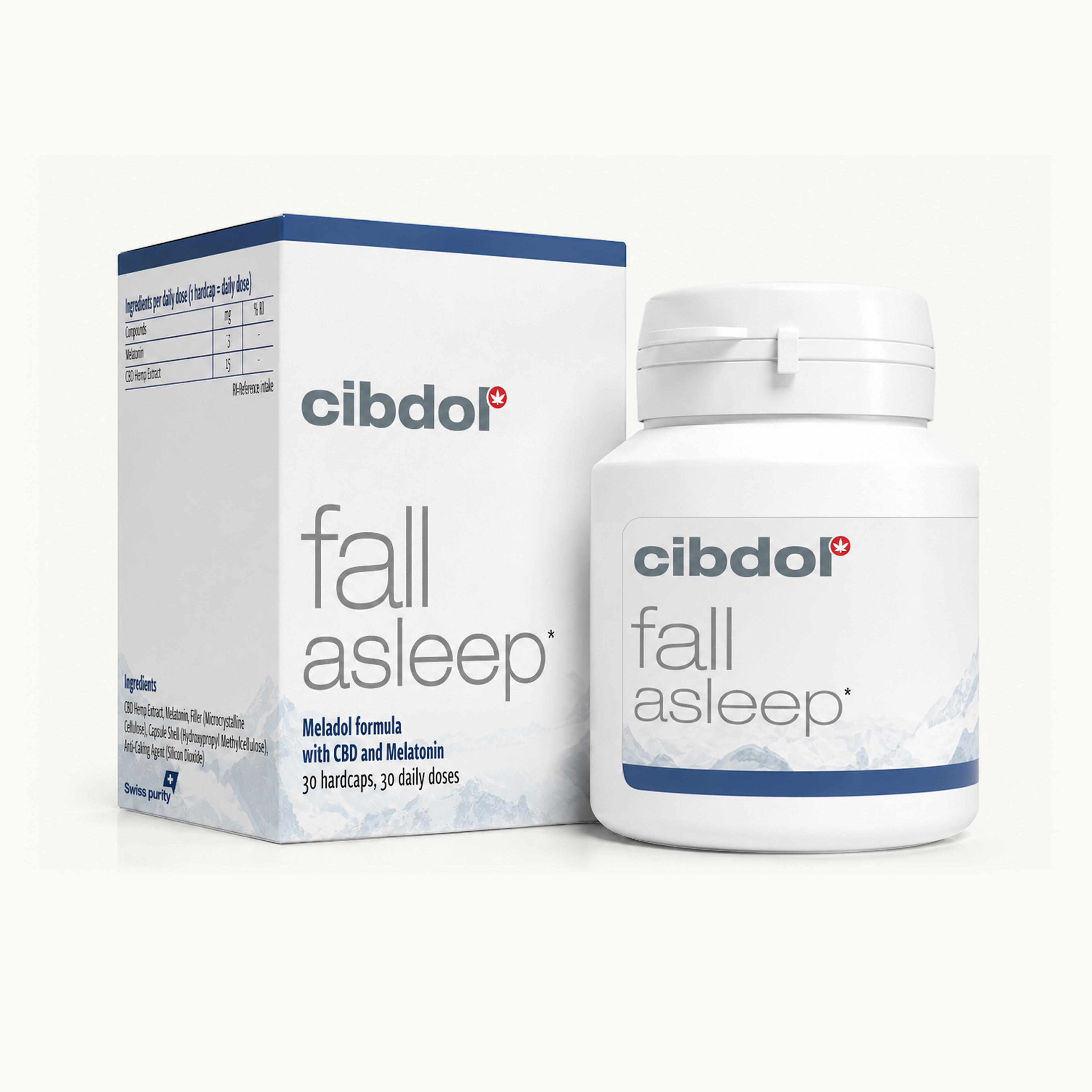
Consumers evaluating lipid-based liquids benefit from separating structural descriptions from outcome expectations. The Cibdol Meladol carton describes itself on the front panel as a liposomal formula with CBD and melatonin, which is the label line this page explains. In that context, the term identifies the carrier method used to hold both a lipid-soluble constituent and an aqueous component within a unified fluid system.
This article describes a formulation technology from the pharmaceutical literature. It is not medical advice and makes no claim about outcomes. When assessing any product, the informative elements remain the independent batch analysis, the exact quantity of active ingredients per dose, and transparent laboratory verification.
Frequently Asked Questions
8 questionsIs a liposome the same thing as a vesicle?
Who first described the structure, and when?
Are liposomes only used in supplements?
Does the word liposomal tell me how strong a formula is?
What did researchers learn from the first approved liposomal medicine?
Does the word liposomal guarantee higher absorption?
How does vesicle structure influence stability?
Why is Meladol described as a liposomal formula?
About this article


Luke Sholl has been writing about cannabinoids, CBD, and the broader benefits of nature since 2011. His background includes first-hand cannabis cultivation experience spanning the full seed-to-harvest lifecycle across so
This wiki article was drafted with AI assistance and reviewed by Luke Sholl, CBD & wellness writer. Editorial oversight by Joshua Askew.
Medical disclaimer. This content is for informational purposes only and does not constitute medical advice. Consult a qualified healthcare provider before use of any substance.
Last reviewed 27 серпня 2026 р.
References (4)
- [1]Bangham, A.D., Standish, M.M. and Watkins, J.C. (1965). Diffusion of univalent ions across the lamellae of swollen phospholipids.
- [2]Akbarzadeh, A. et al. (2013). Liposome: classification, preparation, and applications.
- [3]Bozzuto G, Molinari A. Liposomes as nanomedical devices. International Journal of Nanomedicine 2015;10:975-999. doi:10.2147/IJN.S68861 Source
- [4]Barenholz Y. Doxil, the first FDA-approved nano-drug: lessons learned. Journal of Controlled Release 2012;160(2):117-134. doi:10.1016/j.jconrel.2012.03.020 Source
Related Articles
Valencene: The Molecule Behind the Name
A sesquiterpene built from three isoprene units, fifteen carbons in total, formula C15H24. Here is what the chemistry fixes, and where the published record runs out.
Terpineol: Lilac, Not Pine
Hemp aroma gets talked about in pine and citrus. Terpineol sits somewhere else: a floral monoterpene alcohol whose name hides four isomers and whose boiling point is reported inconsistently.
Sabinene Explained: Formula, Family, Boiling Point
Sabinene sits in the terpene family, with the formula C10H16 and a molar mass around 136 g/mol. Here is what the chemistry fixes, and where the record for this single molecule stops.
Phytol: From Chlorophyll to a Boiling Point
A terpenoid with an alcohol group, a diterpene backbone, and a boiling point that only makes sense with its pressure condition attached. Here is what the record holds, and where it stops.
Ocimene, Described in Four Lines
A short, precise look at one aromatic molecule: its family in the terpene group, the four words used for its smell, and what the approximate 100 °C figure actually marks.
Guaiol: 15 Carbons, One Hydroxyl Group, Two Boiling Points
Guaiol is a sesquiterpene alcohol: a 15-carbon skeleton carrying a hydroxyl group. Here is its structure, its aroma profile, and why one molecule ends up with two very different boiling point figures.

Geraniol: Formula, Family, Boiling Point
Geraniol is a monoterpene alcohol with the formula C10H18O and a boiling point near 230 °C at atmospheric pressure. Here is what the chemistry pins down, and where the published record still opens out.
What Is Farnesene? Start With the Formula
Farnesene is a C15H24 hydrocarbon, and the name covers a family of isomers rather than a single compound. Here is the chemistry, the difference from farnesol, and what the plant record says.

Eucalyptol on a Lab Report: One Compound, Two Names
Eucalyptol and 1,8-cineole are the same molecule written two ways. Here are the terpene basics, the number that keeps getting quoted, and why the batch document matters more than the spelling.
