Three Carrier Oils, and 96% of the Bottle
Definition
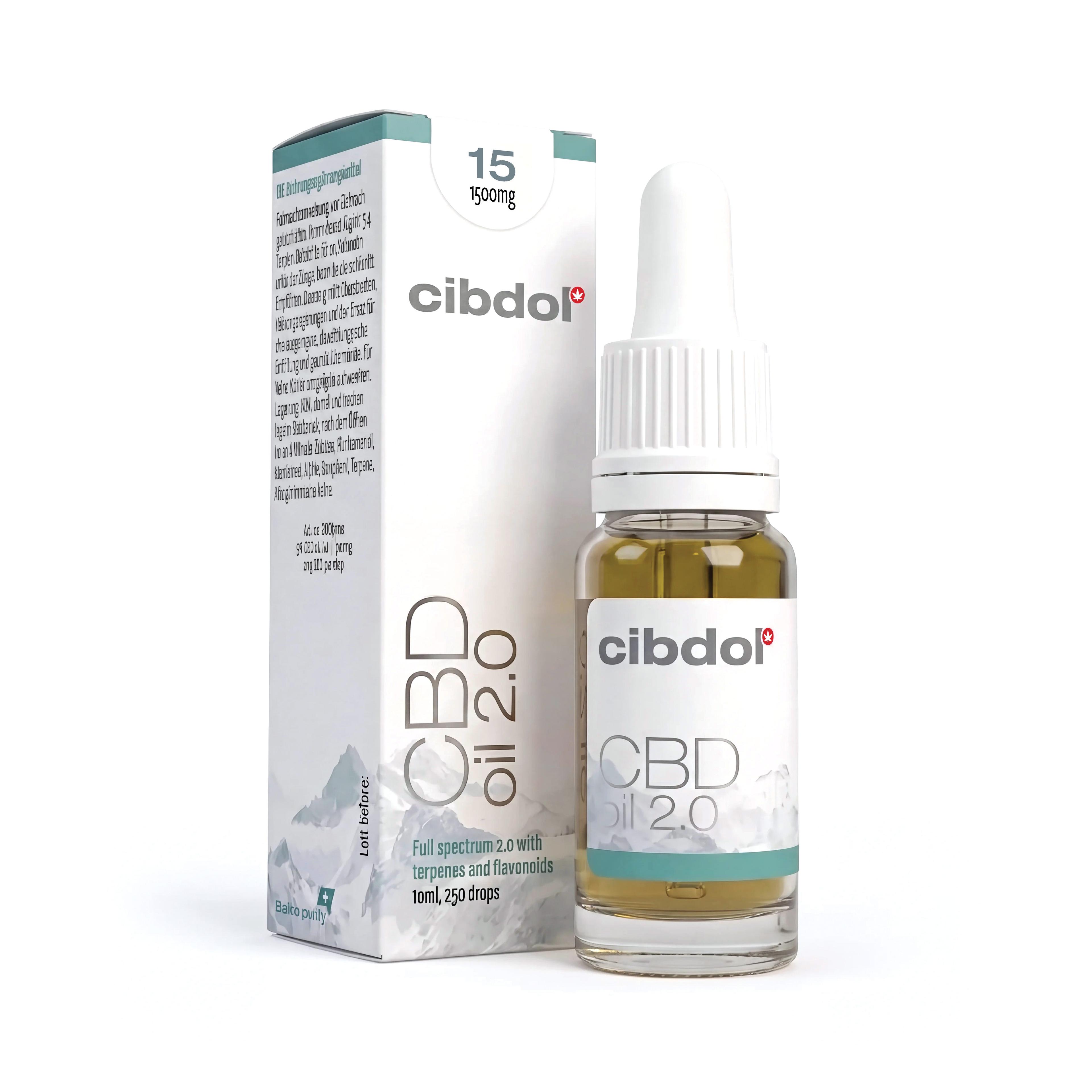
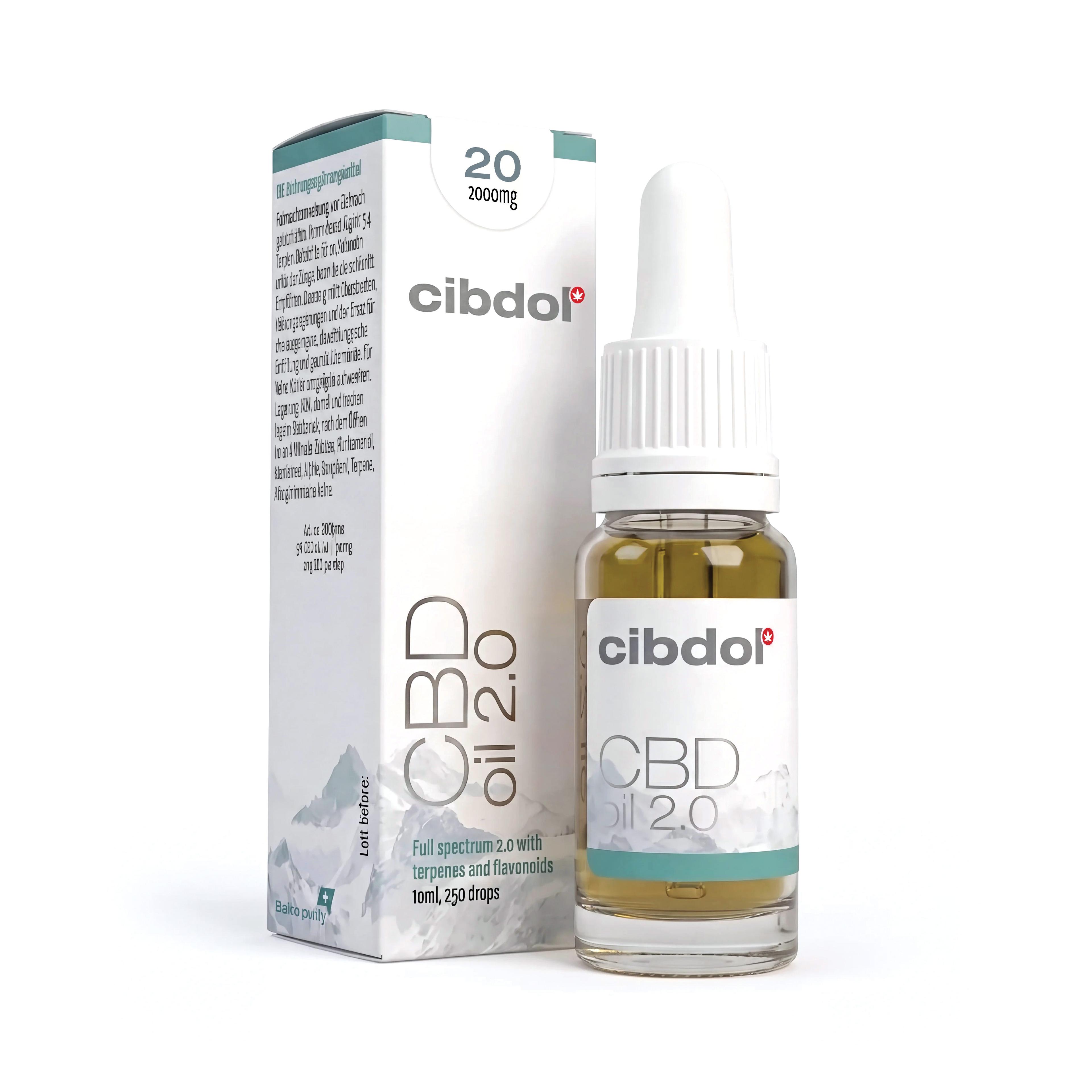
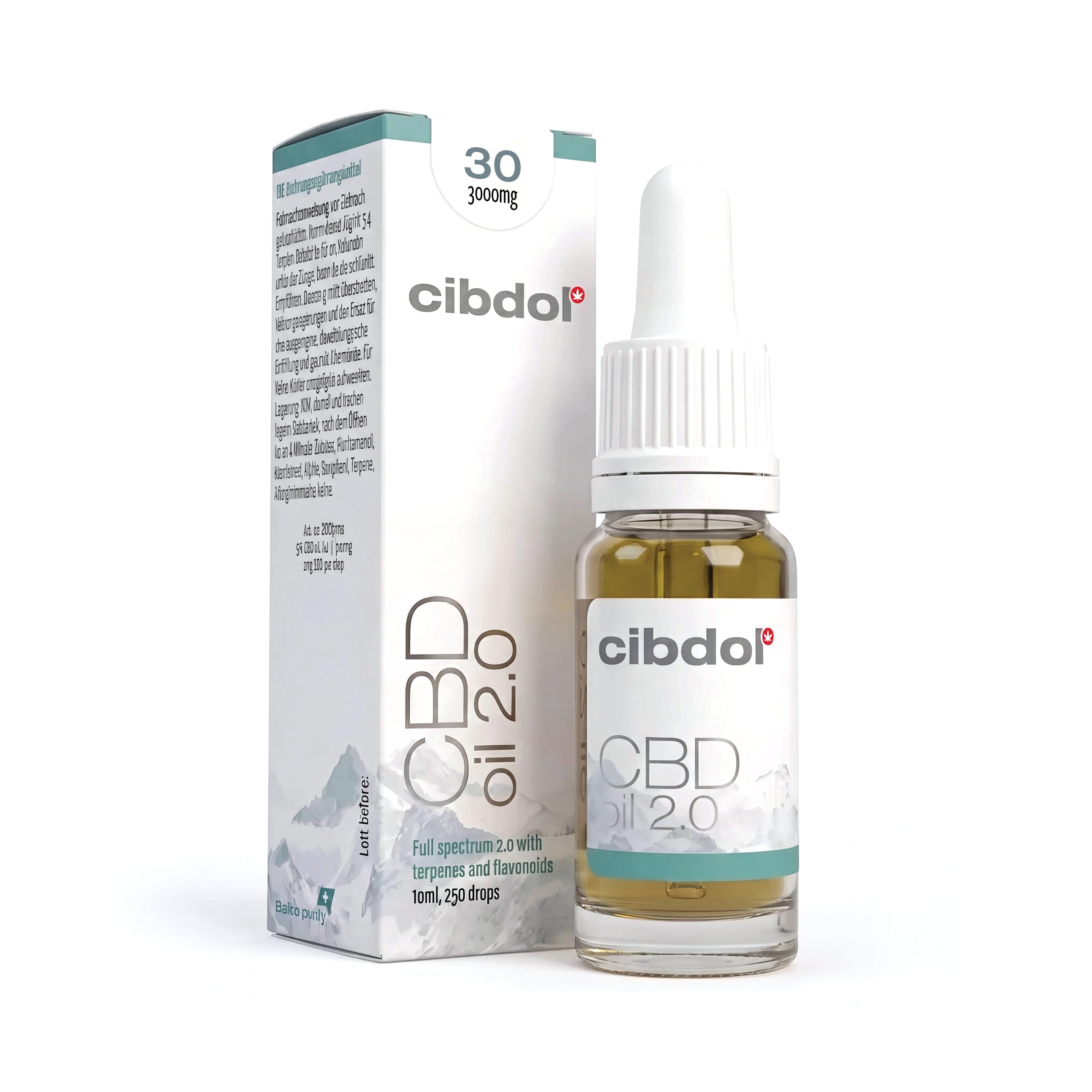
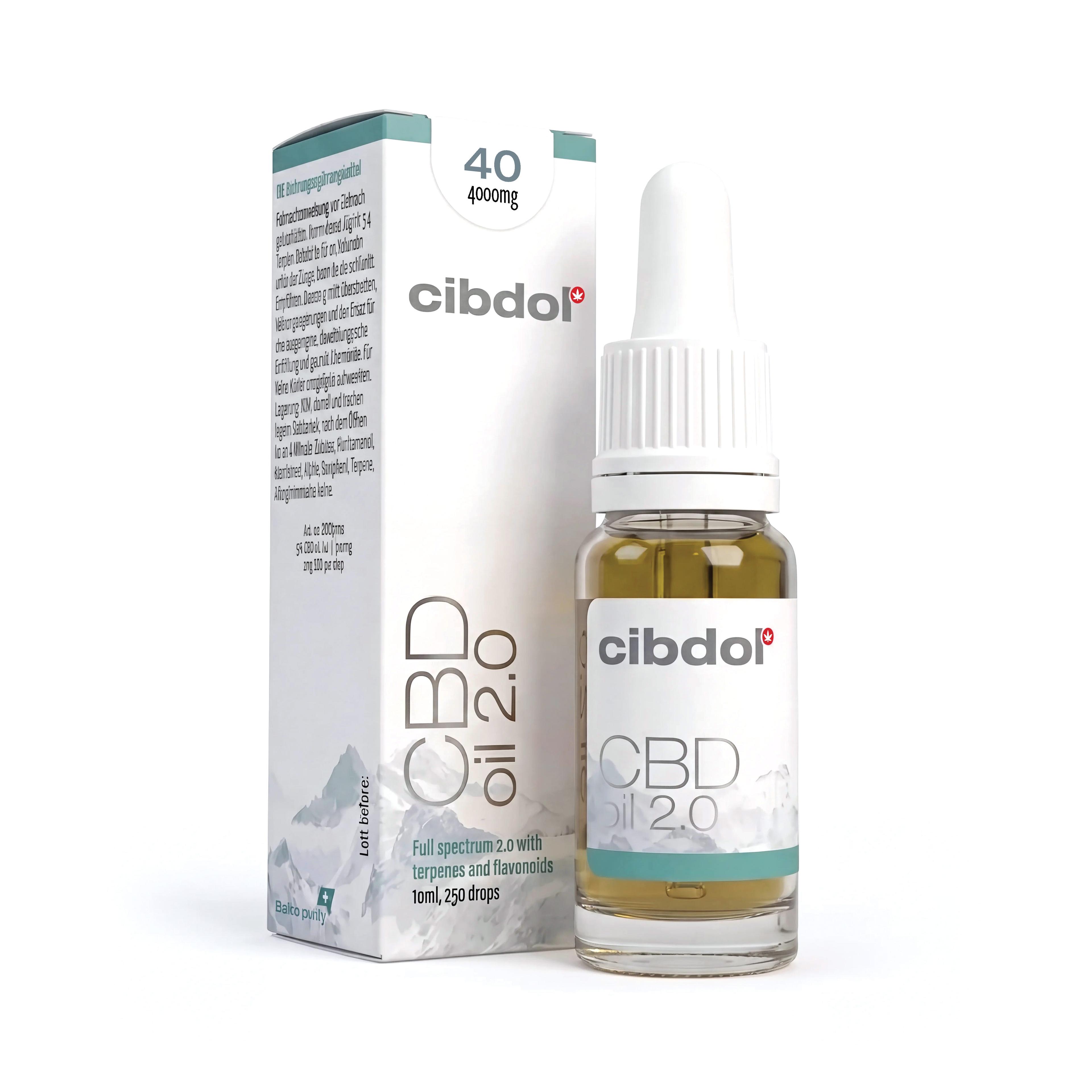
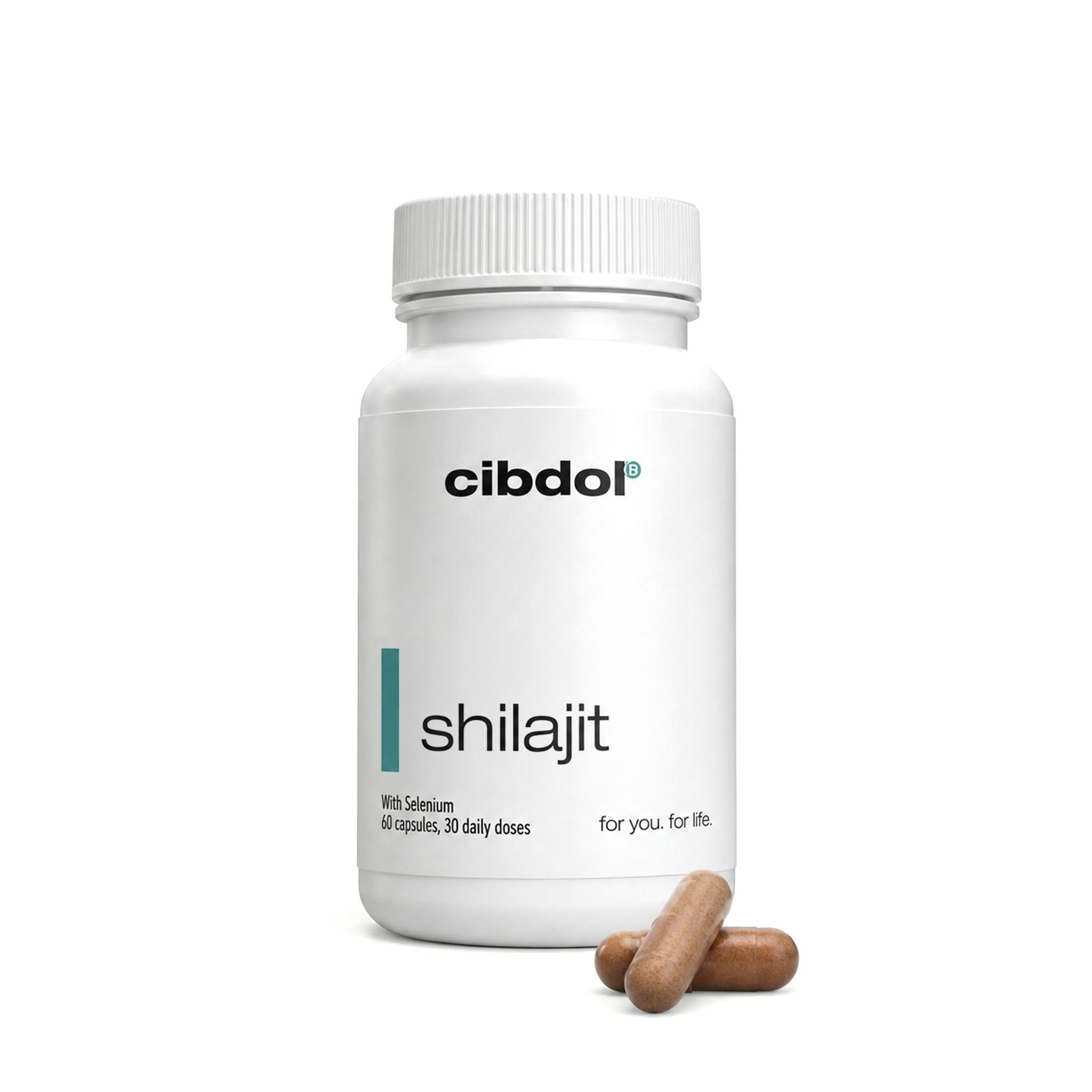
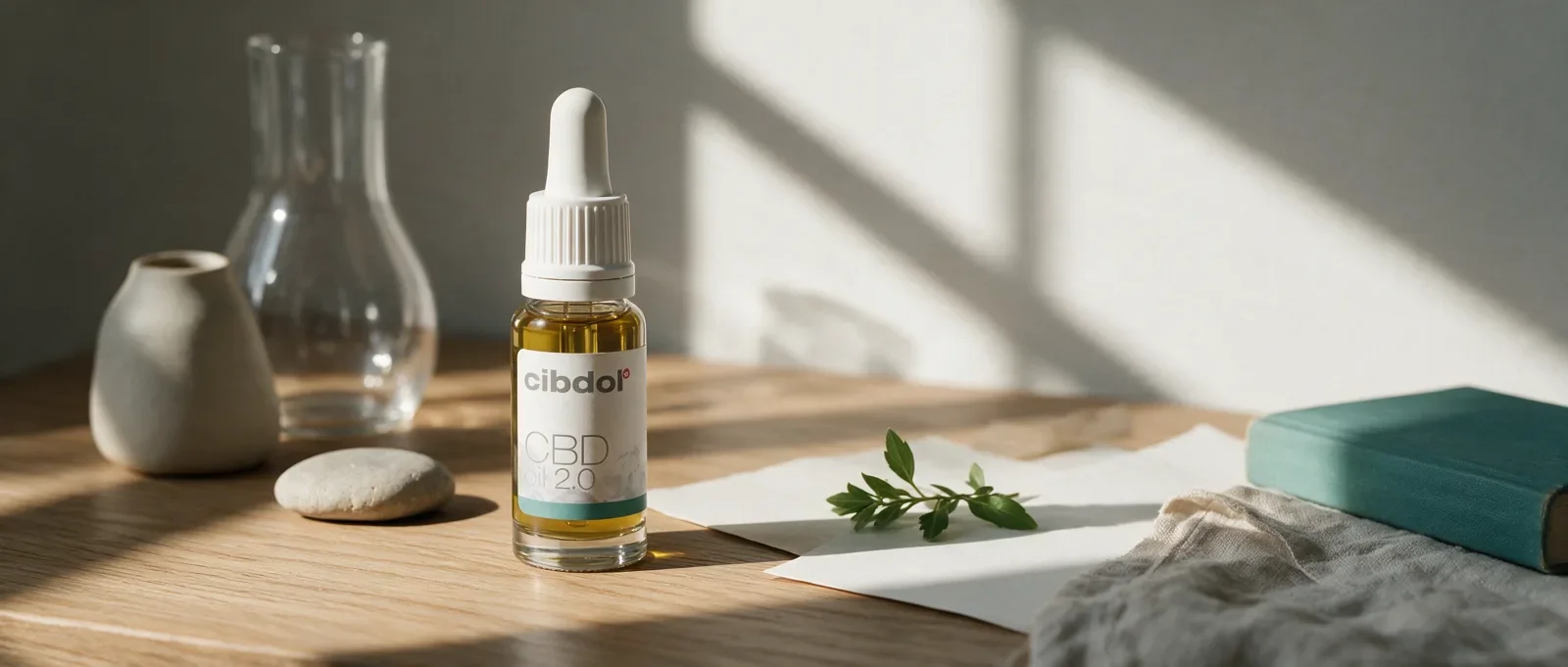
A carrier oil is the food-grade oil a hemp extract gets diluted into, and it accounts for most of what sits inside the bottle. Cibdol works with three of them: cold-pressed hemp seed oil, MCT oil from coconut, and olive oil. Which one you're holding depends on the strength and the format, and it's printed on the label.
Ninety-six percent of a 4% bottle
Read the figure on a 4% CBD oil as a weight. Four percent CBD by weight of the finished bottle. The remaining 96% or so is carrier oil, which makes the carrier the largest ingredient in your hand by a wide margin, and the one people rarely look up.
Three carriers cover the whole range. Cold-pressed hemp seed oil, MCT oil from coconut, and olive oil. That's the full list.
| Carrier oil | Where it appears in the range | Source plant or material |
|---|---|---|
| Cold-pressed hemp seed oil | CBD oils from 2.5% to 20%; capsules from 5% to 20% | Pressed seeds of Cannabis sativa L. |
| MCT oil | CBD oils at 30% and 40%; Complete Sleep, where it is 92.3% of the formula | Coconut |
| Olive oil | CBG oil at 5%; CBN oil at 2:1; softgel fills at 30% and 40% | Olives |
So the three bases don't overlap at random. Cold-pressed hemp seed oil carries the CBD oils from 2.5% up to 20%, and the capsules from 5% up to 20%. MCT oil from coconut carries the 30% and 40% CBD oils. Olive oil is what you'll find behind the CBG oil at 5% and the CBN oil at 2:1, and it's also the base inside the softgel fills at 30% and 40%, sitting there alongside the extract.
One product makes the ratio unusually visible. Complete Sleep is 92.3% MCT oil by formula: a small active load in a large volume of oil. Nothing exotic about that arrangement, it's just what the numbers look like when you write them out.
Three carriers, three sources. Seeds pressed from the hemp plant, coconut, and the olive. Each of them is a food oil before it ever meets a cannabinoid extract, and each one is declared on the pack. Since 2014 the working standard hasn't shifted: a readable ingredient list, and a batch you can verify against it. The carrier belongs on that list, printed in the same size as the rest.
Counting the carbons in a carrier
MCT is short for medium-chain triglyceride. The medium-chain part isn't a style of oil, it's a measurement. Fatty acids with roughly six to twelve carbon atoms in the chain fall into that group. Caprylic acid has eight carbons. Capric acid has ten. Those are the two names sitting behind the three letters, and in Cibdol's case the oil is drawn from coconut.
Long-chain fatty acids start at fourteen carbons and run upwards. They dominate olive oil and cold-pressed hemp seed oil. That single count is the clearest technical line between the three carriers in the range.
| Fatty acid group | Chain length | Carrier where it dominates |
|---|---|---|
| Medium-chain fatty acids | Around 6 to 12 carbons; caprylic acid at 8, capric acid at 10 | MCT oil, sourced from coconut |
| Long-chain fatty acids | 14 carbons and above | Olive oil and cold-pressed hemp seed oil |
| Hemp seed profile as described by Callaway in 2004 [1] | Dominated by linoleic acid and alpha-linolenic acid, at roughly 3:1 omega-6 to omega-3 | Cold-pressed hemp seed oil |
Callaway's 2004 overview of hempseed as a nutritional resource describes that profile in detail: a fatty-acid make-up led by linoleic acid and alpha-linolenic acid, in a ratio of about three to one, omega-6 to omega-3 [1]. Useful context if you've only ever met hemp seed oil as the thing a CBD extract is diluted into.
Because it isn't only that. Hemp seed oil is a food oil in its own right, sold on retail shelves next to rapeseed oil and walnut oil, and it had a nutritional literature of its own well before anyone used it to dilute a cannabinoid extract [1]. Cold-pressed, from the pressed seeds of Cannabis sativa L. Same plant species as the extract, a different part of it.
Olive oil needs less introduction, and coconut-derived MCT oil sits in the middle of that comparison: a food oil too, distinguished by chain length rather than by origin story. Three oils, three fatty-acid pictures, all of them declared by name.
What changes at 30%
There's one number where the base swaps over, and it's the same number for oils and for the capsule range. Below it, cold-pressed hemp seed oil. At it and above, something else.
| Format | Strength | Carrier in the formula |
|---|---|---|
| CBD oil | 2.5% to 20% | Cold-pressed hemp seed oil |
| CBD oil | 30% and 40% | MCT oil from coconut |
| Capsules | 5% to 20% | Cold-pressed hemp seed oil |
| Softgel fills | 30% and 40% | Olive oil, together with the extract |
| CBG oil | 5% | Olive oil |
| CBN oil | 2:1 | Olive oil |
| Complete Sleep | MCT oil at 92.3% of the formula | MCT oil from coconut |
Two things are worth reading off that grid. First, the switch point is 30% in both columns, oils and capsules alike, so you only have to remember one figure. Second, what's on the other side of the switch isn't identical across formats. A 30% or 40% CBD oil in a pipette bottle is built on MCT oil. A 30% or 40% softgel fill is built on olive oil plus extract.
The lower-strength picture is tidier. From 2.5% to 20% in the oils, and from 5% to 20% in the capsules, the base is cold-pressed hemp seed oil throughout. No mixed cases, no exceptions buried in the middle of the range.
Then there are the bottles that don't follow the CBD numbering at all. The CBG oil at 5% and the CBN oil at 2:1 both use olive oil, so the carrier there is a property of the product rather than of a percentage. And Complete Sleep sits in its own row for a reason: at 92.3% MCT oil, the carrier isn't a detail of the formula, it more or less is the formula by volume.
Whichever row applies to the bottle in front of you, the carrier is named on the pack and the batch has its own analysis. That pairing has been the standard here since 2014.
Nine things the label settles for you
Everything above can be checked without taking anyone's word for it. The carrier is an ingredient, so it's declared like any other ingredient, and the strength on the front tells you which of the three to expect. Here's the order that gets you there quickly.
- Turn the bottle round and find the ingredient list, because the carrier is on it and accounts for most of what you're holding.
- Read the percentage on the front as a weight figure, the way a 4% oil means 4% CBD by weight of the finished bottle, with roughly 96% carrier oil around it.
- For a CBD oil between 2.5% and 20%, expect cold-pressed hemp seed oil, since that's the base across the whole lower half of the range.
- For a CBD oil at 30% or 40%, expect MCT oil from coconut, which is why those two bottles read differently from the rest of the line.
- With capsules, use the same figure: from 5% to 20% the fill is hemp seed oil, while the 30% and 40% fills are olive oil together with the extract.
- If it's the CBG oil at 5% or the CBN oil at 2:1, the base is olive oil in both cases, so the cannabinoid changes and the carrier doesn't.
- On Complete Sleep, note the 92.3% figure for MCT oil, which tells you it's a small active load carried in a large volume of oil.
- If the three letters MCT are what you want explained, they describe chain length rather than origin: around six to twelve carbons, with caprylic acid at eight and capric acid at ten.
- Finally, open the batch analysis for the product and read it next to the ingredient list, because a readable list plus a verifiable batch has been the working standard here since 2014.
Frequently Asked Questions
4 questionsWhich carrier oil is in a 10% CBD oil?
Where does Cibdol's MCT oil come from?
Which products have olive oil as the base?
How much of the bottle is actually carrier oil?
About this article


Luke Sholl has been writing about cannabinoids, CBD, and the broader benefits of nature since 2011. His background includes first-hand cannabis cultivation experience spanning the full seed-to-harvest lifecycle across so
This wiki article was drafted with AI assistance and reviewed by Luke Sholl, CBD & wellness writer. Editorial oversight by Joshua Askew.
Medical disclaimer. This content is for informational purposes only and does not constitute medical advice. Consult a qualified healthcare provider before use of any substance.
Last reviewed 27 серпня 2026 р.
References (1)
- [1]Callaway, J.C. (2004). Hempseed as a nutritional resource: An overview. DOI: https://doi.org/10.1007/s10681-004-4811-6
Related Articles
Valencene: The Molecule Behind the Name
A sesquiterpene built from three isoprene units, fifteen carbons in total, formula C15H24. Here is what the chemistry fixes, and where the published record runs out.
Terpineol: Lilac, Not Pine
Hemp aroma gets talked about in pine and citrus. Terpineol sits somewhere else: a floral monoterpene alcohol whose name hides four isomers and whose boiling point is reported inconsistently.
Sabinene Explained: Formula, Family, Boiling Point
Sabinene sits in the terpene family, with the formula C10H16 and a molar mass around 136 g/mol. Here is what the chemistry fixes, and where the record for this single molecule stops.
Phytol: From Chlorophyll to a Boiling Point
A terpenoid with an alcohol group, a diterpene backbone, and a boiling point that only makes sense with its pressure condition attached. Here is what the record holds, and where it stops.
Ocimene, Described in Four Lines
A short, precise look at one aromatic molecule: its family in the terpene group, the four words used for its smell, and what the approximate 100 °C figure actually marks.
Guaiol: 15 Carbons, One Hydroxyl Group, Two Boiling Points
Guaiol is a sesquiterpene alcohol: a 15-carbon skeleton carrying a hydroxyl group. Here is its structure, its aroma profile, and why one molecule ends up with two very different boiling point figures.
Geraniol: Formula, Family, Boiling Point
Geraniol is a monoterpene alcohol with the formula C10H18O and a boiling point near 230 °C at atmospheric pressure. Here is what the chemistry pins down, and where the published record still opens out.
What Is Farnesene? Start With the Formula
Farnesene is a C15H24 hydrocarbon, and the name covers a family of isomers rather than a single compound. Here is the chemistry, the difference from farnesol, and what the plant record says.
Eucalyptol on a Lab Report: One Compound, Two Names
Eucalyptol and 1,8-cineole are the same molecule written two ways. Here are the terpene basics, the number that keeps getting quoted, and why the batch document matters more than the spelling.
