CBD, Explained and Mapped
Cannabidiol, shortened to CBD, is one of many cannabinoids hemp produces. It is non-intoxicating, so there is no THC-style high. Chemists settled its structure in 1940, roughly fifty years before the receptor system it is now studied alongside was first described.
CBD is the everyday short form of cannabidiol, one of many compounds hemp produces, and it is non-intoxicating: it does not produce the high associated with THC. Hemp makes a whole family of cannabinoids. Cannabidiol is the one most people can name. If you would rather see the shelf before the science, the six strengths of CBD oil 2.0 sit on the CBD oil page, because that is where the concentration ladder lives.
Cannabidiol, 1940, and a fifty-year gap
Cannabidiol is a plant molecule. Not a brand, not a format, not a category. Adams and colleagues determined its structure in 1940[1], which means chemists knew the shape of the compound long before anyone could say what in the body it was meeting.
The receptor side of the story arrived much later. Matsuda and colleagues cloned and described the first cannabinoid receptor in 1990[2], and two years after that Devane and colleagues isolated the first compound the body makes itself that binds that receptor[3]. Read those dates in a row: the molecule in 1940, the receptor in 1990, the body's own binder in 1992. Half a century separates the compound from the system it is now discussed alongside, and that gap is the most interesting fact on this page. It also explains why cannabidiol gets talked about with more confidence than the published human record carries. The receptors are walked through one at a time in the wiki entry on the endocannabinoid system.
Does CBD produce a high?
No, it does not. Cannabidiol is non-intoxicating, and the high people picture when cannabis comes up is THC's, the cannabinoid researchers describe as intoxicating. Hemp grown for CBD in the EU is cultivated within legal THC limits, and nobody has to take that on faith: every Cibdol batch is analysed by an independent laboratory, and the certificate of analysis is published with the measured cannabinoid content, THC included, plus purity checks. A side-by-side read of the two molecules sits in the wiki comparison of CBD, THC and the lesser-studied cannabinoids, and the wiki page on THC covers THC on its own terms.
Find your route through the range
Pick by what you want in your hand.
An oil with a dropper
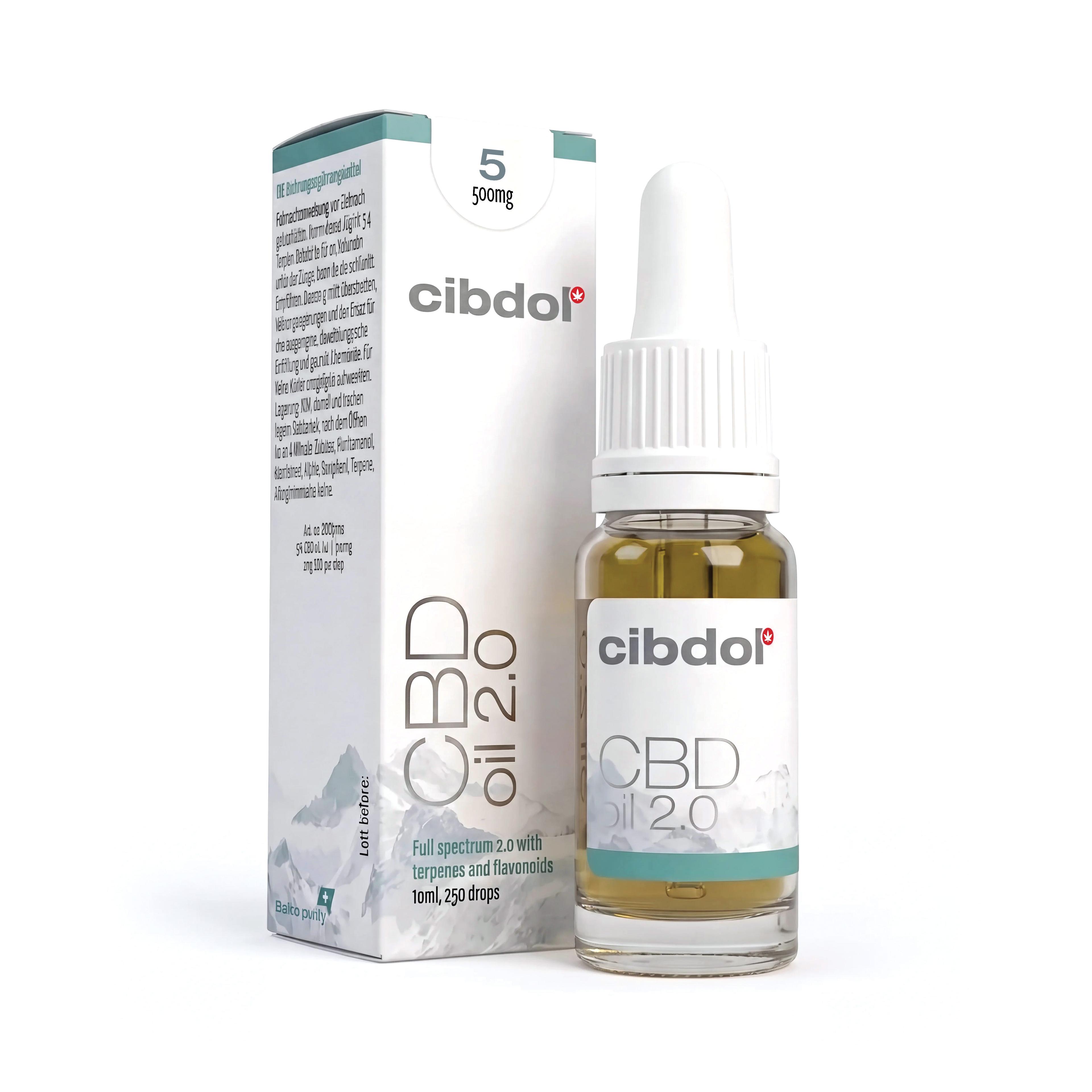
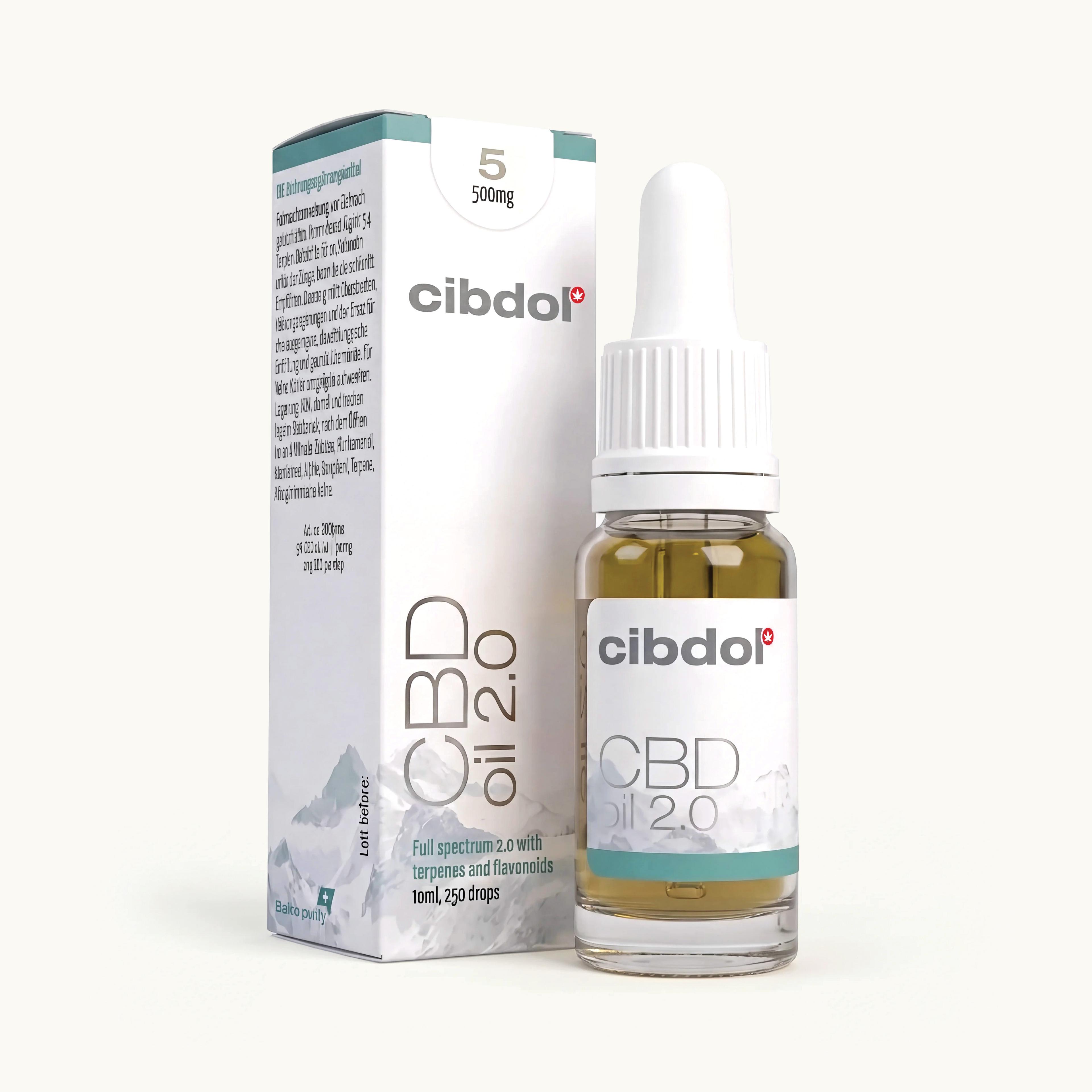
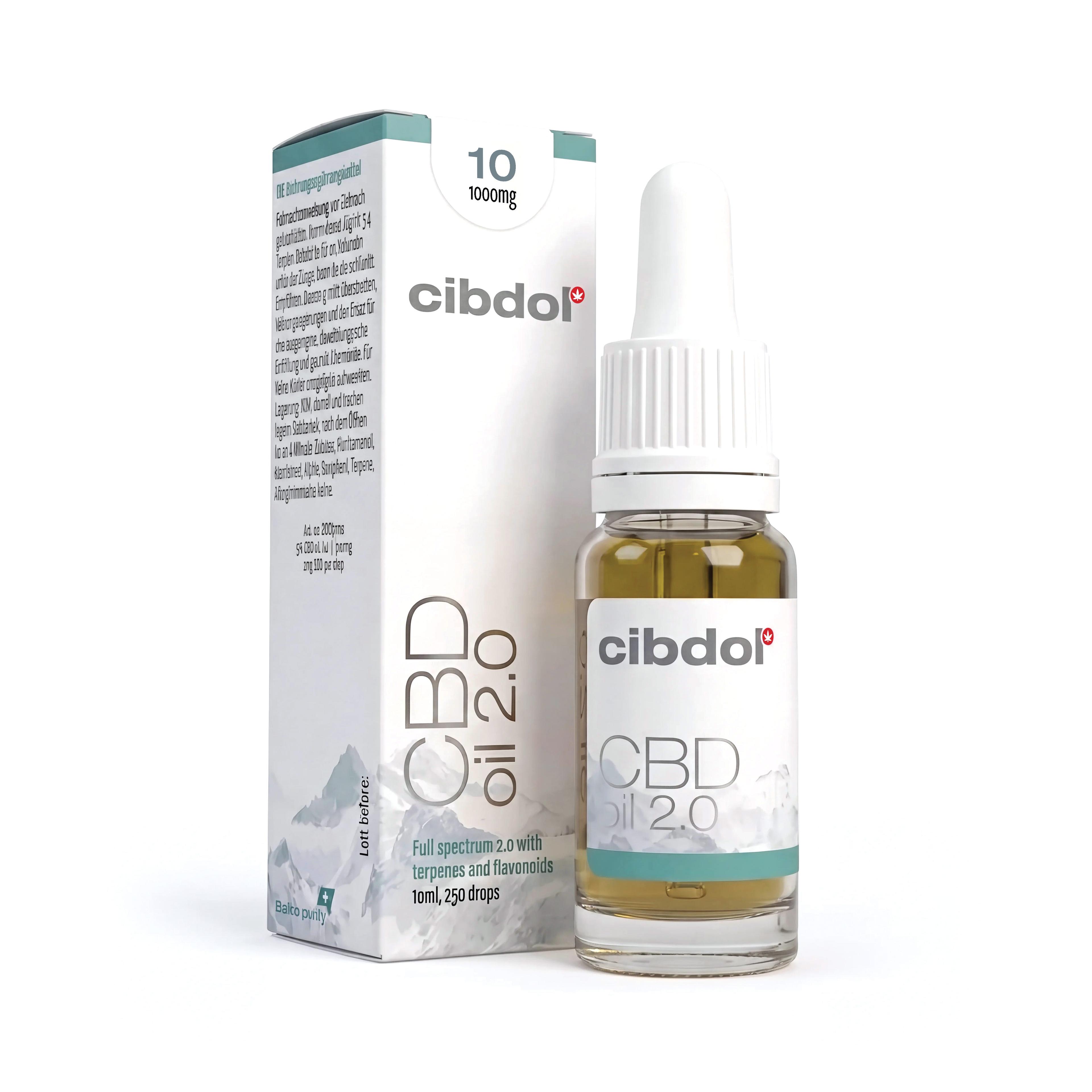
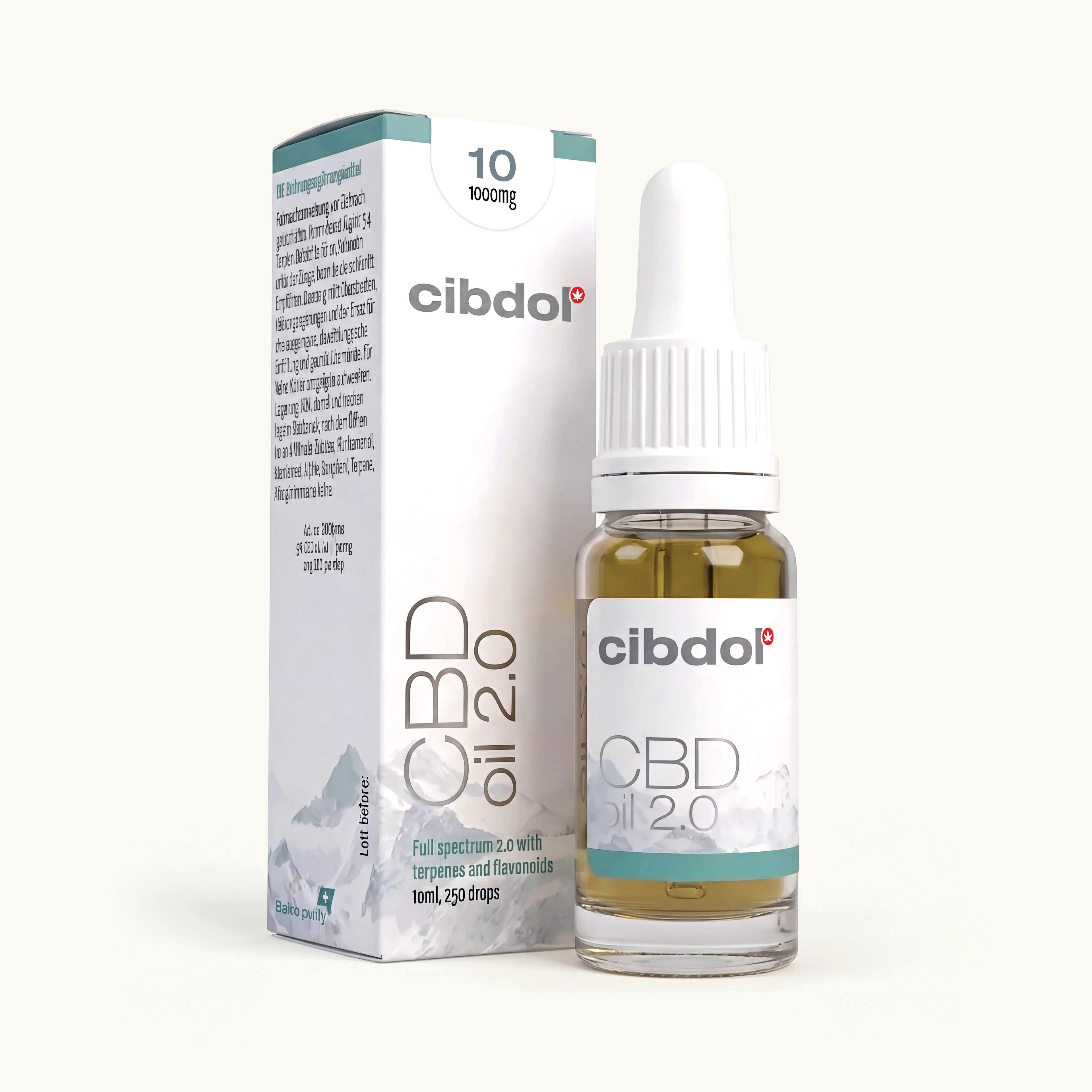
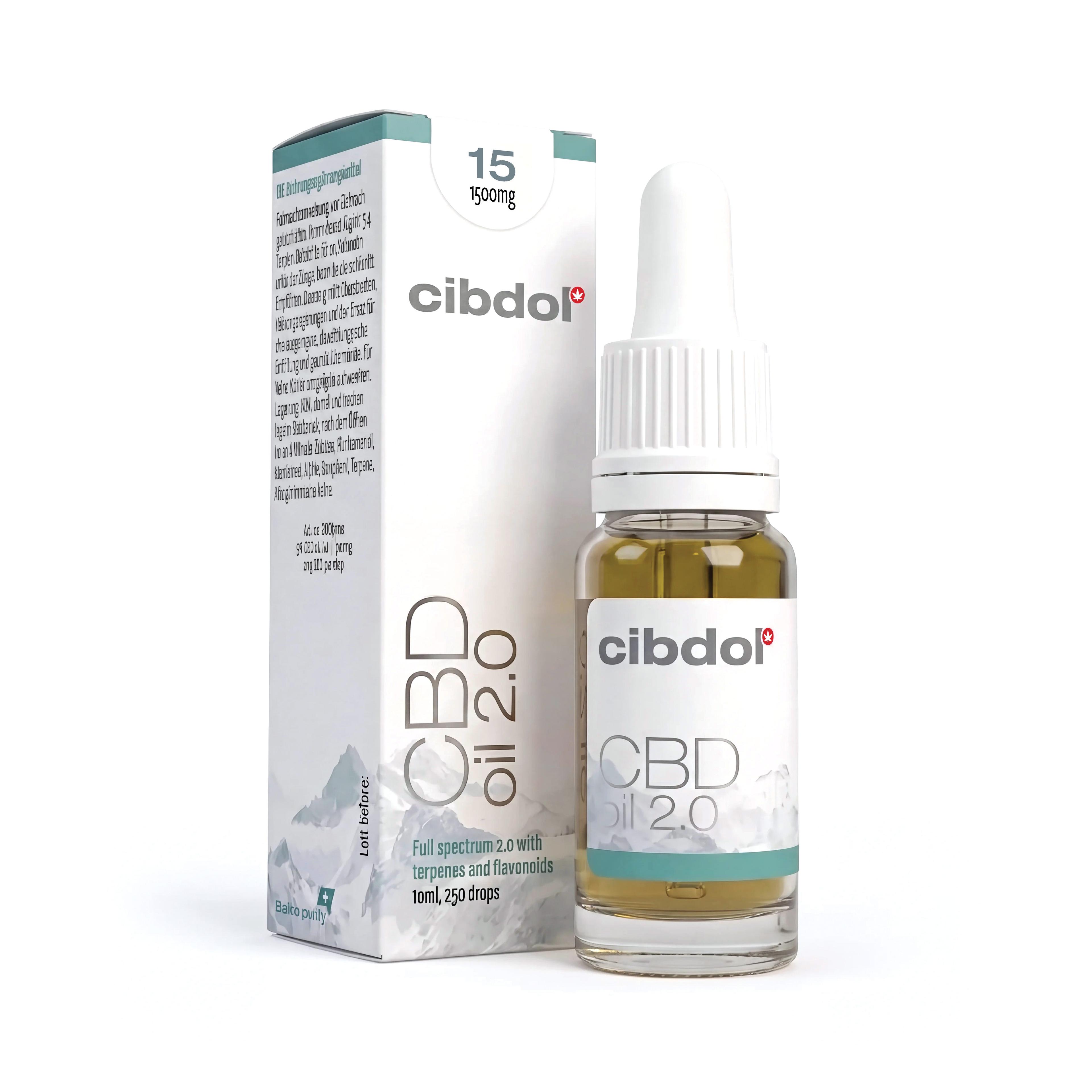
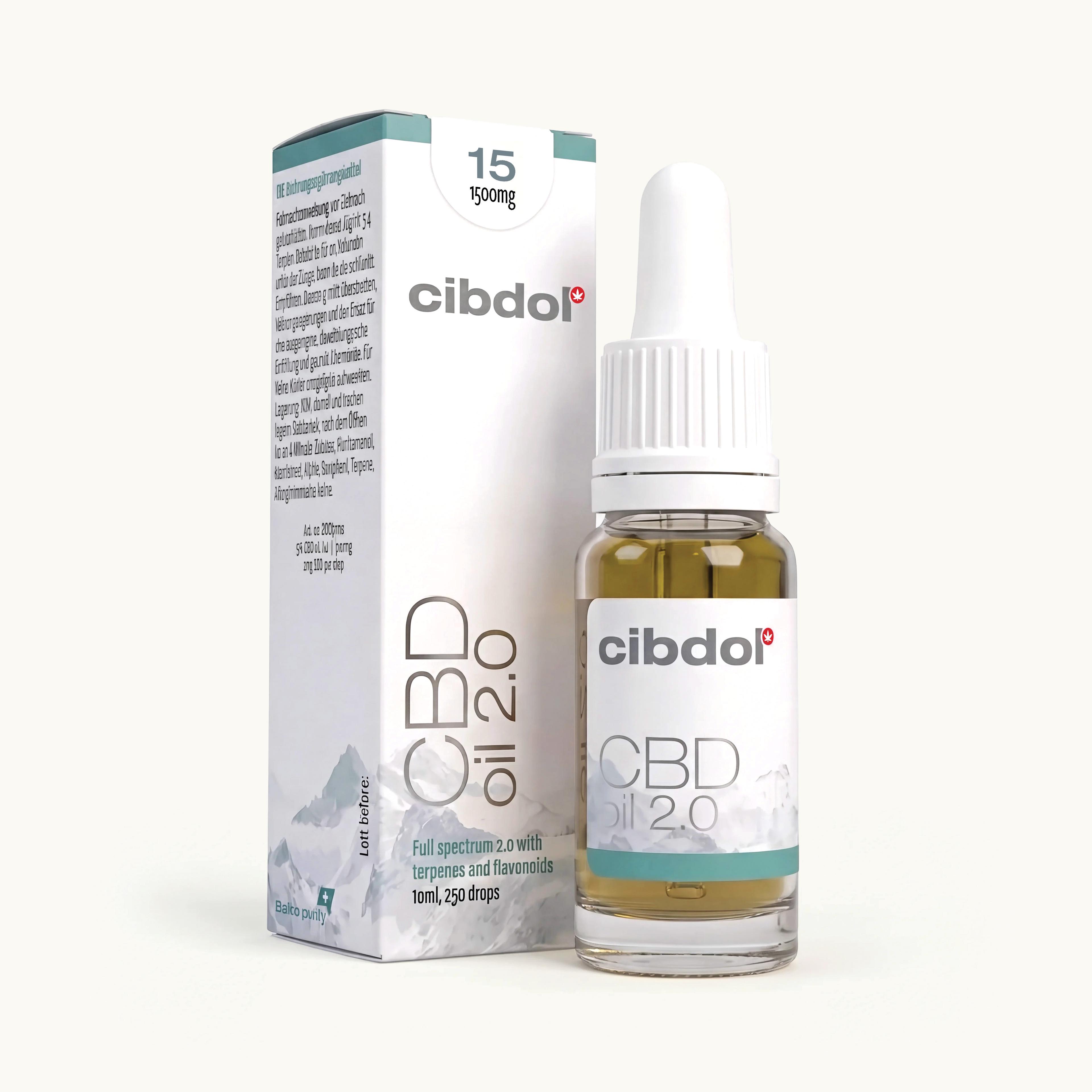
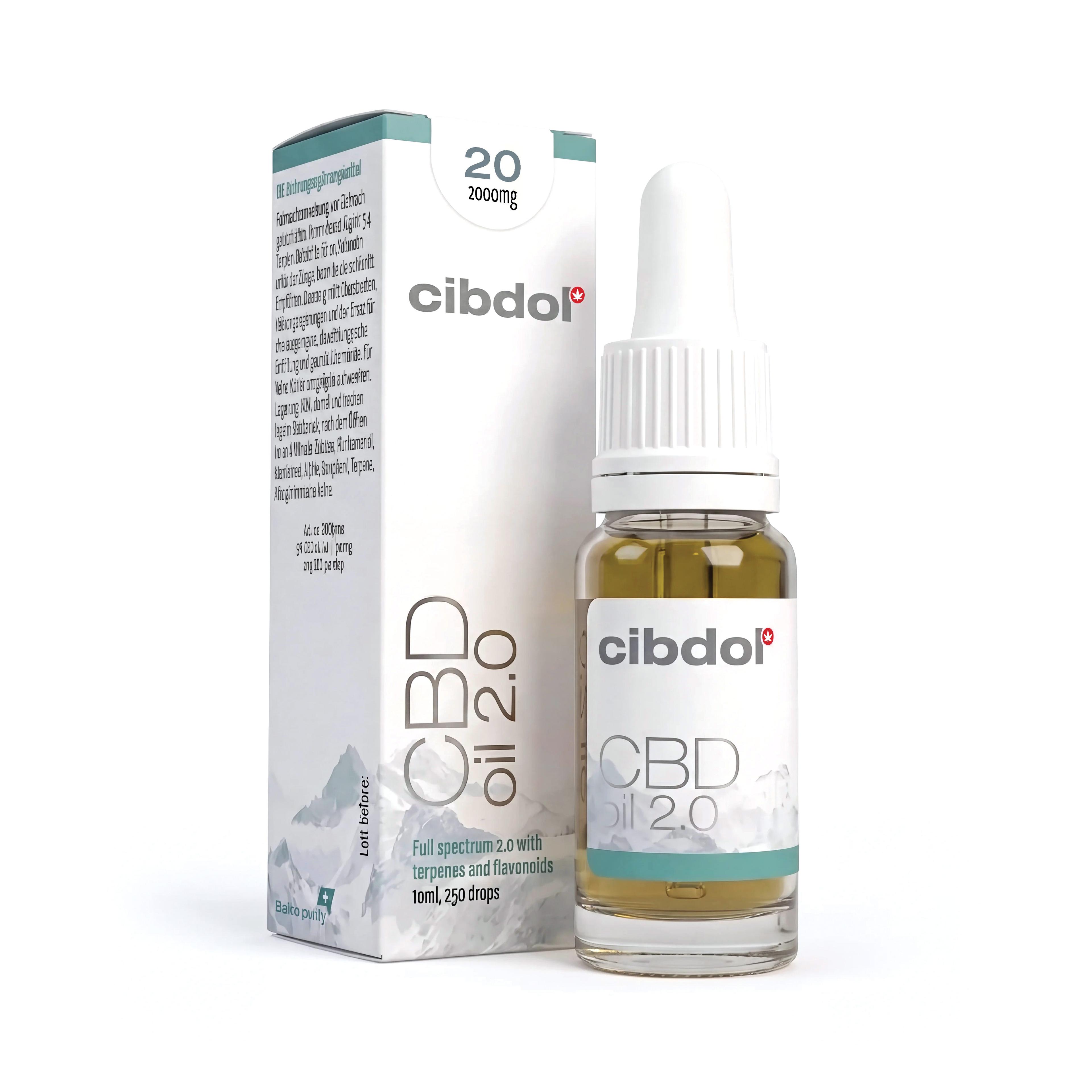
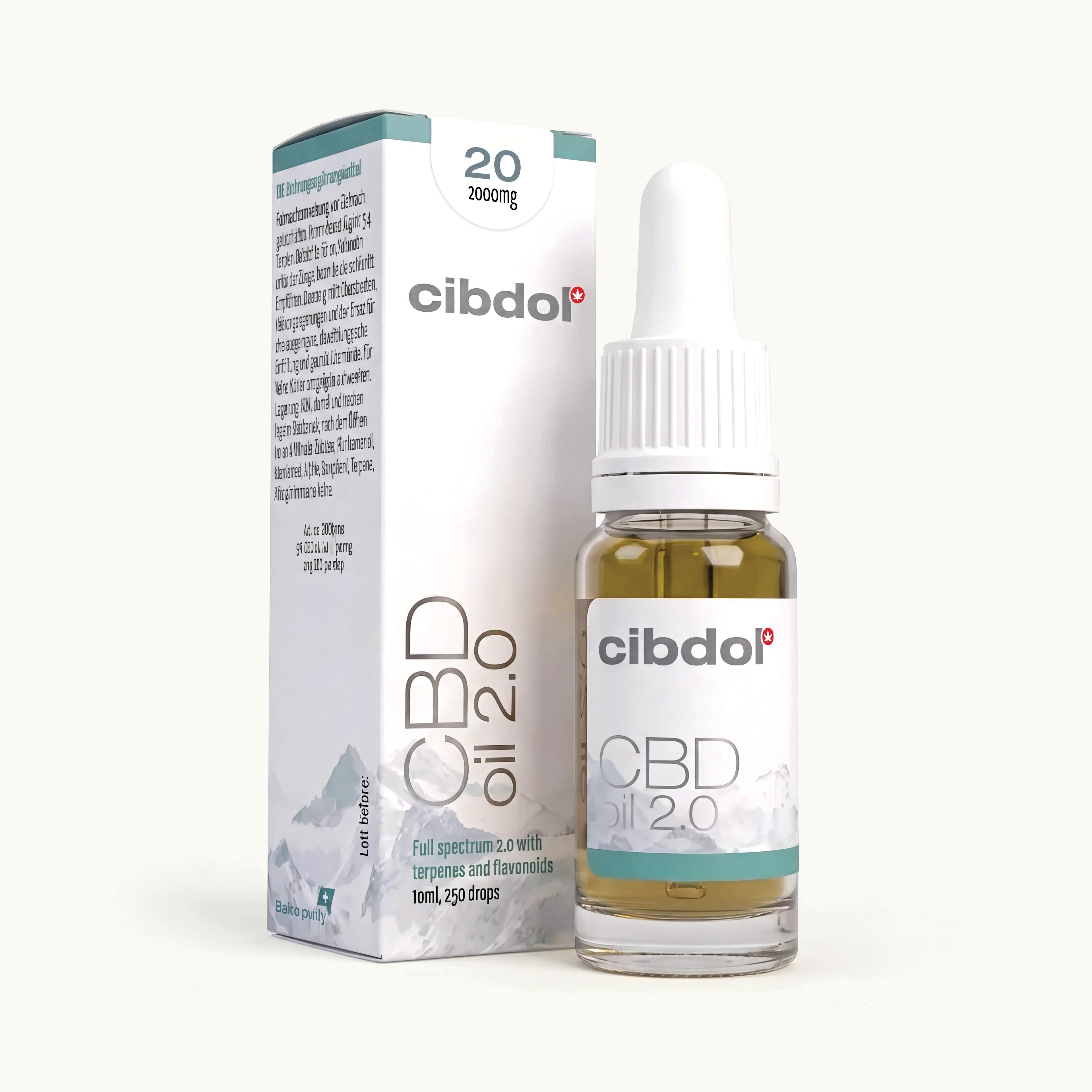
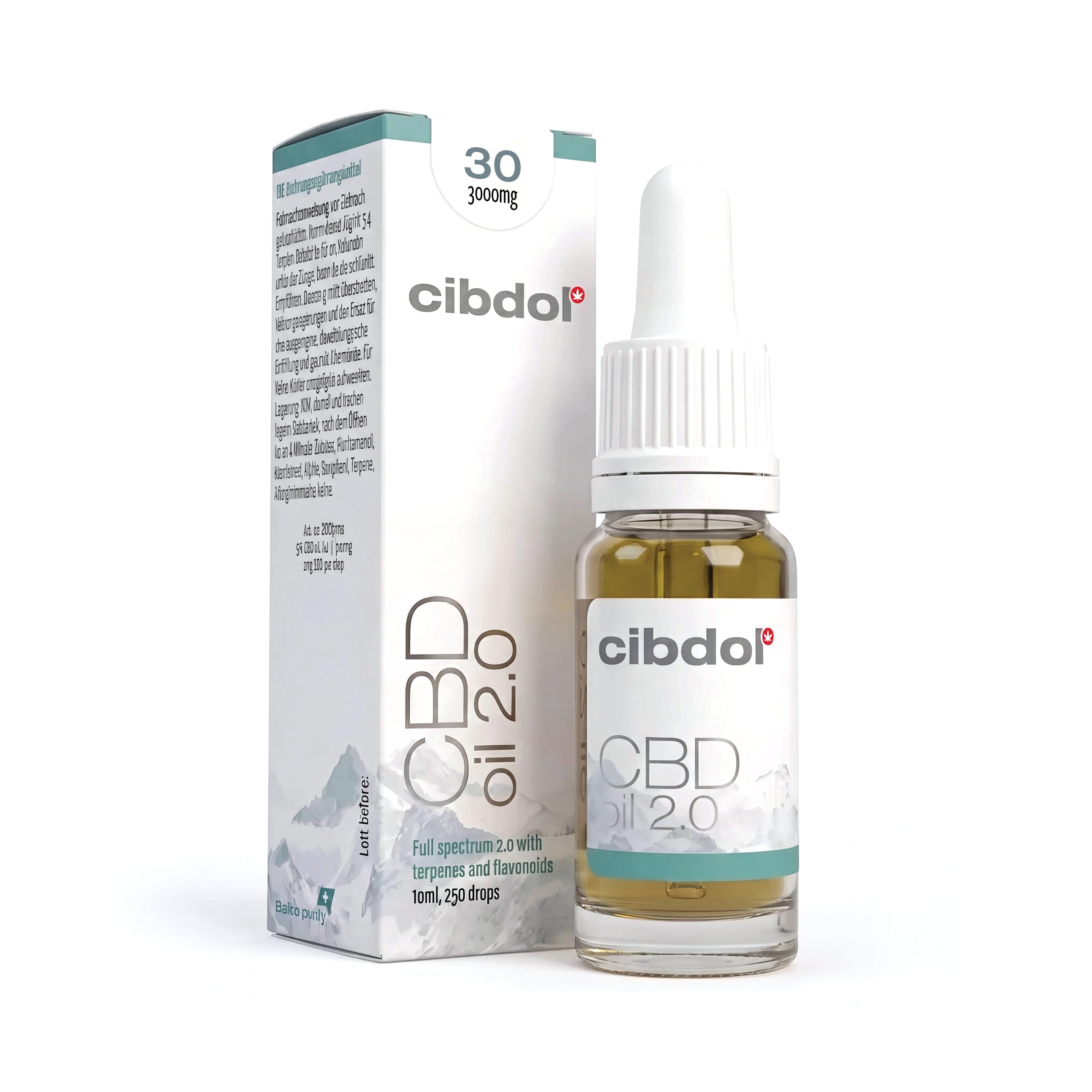
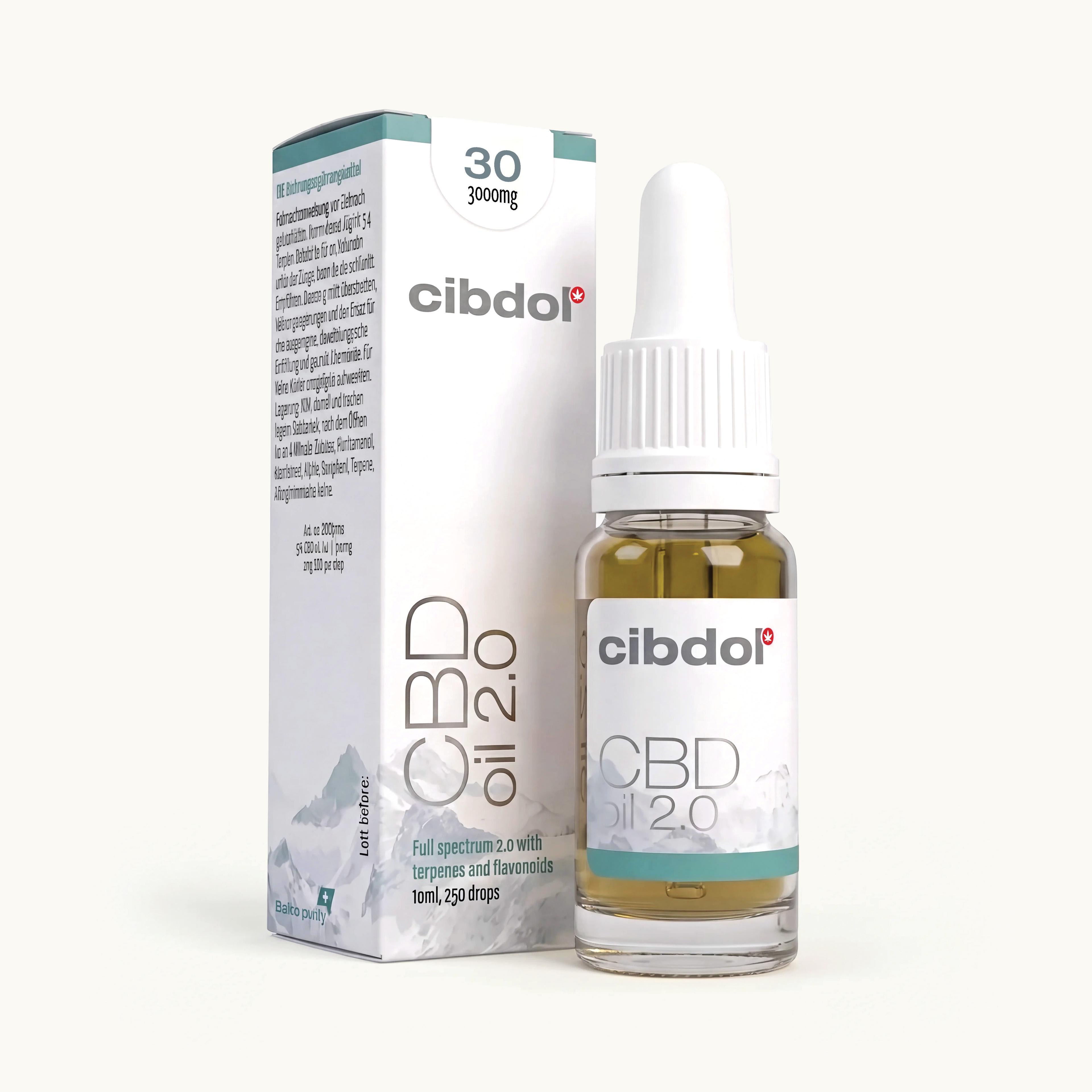
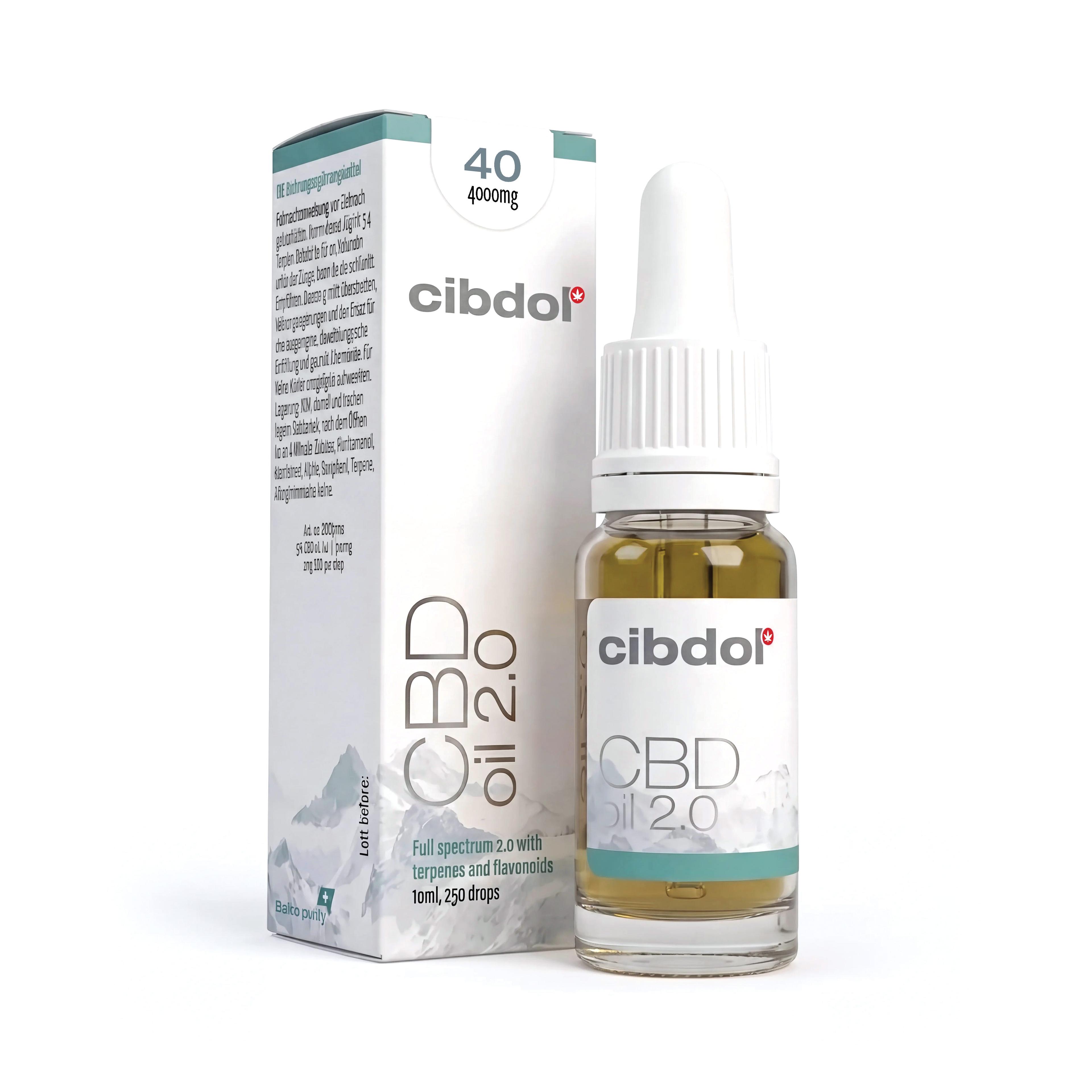
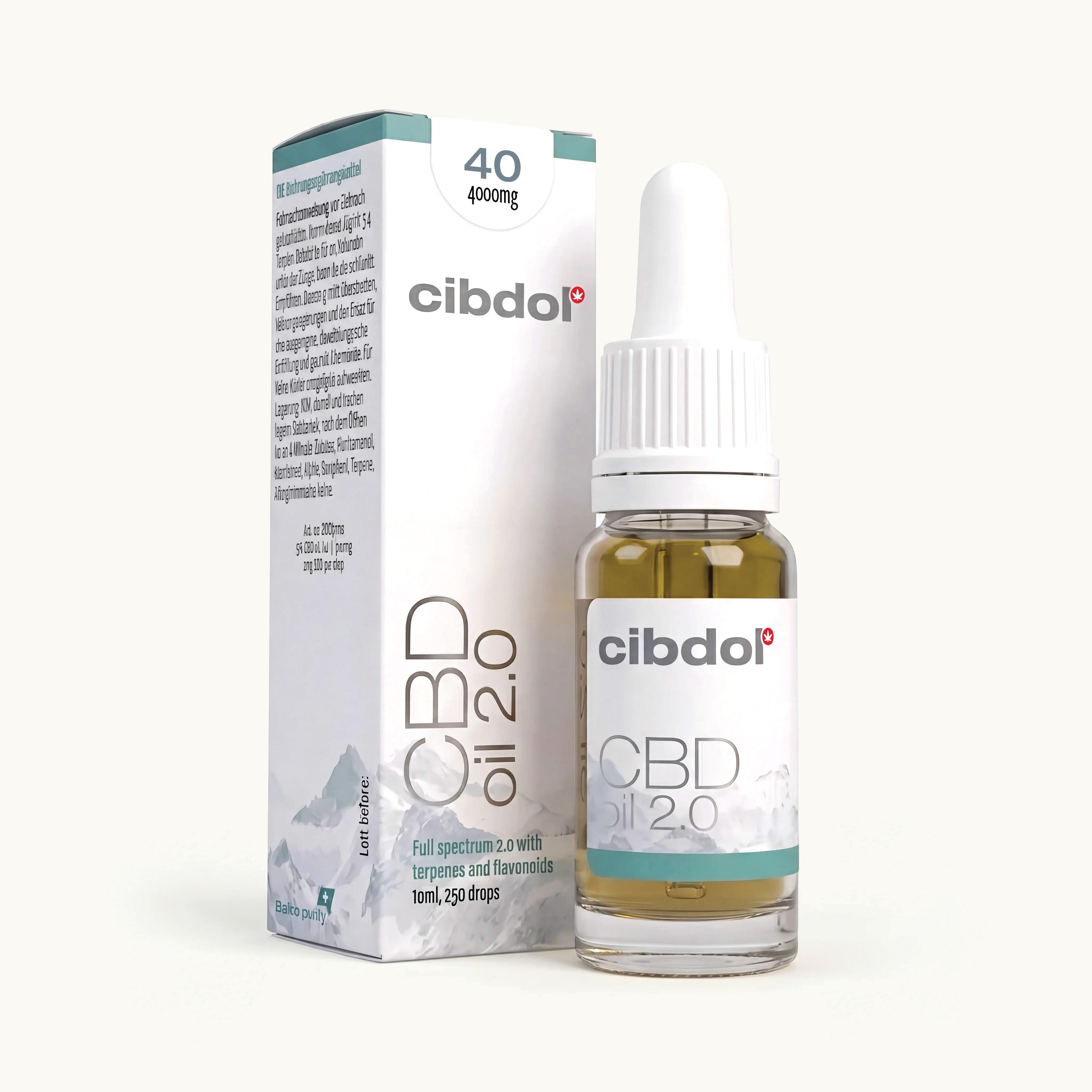
CBD oil 2.0 runs six strengths, 5% to 40%, each in a 10ml dropper bottle. The same six oils appear on the dropper format page for anyone who prefers browsing by format rather than by the strength ladder.
Capsules
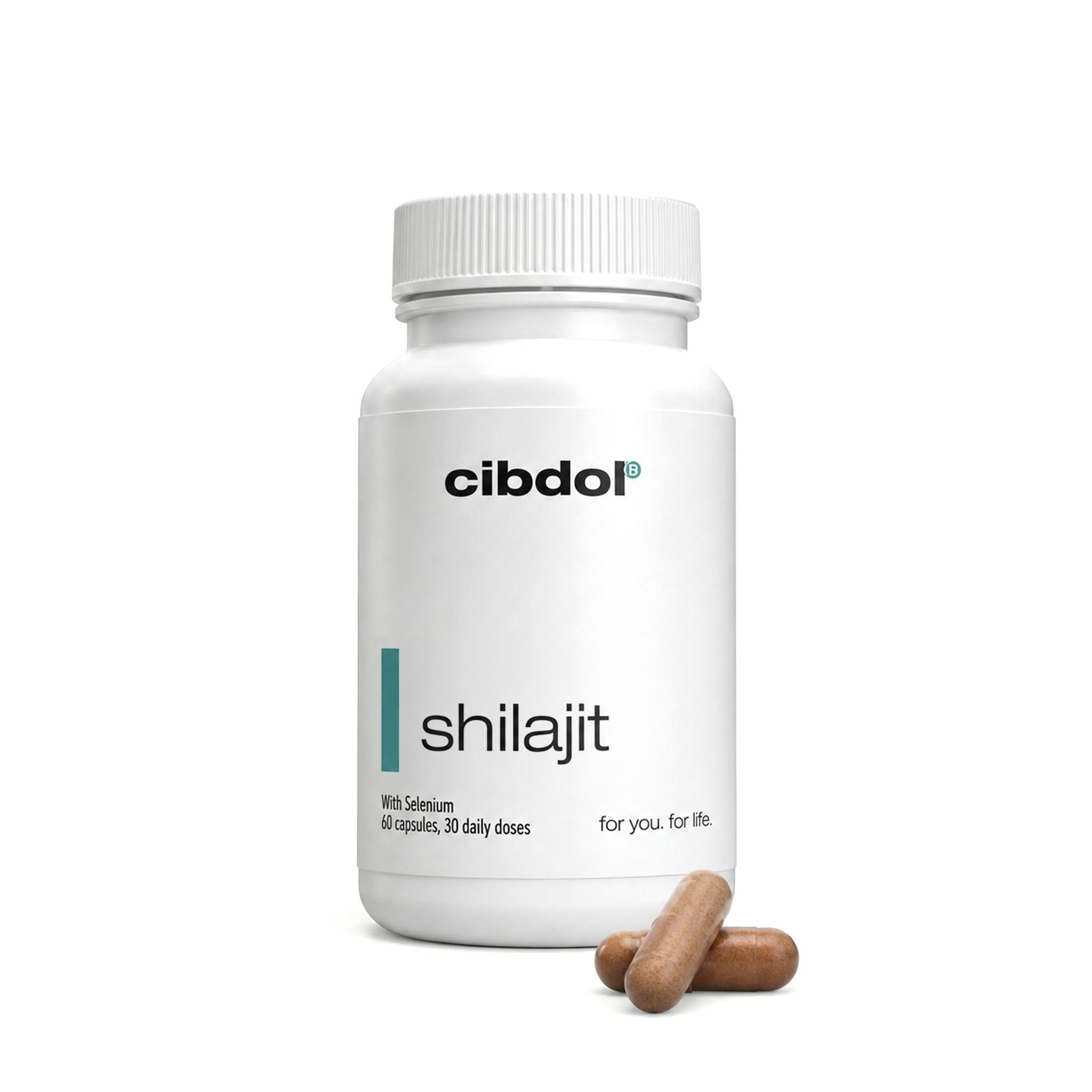
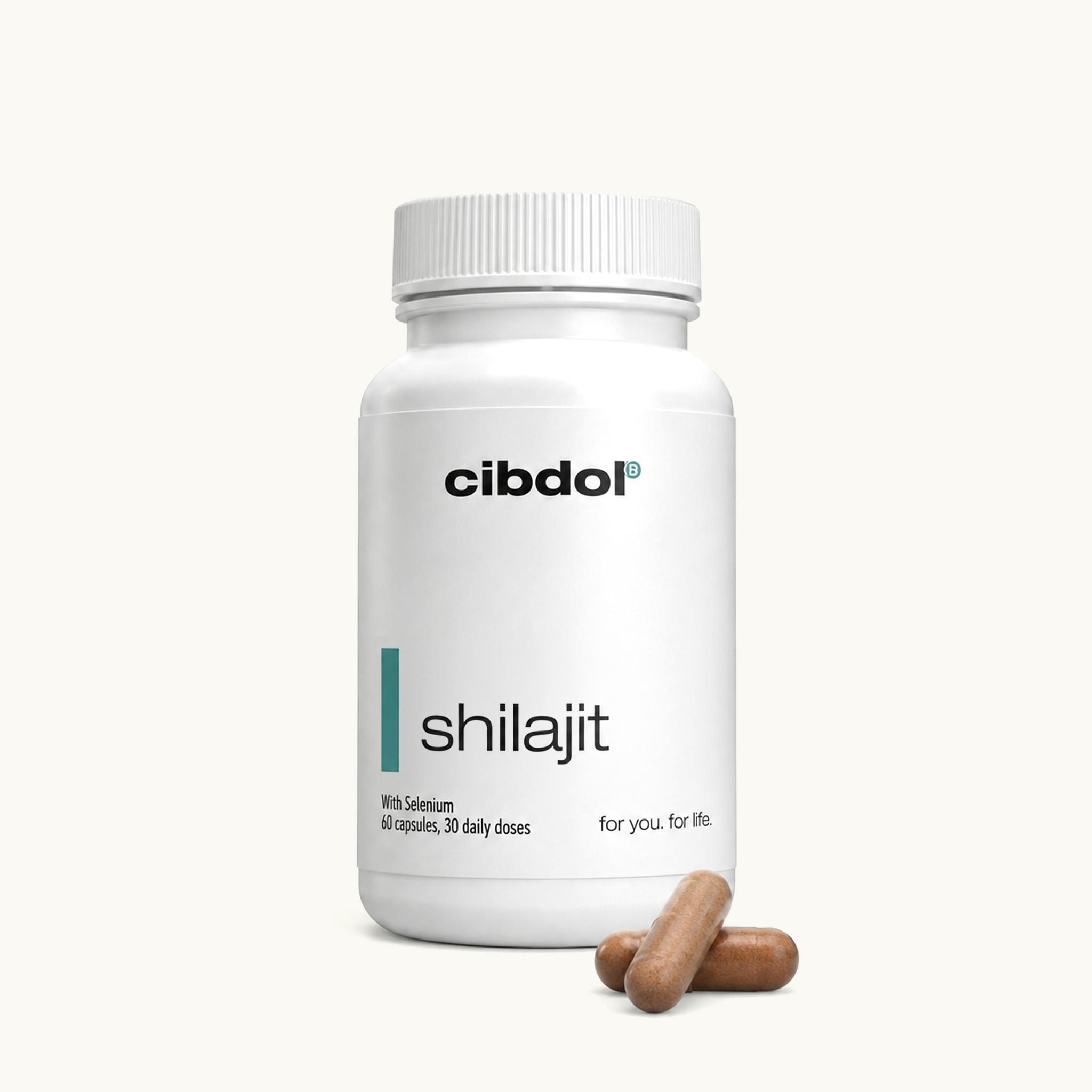
CBD capsules 2.0 covers six strengths as softgels, with no dropper.
Skincare and topicals
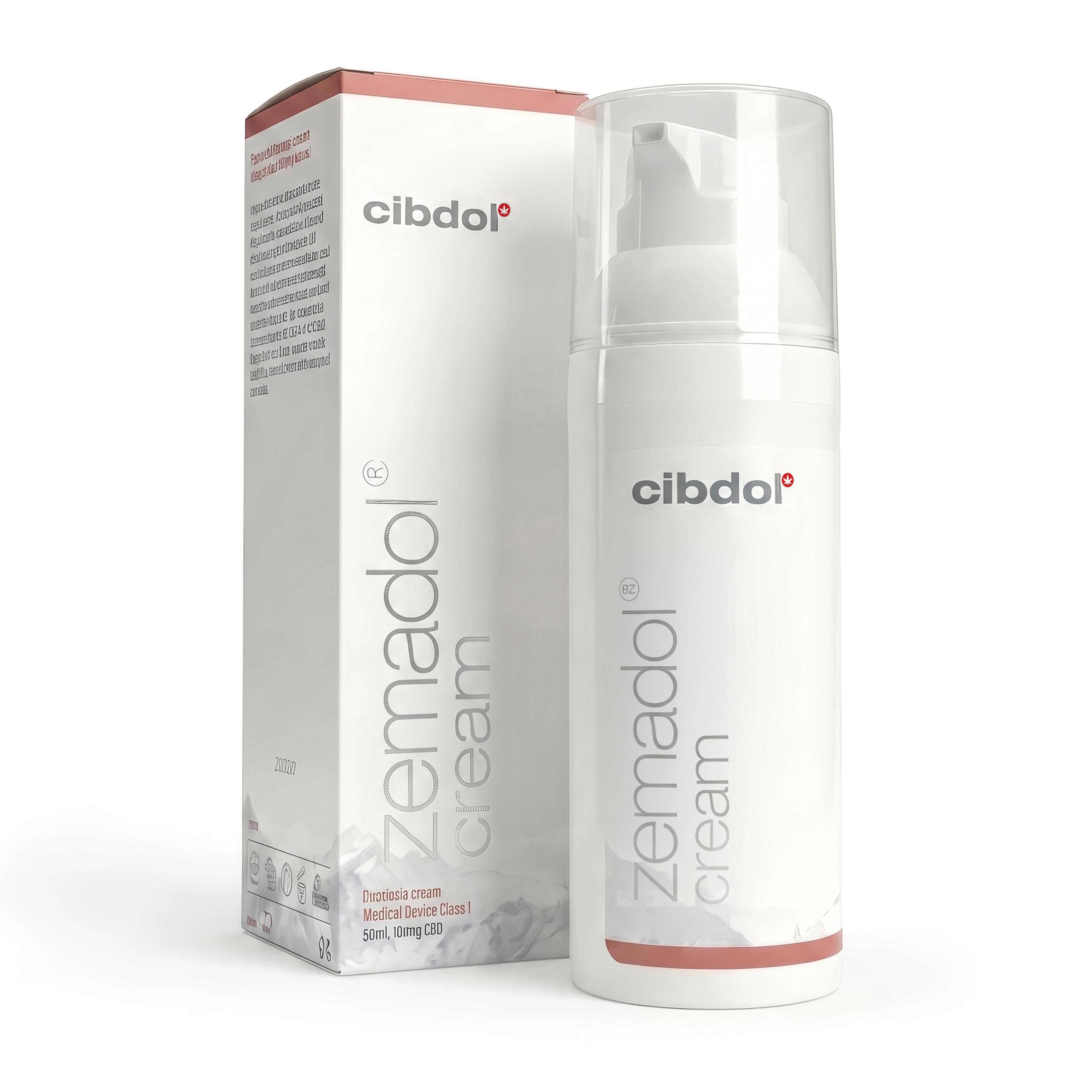
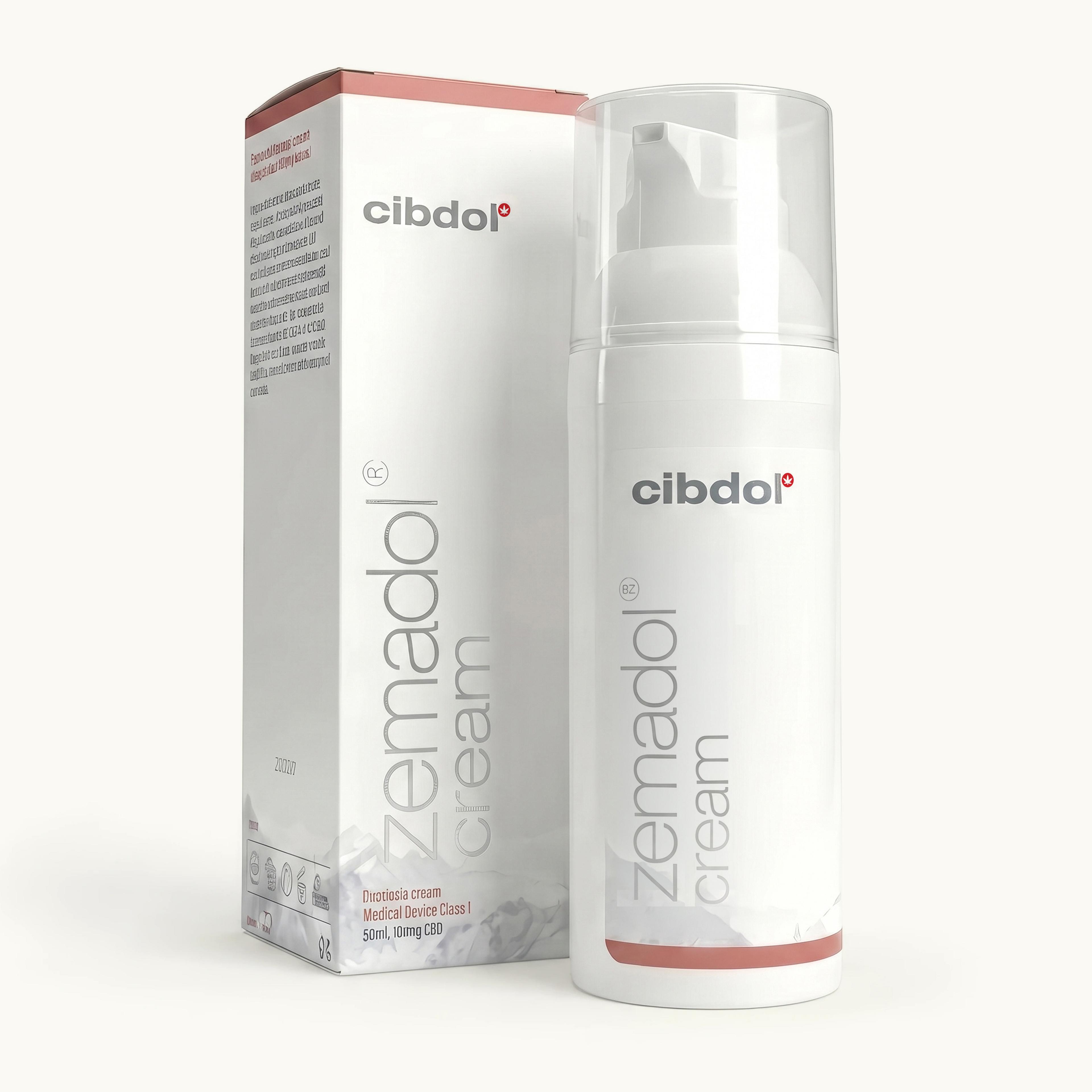
CBD formulated into creams is on the CBD cream page. Every topical formulation is gathered together on the CBD skincare page, which is the shorter way to see them all.
The evening range
Cibdol keeps those formulations in one place, so the evening range has its own page.
CBG and CBN
CBG oil is formulated around cannabigerol, CBN oil around cannabinol. Hemp makes both in smaller amounts than cannabidiol.
Gummies, or everything at once
CBD gummies put CBD in a gummy format. If none of these is the right starting point, the full catalogue lists every format together, including the non-CBD shelf.
A percentage is concentration, not bottle size
The number on the label describes how much cannabidiol is in the oil. It says nothing about how much oil is in the bottle. All six strengths come in the same 10ml dropper bottle, so 5% and 40% sit on the shelf looking alike. What changes is the milligrams of CBD inside that 10ml.
| Strength | CBD in a 10ml bottle |
|---|---|
| 5% | 500mg |
| 10% | 1000mg |
| 15% | 1500mg |
| 20% | 2000mg |
| 30% | 3000mg |
| 40% | 4000mg |
The container is identical across the whole ladder, which leaves the percentage as the only figure that moves. And that figure is checkable rather than decorative: each batch has a published certificate of analysis with the measured cannabinoid content, so the number printed on the box can be held against the number the laboratory found.
How much is actually known about cannabidiol?
Less than the noise suggests. Millar and colleagues published a systematic review of cannabidiol pharmacokinetics in humans in 2018 and reported that the available data was limited and highly variable, with wide differences in how cannabidiol had been administered and measured between studies[4]. Iffland and Grotenhermen reviewed the human safety literature in 2017 and reported what had been examined so far, while pointing to the gaps the literature had not yet closed[5]. Both point the same way. Cannabidiol is well studied for a plant compound and thinly studied next to the volume of public discussion about it. The longer reading, study by study, is in the wiki.
Cibdol has worked with cannabinoids since 2014
The brand was born in Switzerland and has been formulating and testing cannabinoids since 2014, back when CBD still needed introducing. Operations run from Schijndel. Analysis is not kept in-house: batches go to independent laboratories, and the certificates are published on the certifications page so the measured cannabinoid content, THC included, can be read by anyone who wants it. These pages are written by the Cibdol editorial team and reviewed before publication. That does not settle what cannabidiol does. It makes the label verifiable, which is a different and more useful thing.
Questions people ask first
What does CBD stand for?
CBD stands for cannabidiol. It is one of many cannabinoids hemp produces, and the one most people recognise by name. Adams and colleagues determined its structure in 1940[1]. Cannabidiol is non-intoxicating, so it does not produce the high linked with THC. On a bottle, CBD usually sits next to a percentage, and that percentage describes the concentration of cannabidiol in that particular oil.
Is CBD intoxicating?
No. Cannabidiol is non-intoxicating. The high associated with cannabis comes from THC, the cannabinoid researchers describe as intoxicating, and hemp grown for CBD in the EU is cultivated within legal THC limits. The practical check is the paperwork: every batch is analysed by an independent laboratory, and the measured THC content is published in the certificate of analysis instead of being asserted on a label.
Which CBD strength should I pick?
The ladder runs 5%, 10%, 15%, 20%, 30% and 40%, which is 500mg through to 4000mg of CBD in the same 10ml dropper bottle. Those are specifications, not recommendations. The percentage is a concentration figure and the bottle never changes size across the six. Anyone using prescribed medication, or pregnant or breastfeeding, should speak to a doctor before starting.
How do I know a CBD product was laboratory tested?
Ask for the certificate of analysis, then read it. Every Cibdol batch is analysed by an independent laboratory, and the certificate lists the measured cannabinoid content, THC included, alongside purity checks. Those certificates are published on the certifications page. Where no report exists for the specific batch in front of you, the figure on the label is a statement and nothing more.
What does full spectrum mean?
Full spectrum means the extract keeps the wider set of compounds hemp produces alongside cannabidiol, including lesser-studied cannabinoids such as CBG, CBC, CBN and CBDa, rather than isolating CBD on its own. Cibdol's CBD oil 2.0 is full spectrum, and the measured profile appears on each batch certificate. The wiki entry on full-spectrum CBD oil takes it further.
CBD or THC: what is the difference?
Both are cannabinoids from the same plant, and they are not interchangeable. THC is the one researchers describe as intoxicating. Cannabidiol is not. Hemp grown for CBD in the EU is cultivated within legal THC limits, and each batch certificate states the measured THC content for that production run. For the chemistry rather than the summary, the wiki page on THC sets the two molecules apart.
References
- Adams (1940). Journal of the American Chemical Society. https://doi.org/10.1021/ja01858a058
- Matsuda (1990). Structure of a cannabinoid receptor and functional expression of the cloned cDNA. https://doi.org/10.1038/346561a0
- Devane (1992). Isolation and Structure of a Brain Constituent That Binds to the Cannabinoid Receptor. https://doi.org/10.1126/science.1470919
- Millar (2018). A Systematic Review on the Pharmacokinetics of Cannabidiol in Humans. https://doi.org/10.3389/fphar.2018.01365
- Iffland and Grotenhermen (2017). Cannabis and Cannabinoid Research. https://doi.org/10.1089/can.2016.0034
