Melatonin gummies, sprays, drops and patches compared
Definition
A critical assessment of the clinical pharmacokinetic data comparing melatonin gummies, sublingual sprays, swallowed tablets, and patches.
Melatonin gummies attract more interest than any other product format on the shelf, yet the physiological difference between formats is far narrower than packaging claims imply. The delivery route alters the timing and height of the concentration curve in the bloodstream, but it does not change the molecule itself. Furthermore, independent laboratory testing reveals that the widest gap between products is not the delivery mechanism, but whether the package contains what it promises.
How delivery format alters the blood curve
The form changes the shape of the curve, not the substance in it. In a randomised crossover study in 14 healthy male volunteers, a sublingual spray produced an early high plasma peak at about 23 minutes, while a prolonged-release tablet produced a lower peak at about 64 minutes followed by a plateau and a slower decline. [1]
These numbers reflect two distinct kinetic profiles. The spray delivers melatonin through the oral mucosa directly into systemic circulation, creating a swift rise and a comparatively rapid clearance. The prolonged-release tablet releases melatonin slowly along the gastrointestinal tract, generating a delayed, flatter peak that maintains measurable levels over several hours. Neither curve represents a superior compound; they simply represent different arrival speeds.
Why swallowed formats behave similarly
A swallowed dose is fast and brief whatever it is wrapped in. In a crossover study of 12 healthy male volunteers, plasma levels peaked on average 40.8 minutes after an oral dose and the elimination half-life was about 54 minutes. [2]
Most of a swallowed dose never reaches the bloodstream. The same study measured the median absolute oral bioavailability at around 3 percent, because the liver breaks down most of it on the first pass. [2] The part absorbed through the lining of the mouth does not pass through the liver first.
Whether swallowed as a standard hard capsule, a drinking liquid, or a chewable sweet, melatonin enters the stomach, travels to the small intestine, and passes directly through the portal vein into the liver. Because hepatic enzymes metabolise roughly 97 percent of the compound on that initial transit, all standard swallowed oral products share this low systemic efficiency and rapid subsequent clearance.
The evidence behind chewable gummies
Gummies are by a wide margin the most searched format, and they are also the format where a chewable sweet has to carry an accurate amount of an active substance through manufacture and storage. No published study establishes a release profile for a melatonin gummy that differs from any other swallowed form.
Because the gummy base dissolves and is swallowed into the digestive tract, its active ingredient follows identical gastrointestinal processing to traditional tablets. The main practical distinction lies in manufacturing consistency. Infusing an exact quantity of an active compound into heated gelatin or pectin syrup, setting it in moulds, and preventing degradation during retail storage poses greater quality control hurdles than pressing dry powders into tablets.
Label accuracy and product purity
What the label says is not reliably what is in the product. An analysis of 31 commercial melatonin supplements measured melatonin content ranging from 83 percent below the labelled amount to 478 percent above it, and found that two lots of the same product could differ from each other by as much as 465 percent. The variation did not track the manufacturer or the type of product. [3]
The same analysis screened those products for serotonin, a related compound, and found it present in some of them. That is a manufacturing quality finding about the products tested, not a property of melatonin. [3]
These findings demonstrate that batch consistency and production hygiene represent far larger variables for consumers than the choice between a drop, a capsule, or a chewable format.
Transdermal patches
Human pharmacokinetic studies of transdermal melatonin exist, but they are small and did not test a patch as sold to consumers. In a 1997 crossover study in twelve men, plasma melatonin from a patch was very variable, rose with a marked delay and declined only gradually after the patch was removed.[4] A 2021 study in ten healthy women measured transdermal delivery alongside other routes and found the peak concentration roughly 21 hours after application.[5]
Product instructions and manufacturing standards
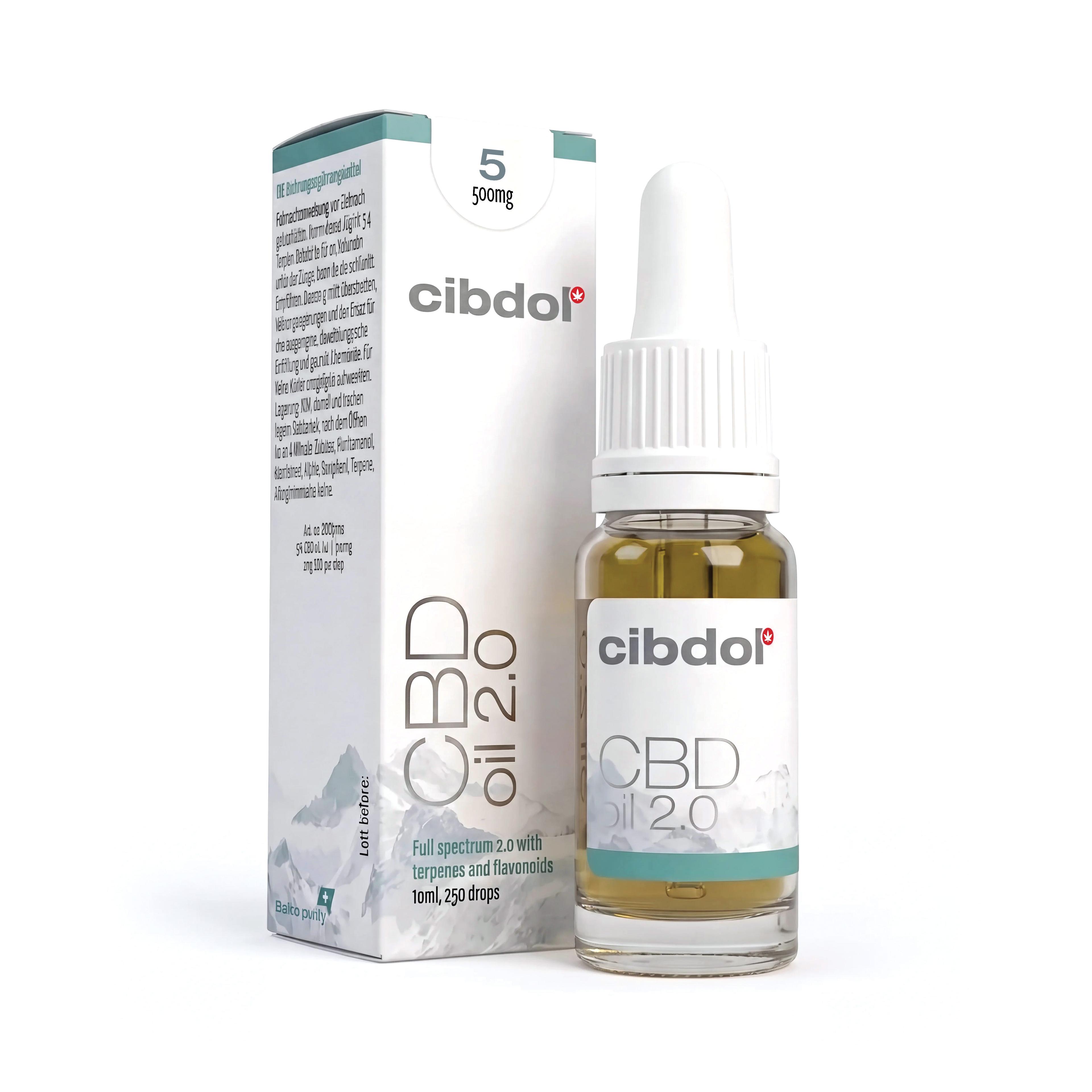
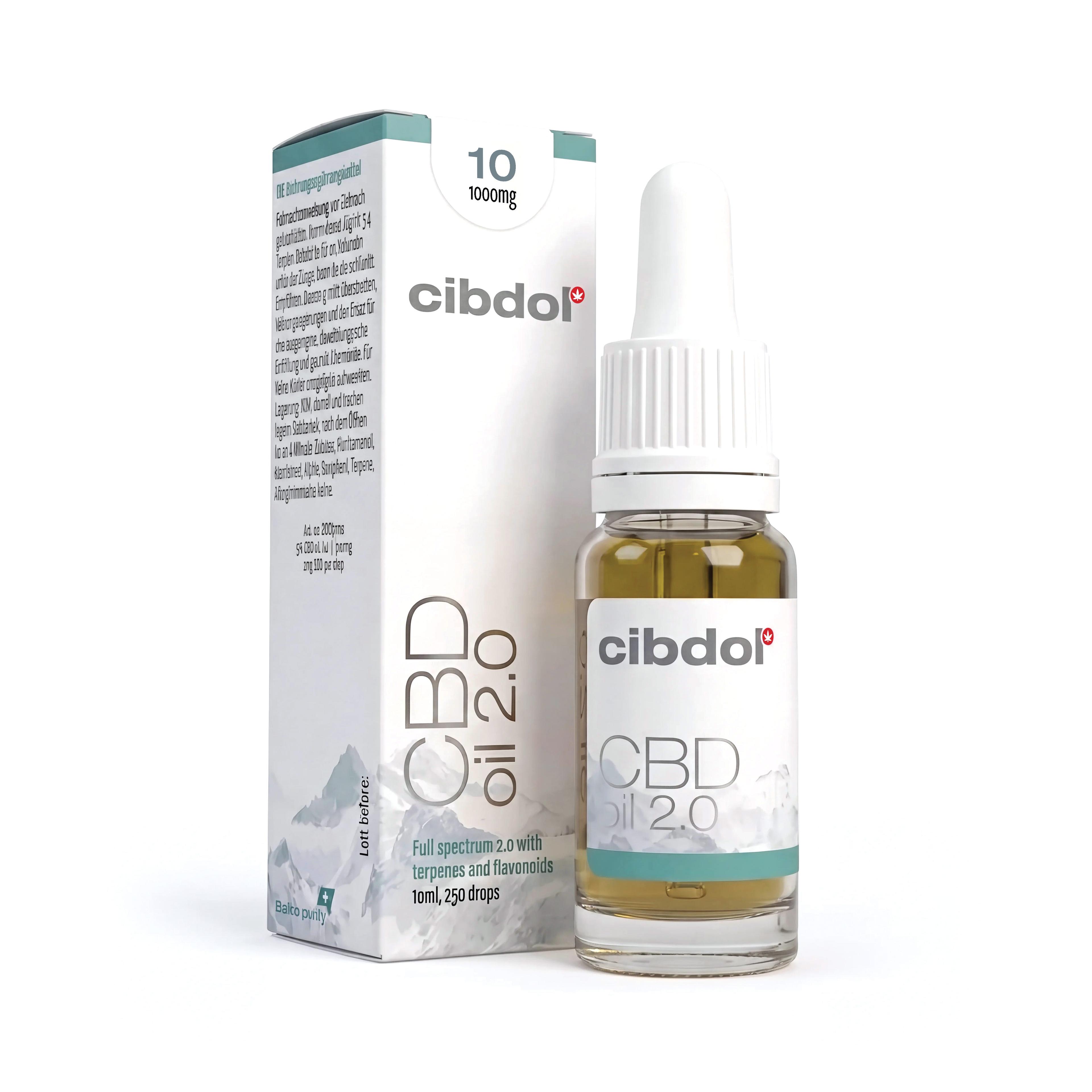
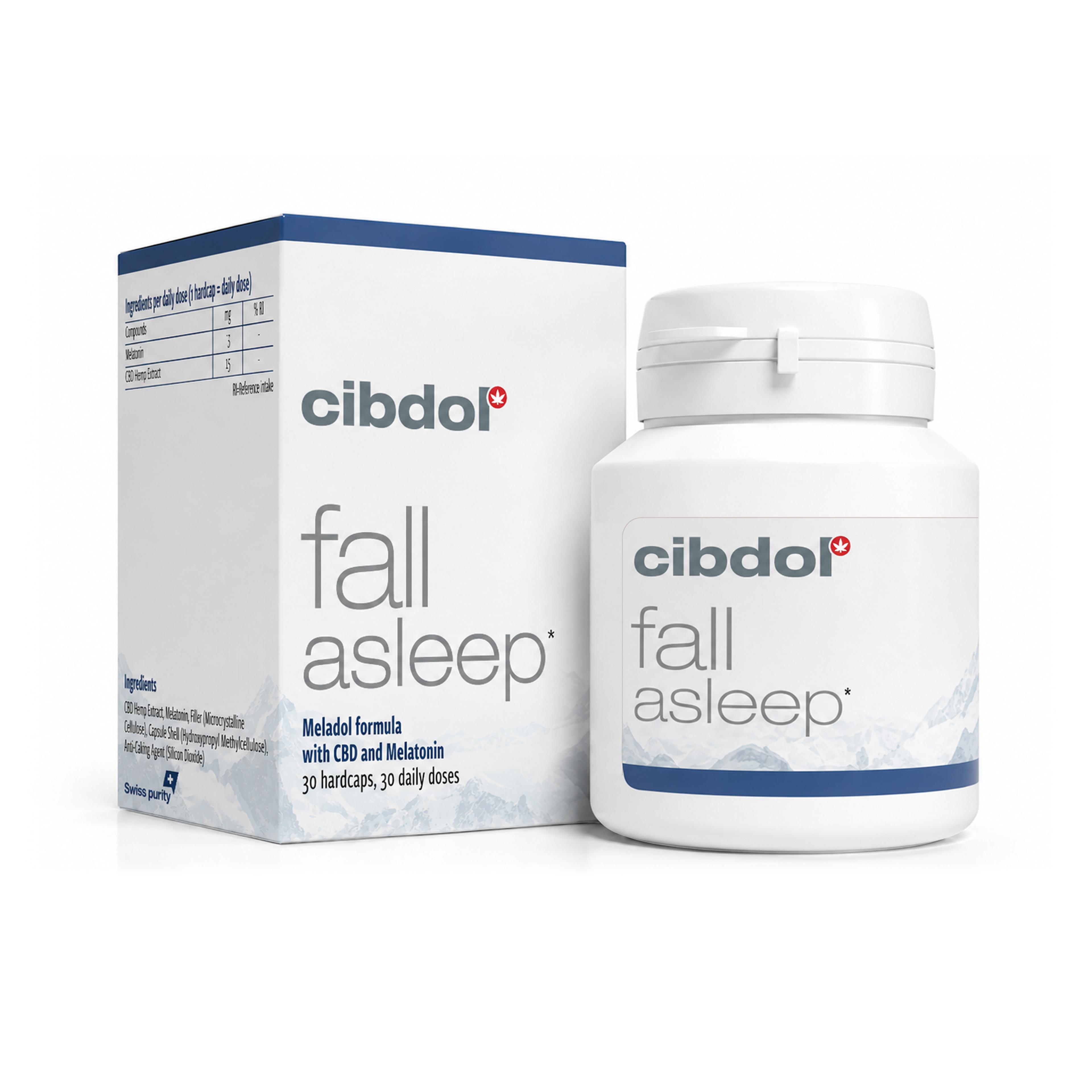
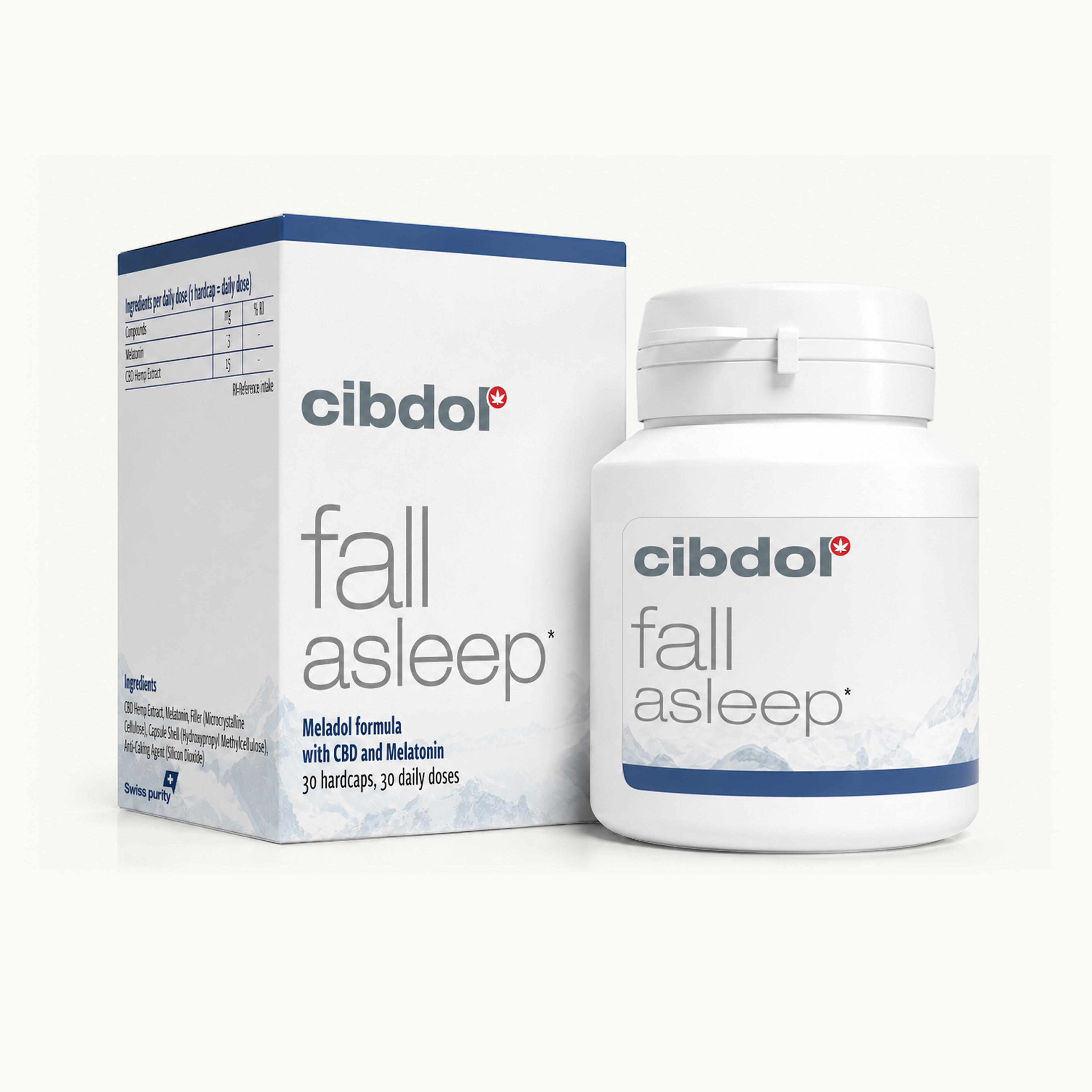
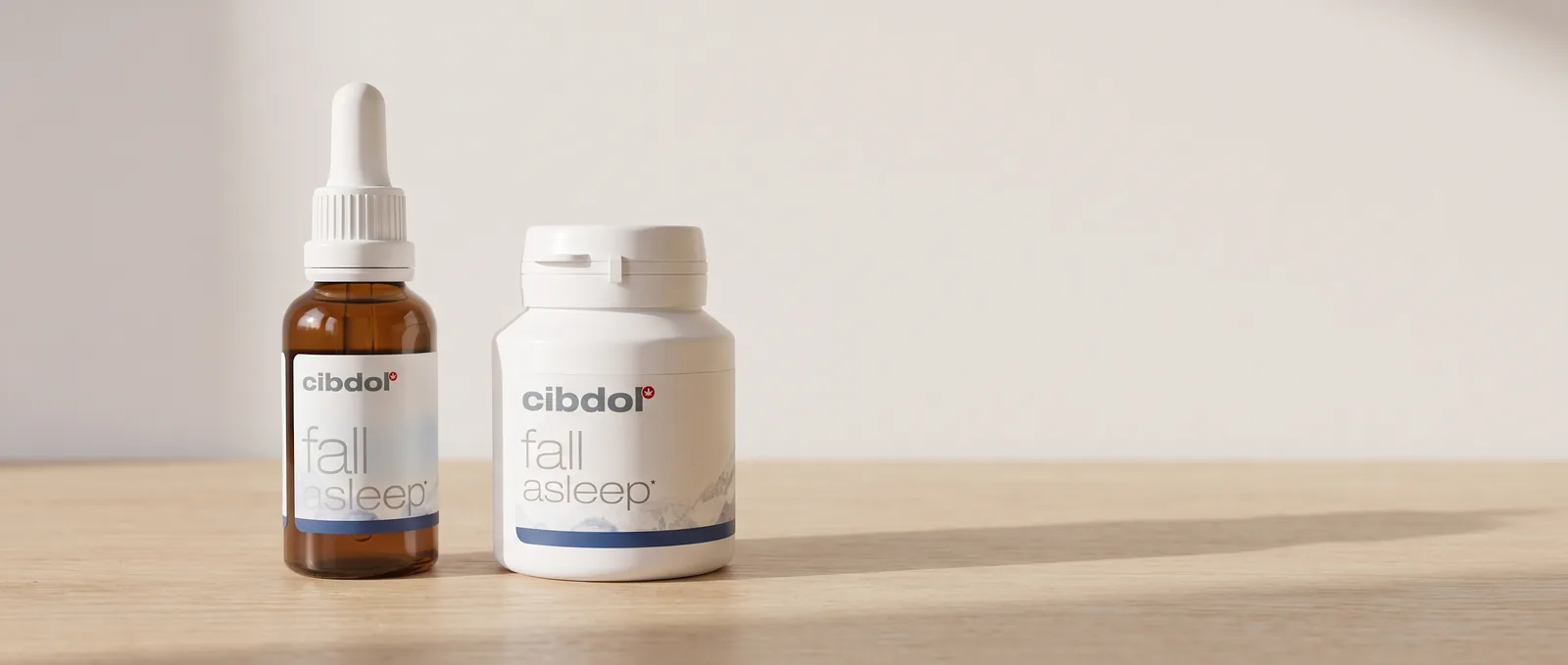
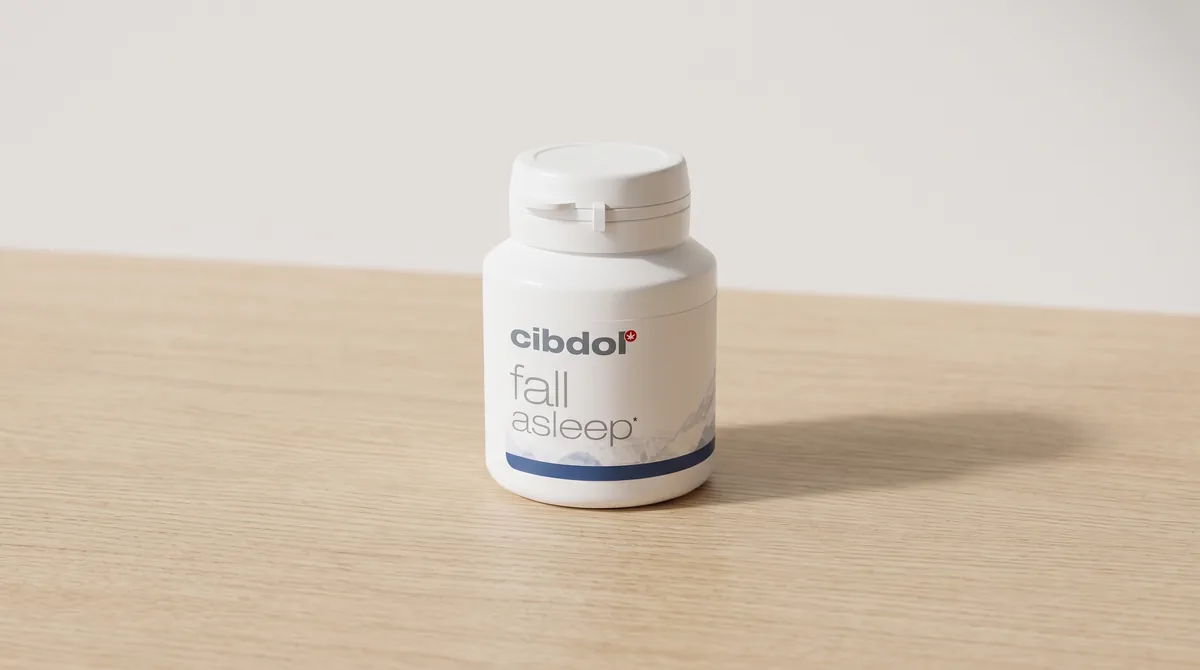
Cibdol sells melatonin in two forms, a liquid taken by drops and a hard capsule, both under the Fall Asleep name. The liquid uses a liposomal carrier and the capsule is a Meladol formula, and both declare melatonin together with cannabinoids from hemp extract. The Fall Asleep Liquid carton instructs the user to take the dose 30 minutes before bed, directly into the mouth or in a glass of water or juice. The capsule carton gives the same 30 minute timing and says not to chew the capsule.
This article describes what the published studies measured about each form. It does not recommend a form, an amount or a product.
Frequently Asked Questions
8 questionsDo melatonin gummies behave differently from swallowed tablets?
Which melatonin format reaches peak concentration fastest?
How long does swallowed melatonin remain in circulation?
How much swallowed melatonin reaches systemic circulation?
Does melatonin absorbed through the lining of the mouth pass through the liver first?
Do commercial melatonin labels match product contents accurately?
Was serotonin identified in commercial melatonin products?
What evidence exists for melatonin patches?
About this article


Luke Sholl has been writing about cannabinoids, CBD, and the broader benefits of nature since 2011. His background includes first-hand cannabis cultivation experience spanning the full seed-to-harvest lifecycle across so
This wiki article was drafted with AI assistance and reviewed by Luke Sholl, CBD & wellness writer. Editorial oversight by Joshua Askew.
Medical disclaimer. This content is for informational purposes only and does not constitute medical advice. Consult a qualified healthcare provider before use of any substance.
References (5)
- [1]Ait Abdellah S, Raverot V, Gal C, Guinobert I, Bardot V, Blondeau C. Bioavailability of melatonin after administration of an oral prolonged-release tablet and an immediate-release sublingual spray in healthy male volunteers. Drugs in R&D 2023;23(3):257-265. doi:10.1007/s40268-023-00431-9 Source
- [2]Andersen LPH, Werner MU, Rosenkilde MM, et al. Pharmacokinetics of oral and intravenous melatonin in healthy volunteers. BMC Pharmacology and Toxicology 2016;17:8. doi:10.1186/s40360-016-0052-2, PMID 26893170 Source
- [3]Erland LAE, Saxena PK. Melatonin natural health products and supplements: presence of serotonin and significant variability of melatonin content. Journal of Clinical Sleep Medicine 2017;13(2):275-281. doi:10.5664/jcsm.6462, PMID 27855744 Source
- [4]Bénès L, Claustrat B, Horrière F, et al. Transmucosal, oral controlled-release, and transdermal drug administration in human subjects: a crossover study with melatonin. Journal of Pharmaceutical Sciences 1997;86(10):1115-1119. doi:10.1021/js970011z, PMID 9344167 Source
- [5]Zetner D, Andersen LPK, Alder R, Jessen ML, Tolstrup A, Rosenberg J. Pharmacokinetics and safety of intravenous, intravesical, rectal, transdermal, and vaginal melatonin in healthy female volunteers: a cross-over study. Pharmacology 2021;106(3-4):169-176. doi:10.1159/000510252, PMID 32937627 Source
Related Articles

Pink noise and the evidence behind coloured sound
A review of acoustic colour definitions, evidence ratings for continuous sound, and laboratory findings on pink noise and sleep structure.
What core sleep means on a wearable device
Core sleep on modern smartwatches corresponds to laboratory light sleep, stages N1 and N2. Earlier research used the term differently, while consumer devices show measurable differences from clinical polysomnography.

Why do we sleep and what the research measures
Researchers have proposed several explanations for sleep, from energy conservation to neural maintenance. This review examines what empirical studies have measured in humans and animals.

Biphasic sleep across history and modern science
This article outlines historical and modern research on biphasic sleep, contrasting preindustrial accounts with field studies and controlled polyphasic trials.

The military sleep method, origins and evidence
The military sleep method traces back to a 1981 book by track coach Bud Winter. Popular retellings claim fast results, but the method itself has not been tested.

Understanding sleep debt and how recovery sleep works
Sleep debt reflects the cumulative difference between required and obtained rest. Laboratory trials reveal how performance deficits accumulate over time and examine the dynamics of subsequent recovery.
How accurate is a sleep tracker at scoring rest stages
Validation studies compare consumer sleep technology with laboratory recordings. Trackers detect sleep reliably but misclassify wakefulness and show inconsistent agreement on stages.

Yoga nidra session steps and scientific evidence
Yoga nidra is a structured guided relaxation practice. Research has evaluated its physiological patterns and measured overnight sleep changes with mixed results.

What objective studies reveal about sleeping positions
Sensor data show adults spend over half the night on their side, with shifts decreasing as age increases. Evidence linking spinal symptoms to specific positions remains thin.
