Educational content about cannabinoid science, not medical advice. Consult a healthcare professional before combining CBD products with medication. Our age policy
Does CBG Make You Sleepy? What's Actually on Record
Definition
CBG, or cannabigerol, is one of the cannabinoids found in hemp, and online it is often introduced as the one that brings on sleepiness. The paper usually cited for that, the 2021 pharmacology review of cannabigerol by Nachnani, Barrett and colleagues, maps where CBG acts in the body and reports no controlled human trials on sedation. So here is what sits in the record, and the exact point where the record stops.
A claim without a founding study
Search the question and answers arrive fast. Dozens of pages carry a version of the same line: cannabigerol brings on drowsiness, an outcome the 2021 review by Nachnani and Barrett does not report from any controlled human trial [1]. The phrasing shifts from page to page, but the shape holds. A cannabinoid, a feeling, and a footnote. The belief is real, in the sense that plenty of people hold it and pass it on in good faith. What sits underneath it is not a trial.
No establishing study exists, and that's worth saying plainly, because the claim usually gets presented as settled. Follow the footnotes back and they tend to land on one paper: the 2021 pharmacology review of cannabigerol by Nachnani, Barrett and colleagues [1]. Read it, and the scope is clear straight away. The review maps where CBG acts in the body. Which receptors it binds, which other sites it touches, what laboratory work has identified about those interactions [1].
That scope line matters more than people expect. A review of sites of action sets out to answer where a molecule binds. It does not set out to answer what a person notices, and the 2021 paper never claims otherwise, since its own subject is the pharmacology of cannabigerol, target by target [1].
A receptor is a docking point on a cell. When a molecule fits one, that fit can be measured, described and published. What the measurement doesn't tell you is how somebody feels an hour after taking an oil. Two different questions, two different kinds of study. The 2021 review answers the first, and on the second it reports no controlled human trials on sedation [1].
This is where things go wrong online. A receptor named in the review gets quoted, a link or two later, as an effect confirmed in volunteers [1]. Nobody invents anything along the way. The citation is even accurate, in the sense that the paper exists and says what it says about receptor activity [1]. What drops out is the difference between a target identified in a lab and a sensation recorded in people. Once that step is missing, the sentence reads like a finding [1].
It doesn't work in reverse either. The absence of controlled human trials on sedation is not evidence that cannabigerol does nothing [1]. It means the question hasn't been put to a controlled test and written up. Open, not closed. The distinction sounds fussy until you notice how much of this category is built on top of it.
Our approach on pages like this one hasn't changed since 2014: state what has been measured, name the source, and mark the point where the evidence stops. That last part is the one the category usually skips.
Weak partial agonist, in plain terms
The 2021 review does describe a profile, and it repays close reading, because the detail is where the popular version falls apart. CBG is characterised there as a weak partial agonist at cannabinoid receptors, with further interaction at alpha-2 adrenoceptors and at the serotonin receptor 5-HT1A [1].
Unpack that. An agonist is a molecule that switches a receptor on. A partial agonist switches it on part of the way rather than fully. And weak describes how readily the molecule binds in the first place. So the paper is describing a compound that touches several systems without pushing hard on any of them [1]. Three qualifiers in one phrase, every one of them doing a job.
Those qualifiers are exactly what disappears when the sentence travels. Alpha-2 adrenoceptors and 5-HT1A are familiar names to anyone who reads pharmacology, and both turn up in discussions of nervous system signalling. Put them next to the word cannabigerol and it looks like an explanation for drowsiness has been supplied. It hasn't. The 2021 review lists sites of action, not sensations reported by volunteers [1].
There's a question of order here too. Laboratory work identifies candidates. Human research decides what those candidates do in people. The 2021 review sits at the first step and describes its own scope as CBG's sites of action in the body [1]. Anything published about how the compound feels would have to come from the second step, and on sedation that step is absent from what the review reports [1].
Reading a pharmacology review is mostly a matter of being precise about what it carries and what it doesn't. This one carries a map: targets, binding, laboratory findings [1]. It doesn't carry a controlled human trial on sedation, which is why it can't stand as the source for a drowsiness claim, however often the footnote turns up beside one [1].
We've watched this exact sequence before with a different molecule. In 2021, Corroon took the widely repeated line that CBN is the sedating cannabinoid and followed it back through the literature [2]. What turned up was a handful of small, old and largely uncontrolled studies, and the conclusion was that the sedation claim is not well supported [2]. Not disproved. Just not supported well enough to keep repeating as fact [2].
Cannabigerol is now on the same route [2]. The claim is moving faster than the research behind it, and a receptor map is being read as an experience [1].
Three cannabinoids, one column that counts
| Cannabinoid | Controlled human research on sedation actually reported | What the cited work does cover | Where the evidence stops |
|---|---|---|---|
| CBG (cannabigerol) | None. The 2021 pharmacology review by Nachnani, Barrett and colleagues reports no controlled human trials on sedation, and no earlier trial is offered in their place [1]. | Sites of action in the body: activity at cannabinoid receptors and at other targets, with CBG described as a weak partial agonist, plus further interaction at alpha-2 adrenoceptors and the serotonin receptor 5-HT1A [1]. | At the receptor map. Targets are identified, outcomes are not, so the review is not an honest source for a drowsiness claim even where it is cited as one [1]. |
| CBN (cannabinol) | Small, old and largely uncontrolled studies, as traced in the 2021 analysis by Corroon [2]. | Corroon followed the popular line that CBN is the sedating cannabinoid back to its sources and concluded that the sedation claim is not well supported [2]. | At the strength of the underlying work. The claim is far better known than the evidence beneath it, and cannabigerol is travelling the same route now [2]. |
| CBD (cannabidiol) | Not assessed on this page, and nothing is implied by the gap. | CBD sits outside the scope of the two reviews cited here, so neither one speaks to it [2]. | Blank on purpose. A comparison stays honest only when the empty rows are left empty instead of being filled with results borrowed from a different molecule. |
| Where the claim came from | No trial at all. The route is repetition: a receptor named in a review, quoted a link or two later as an effect confirmed in volunteers [1]. | The belief is genuinely widespread, and the two reviews cited here explain what it was built on rather than confirming it [1][2]. | At the first retelling, which is usually the point where the qualifier weak drops out of the sentence [1]. |
| How to read an empty cell | Absence of controlled human trials is not proof of no effect [1]. | An unanswered question and a negative answer look identical in a table, and they are not the same thing [1]. | At the point where measurement ends. If controlled research on cannabigerol becomes more specific, the wording in this row follows it rather than the other way round. |
What's in the bottle, and what isn't
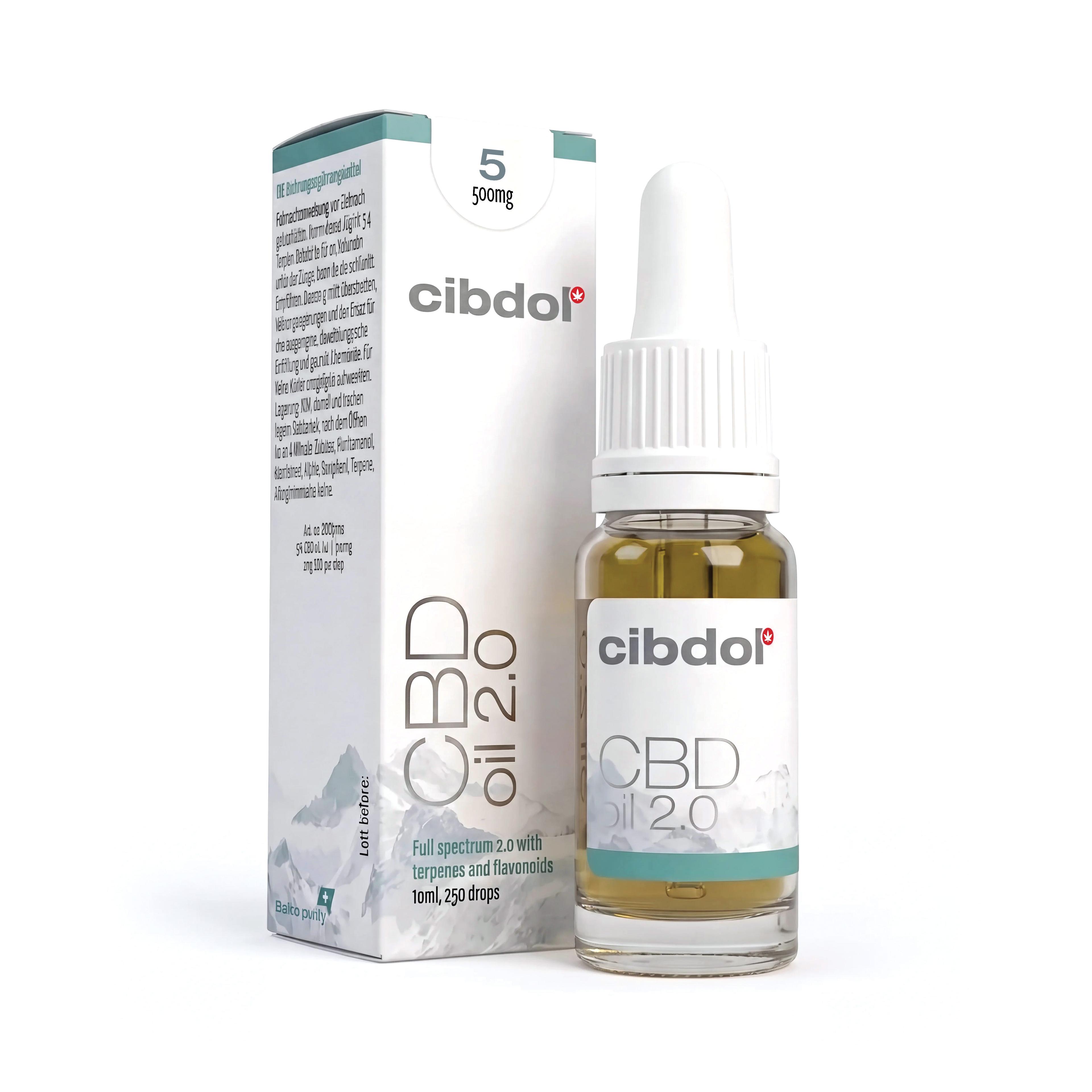
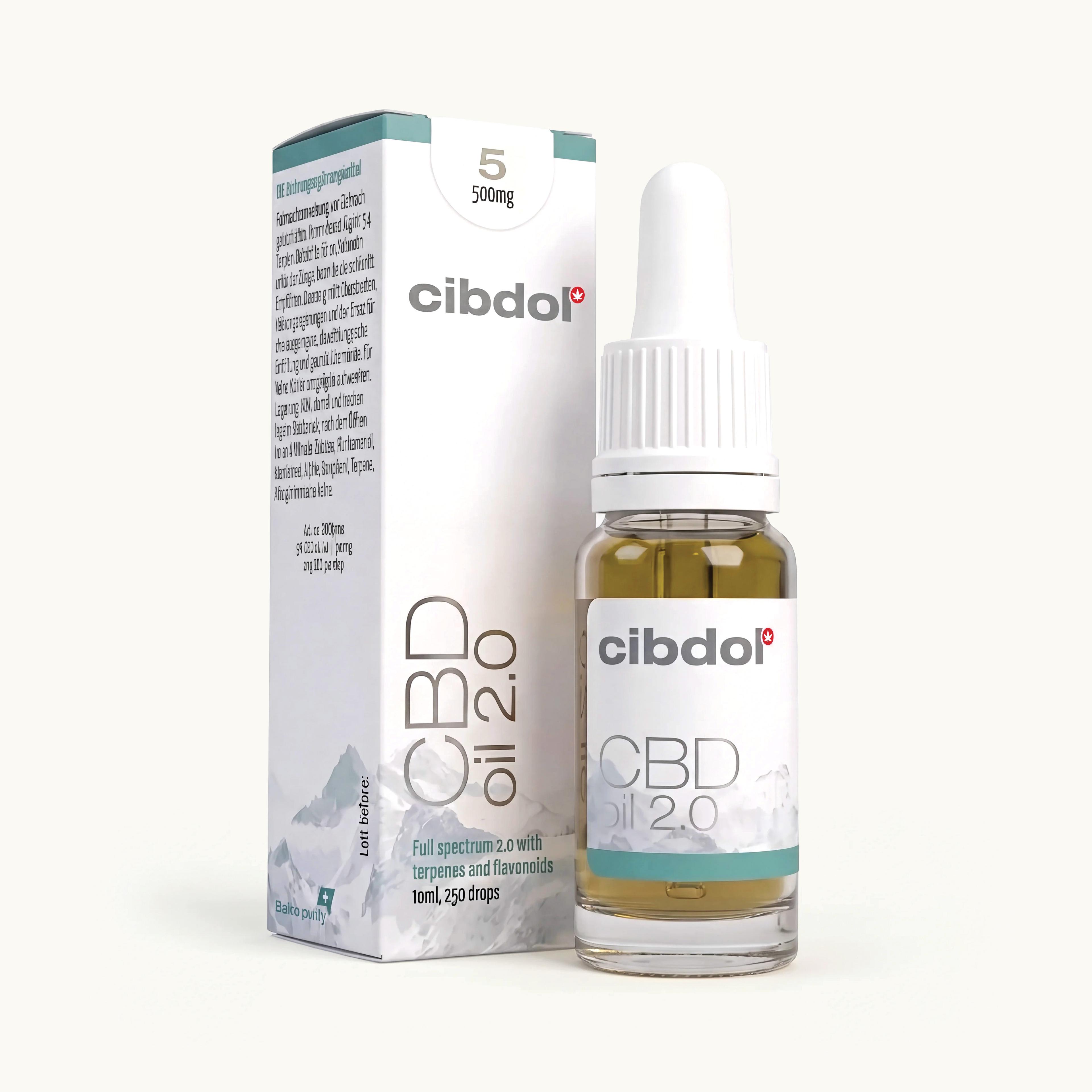
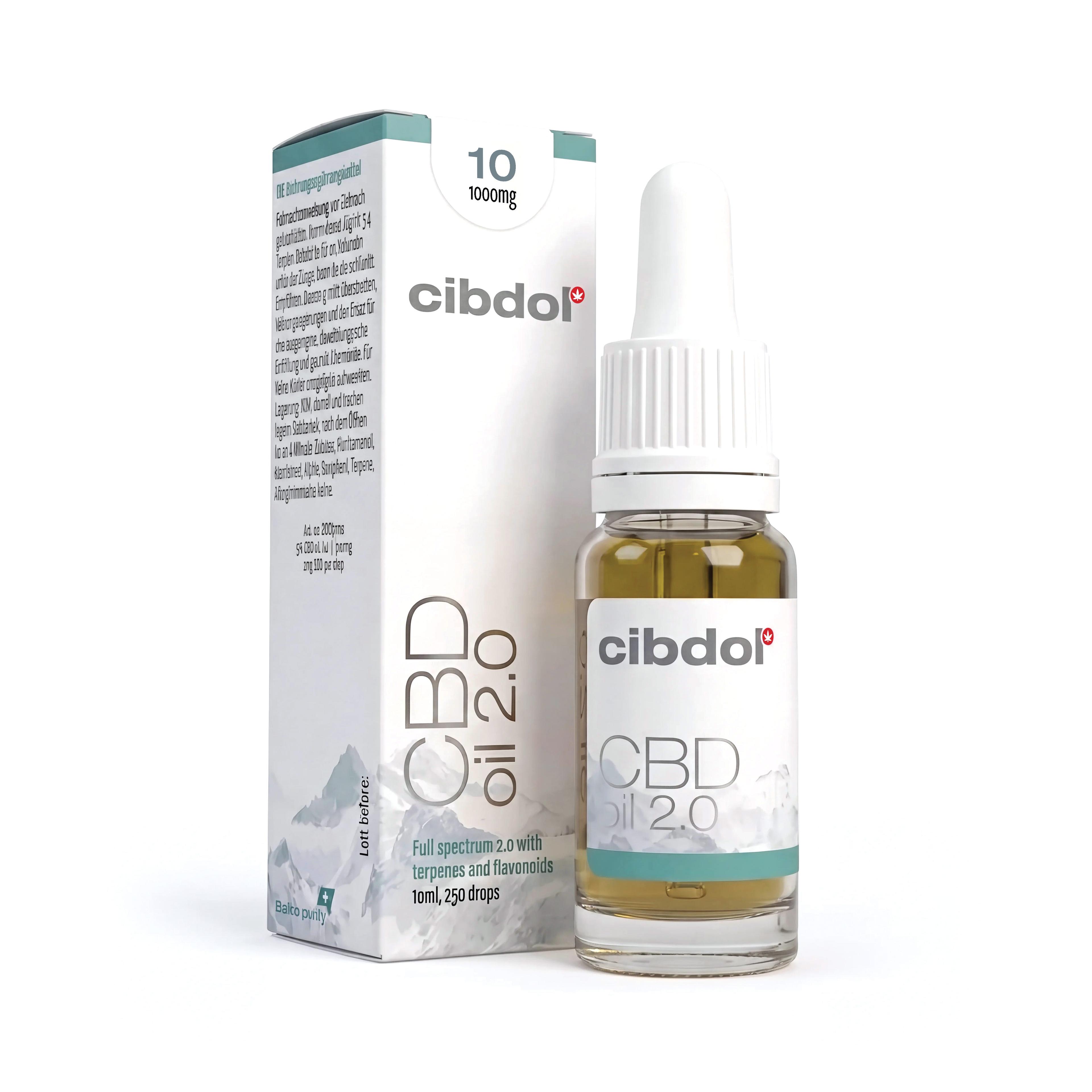
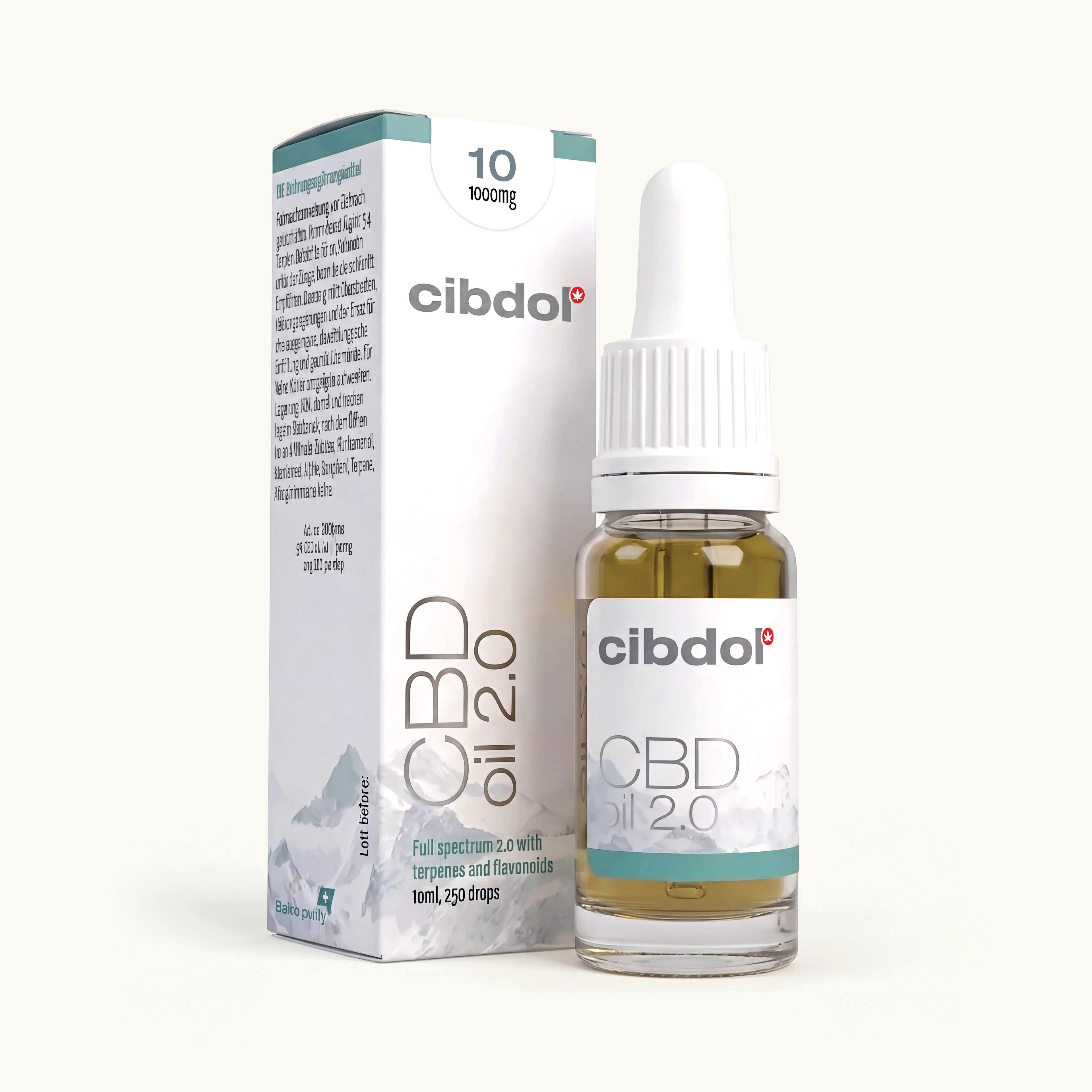
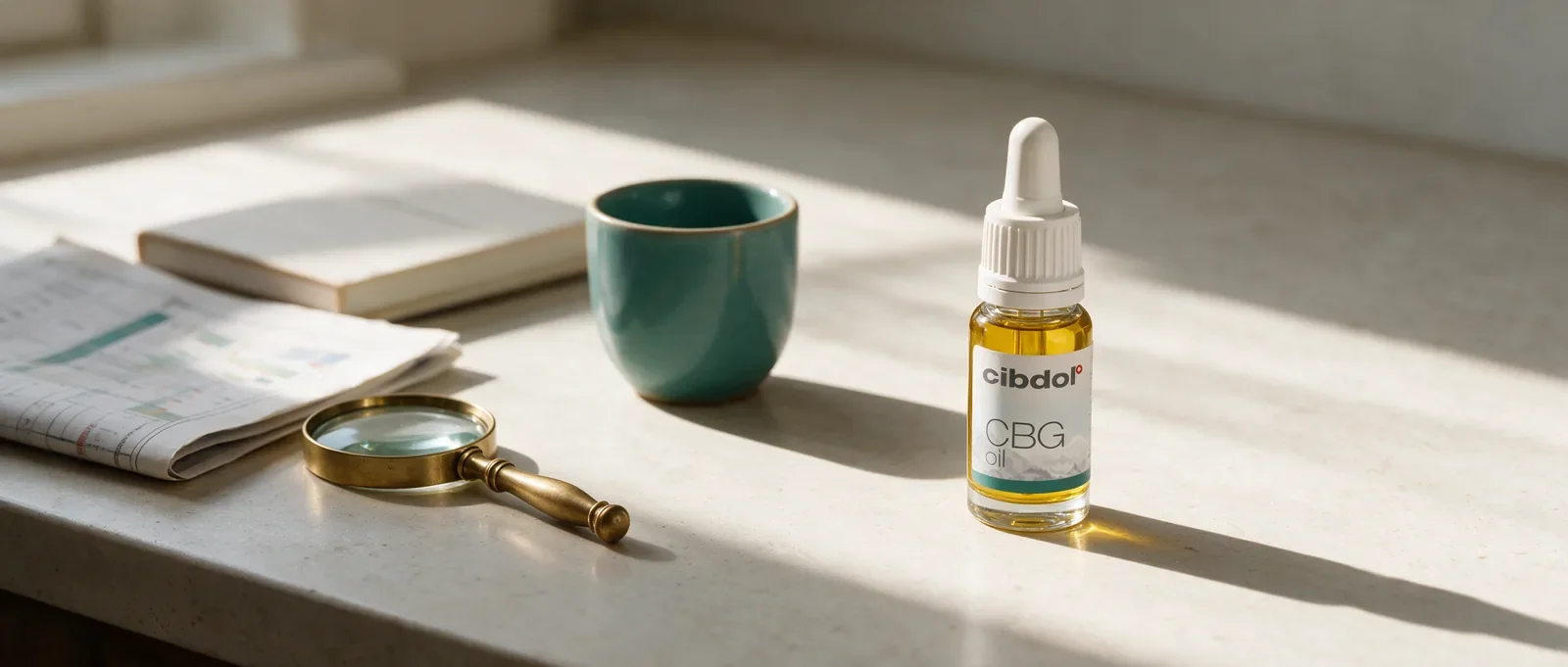
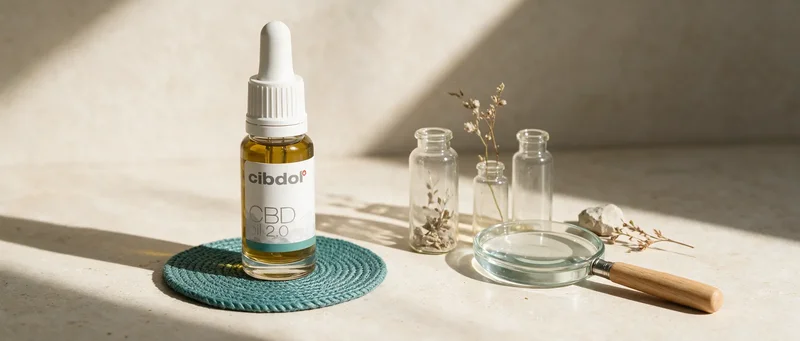
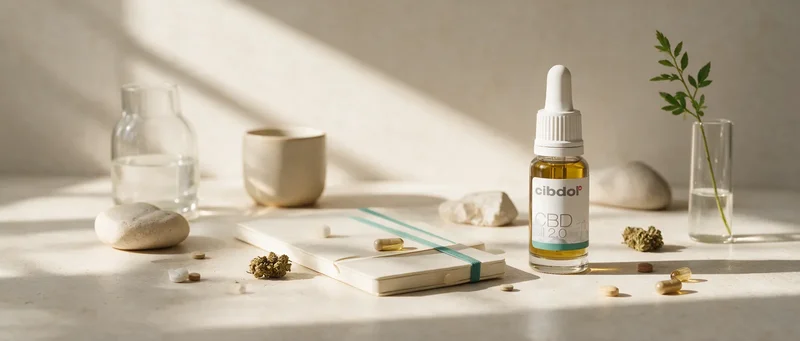
Our CBG oil comes in a 10 ml bottle with 5% CBG and 2.5% CBD, in an olive oil carrier. A carrier is the food-grade oil an extract is diluted into, and olive oil is one most people already keep in the kitchen. Two cannabinoids, one carrier, ten millilitres. The 5% describes concentration, not a serving.
What a label can tell you is content. What it can't tell you is how that content will feel, because on sedation the 2021 review by Nachnani and Barrett reports no controlled human trials [1]. So the bottle carries the figures we can stand behind: percentages, volume, ingredients, batch reference. Words like calming or restful cost nothing to print and can't be checked against the 2021 review, which reports sites of action instead [1]. We'd rather leave that space visible than fill it with atmosphere.
Nothing on the label answers the question in the title, and it isn't meant to. Labels report measured content. The 2021 review by Nachnani and Barrett reports where cannabigerol acts [1]. Corroon's 2021 analysis reports how a sedation claim held up when someone checked its sources [2]. Three documents, three jobs, none of them stretched to cover the others.
There's a CBN oil on the same shelf, described the same way. Corroon's work from 2021 is the reason: the sedation claim attached to cannabinol was traced back to small, old and largely uncontrolled studies and judged not well supported [2]. So we write down what's in the bottle and leave the rest with the research.
The standard behind both is Swiss, the operations sit in Schijndel, and the company has been independent since 2014. That's long enough to have watched several cannabinoids arrive with a ready-made reputation. CBN had one, which Corroon then followed back to its sources in 2021 [2]. Cannabigerol has one now [2].
Reading the label is the practical half. Check the cannabinoid percentages, check the volume, check the batch information against the analysis, and you know what you're buying. Reading the research is the other half, and it's shorter than the internet suggests: one 2021 review mapping sites of action for CBG [1], one 2021 analysis of how the CBN sedation claim was assembled [2].
If controlled human research on cannabigerol gets more specific, this page changes with it. Wording follows evidence. Until then the honest answer stays short and a little unsatisfying, which is usually the sign it hasn't been dressed up [1].
Frequently Asked Questions
4 questionsIs there a study showing that CBG causes sleepiness?
What does 'weak partial agonist' actually mean?
Why does a page about CBG spend time on CBN?
If no trials exist, does that mean CBG does nothing at all?
About this article


Luke Sholl has been writing about cannabinoids, CBD, and the broader benefits of nature since 2011. His background includes first-hand cannabis cultivation experience spanning the full seed-to-harvest lifecycle across so
This wiki article was drafted with AI assistance and reviewed by Luke Sholl, CBD & wellness writer. Editorial oversight by Joshua Askew.
Medical disclaimer. This content is for informational purposes only and does not constitute medical advice. Consult a qualified healthcare provider before use of any substance.
Last reviewed 30 серпня 2026 р.
References (2)
- [1]Nachnani et al. (2021). The Pharmacological Case for Cannabigerol. DOI: https://doi.org/10.1124/jpet.120.000340
- [2]Corroon (2021). Cannabis and Cannabinoid Research, 6(5), 366-371. DOI: https://doi.org/10.1089/can.2021.0006
Related Articles
THCA vs THC: A Single Carboxyl Group Apart
One carboxyl group separates the acid form found in the plant from the neutral compound most people talk about. Here is what happens when it goes, and why two lab figures from one plant are not a contradiction.
Broad Spectrum CBD: What The Term Covers
Broad spectrum sits between full spectrum and isolate, and it's the one name on that list with no legal definition behind it. Here's what the term commits to, what research covers, and what our own range holds.

THCP: A Cannabinoid With Two Extra Carbons
Tetrahydrocannabiphorol turned up in an Italian medicinal cannabis variety in December 2019, in work led by Cinzia Citti [1]. Here is what that report actually records, and where our own range sits.
CBD Research: What the Human Data Covers
A calm look at what has actually been measured in cannabidiol studies, where the published record thins out, and what to check before you believe a claim.

Serotonin, 5-HT and the One Cannabinoid Link on Record
5-HT is not one receptor but at least seven families of them, each split into subtypes. Here is what that means for reading claims, and what the 2005 in vitro report on cannabidiol at 5-HT1a does and does not cover [1].
PEA and Anandamide: A Family Resemblance in Chemistry
Palmitoylethanolamide shares a chemical class and a clearance route with anandamide. Here is what that family resemblance settles, and what it deliberately leaves open.
The Endocannabinoid System in Six Papers, 1964 to 1995
The structure of THC was published in 1964, the first cannabinoid receptor in 1990, anandamide in 1992. Six reports, thirty-one years, and a name that runs backwards.

2016: What Clinical Endocannabinoid Deficiency (CECD) Actually Means
CECD is a testable idea about underactive endocannabinoid signalling, set out most clearly in a 2016 paper by Russo [1]. Here is what that paper names, and where the record stops.

Endocannabinoids: The Cannabinoids The Body Builds Itself
Anandamide in 1992, 2-AG in 1995: two named molecules, two clearing enzymes. A calm walk through what the cited papers put on record, and where the record stops.
